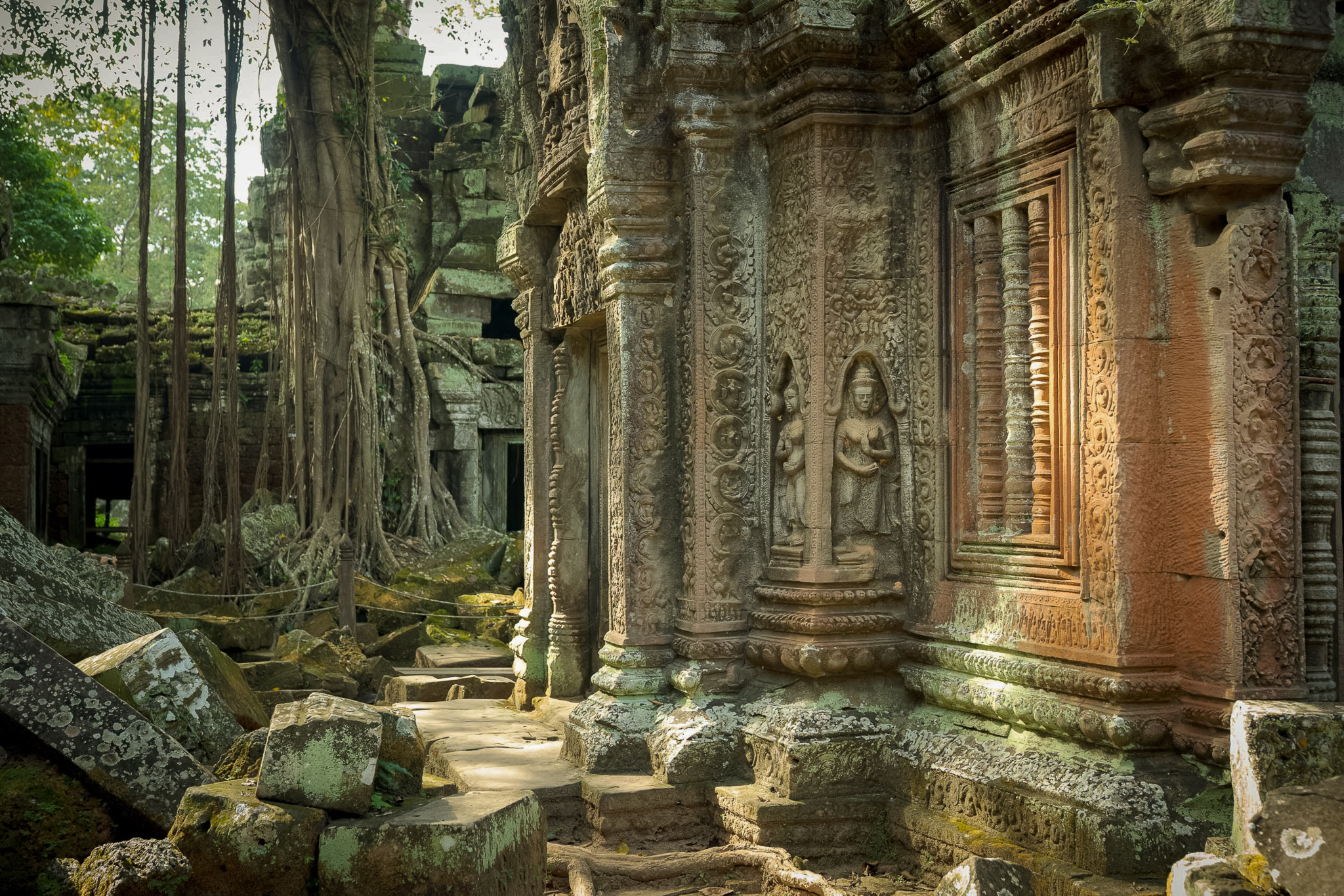
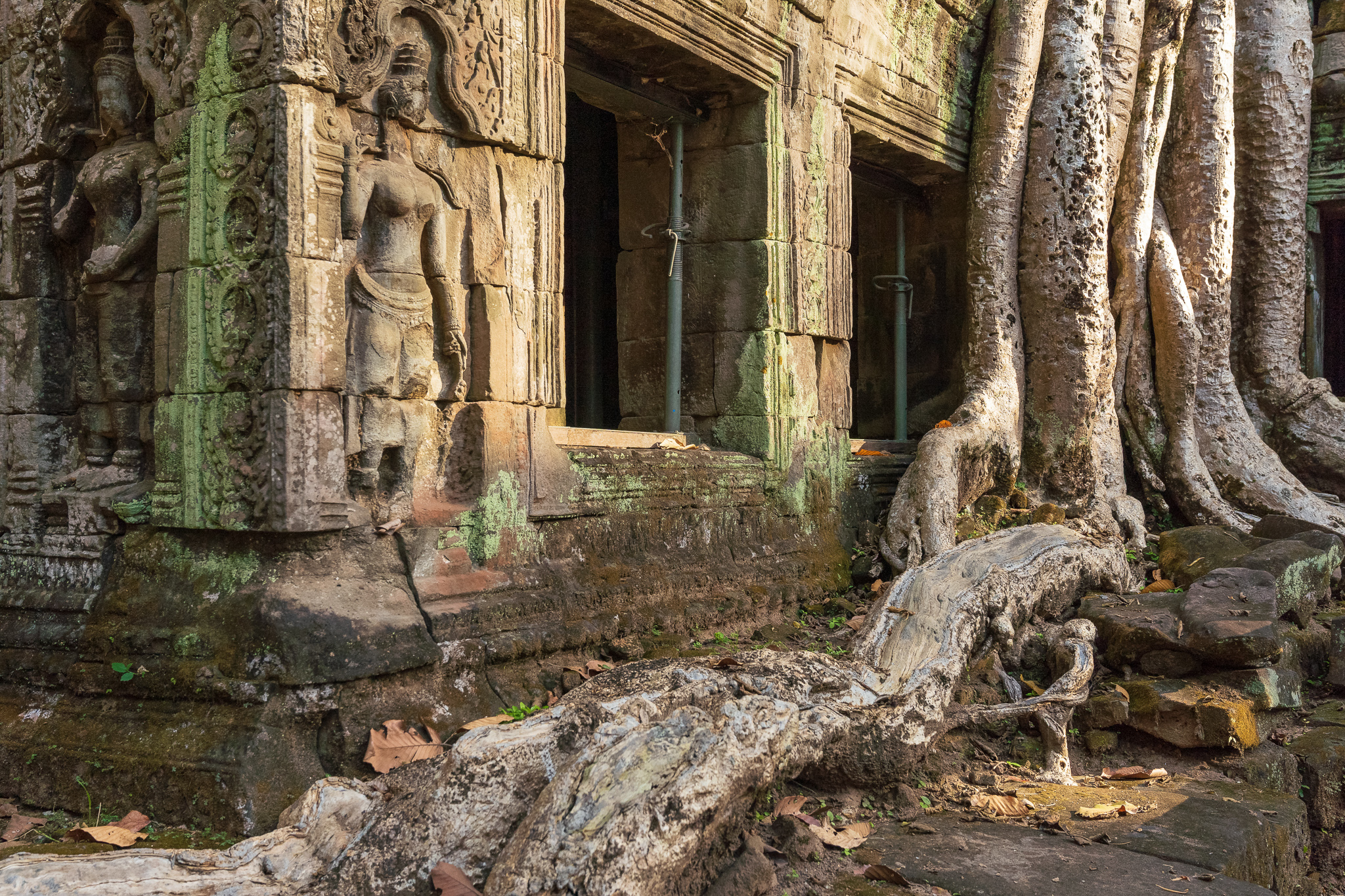
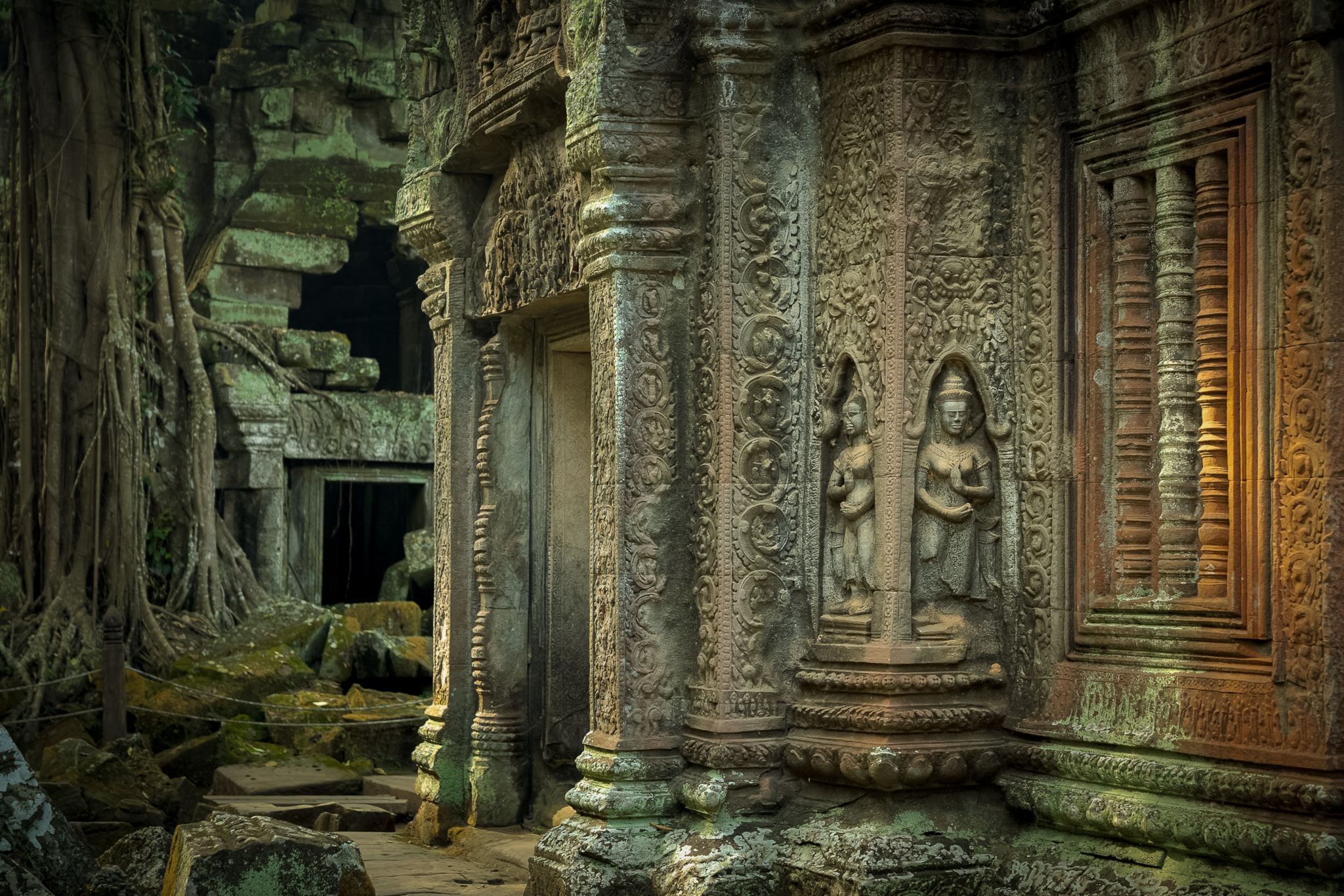
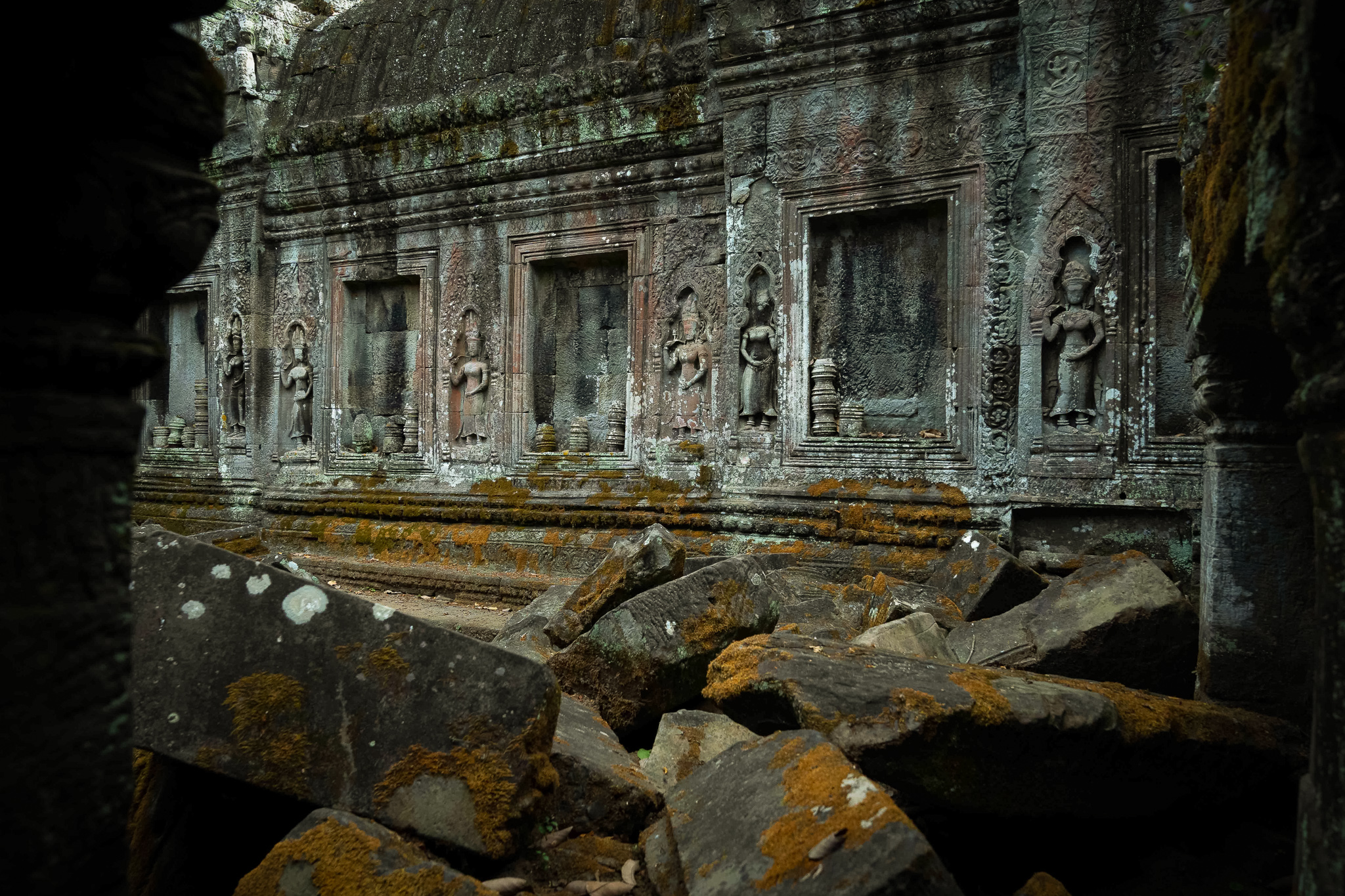
Ta Prohm is one of those rare places that actually lives up to the photographs. Giant tree roots spill over ancient walls, narrow corridors disappear into the jungle, and collapsed stonework has been left intertwined with the forest in a way you won’t find anywhere else at Angkor.
It’s also a temple we know particularly well. We’ve visited and photographed Ta Prohm countless times, from quiet early mornings before the main crowds arrive to the busiest parts of the day. While almost everyone comes for the famous tree-covered ruins, some of our favourite parts of Ta Prohm are the quieter courtyards, doorways and details that are easy to walk straight past.
In this guide, we’ll explore Ta Prohm’s history, its most beautiful areas, the famous trees and some of the lesser-noticed details we’ve discovered over years of visiting the temple, alongside our own photography and practical observations from the ground.
If you’re planning to visit, we’ll also show you how to experience Ta Prohm at its best.
Table of Contents
Explore Ta Prohm through our video
Want to see what it’s actually like to explore Ta Prohm? We filmed this walking tour early in the morning in October 2026, well before the crowds arrived.
October is towards the end of Cambodia’s rainy season, when the forest is particularly lush and green. The video takes you through the temple’s ancient corridors, courtyards and tree-covered ruins, offering a chance to experience the peaceful atmosphere of Ta Prohm at one of the most beautiful times of year.
Enjoyed exploring Ta Prohm? Visit our Connect Cambodia YouTube channel for more temple walkthroughs, videos of Angkor and practical guides to visiting Cambodia.
What makes Ta Prohm Special
There are hundreds of surviving temples and structures across the Angkor Archaeological Park, but Ta Prohm feels different from almost all of them.
Trees rise directly from the ruins. Enormous roots wrap around doorways, descend over walls and disappear between blocks of sandstone. In other places, sections of the temple have collapsed completely, leaving piles of carved stone beneath the forest canopy.
This relationship between architecture and nature is what gives Ta Prohm its character.
It can sometimes be described as a temple that has simply been “left to the jungle”, but that isn’t quite accurate. Ta Prohm is an important archaeological site that has undergone extensive conservation and restoration. What makes it unusual is that the trees and vegetation that have become part of its identity have, where possible, been incorporated into its conservation.
Our take
Ta Prohm deserves more time than many visitors give it.
The famous tree roots are spectacular, but the temple is at its best when you slow down. Look through the doorways, explore the courtyards and pay attention to how the light changes as you move between enclosed corridors and open ruins.
Some of our favourite photographs from Ta Prohm aren’t of its most famous trees at all.
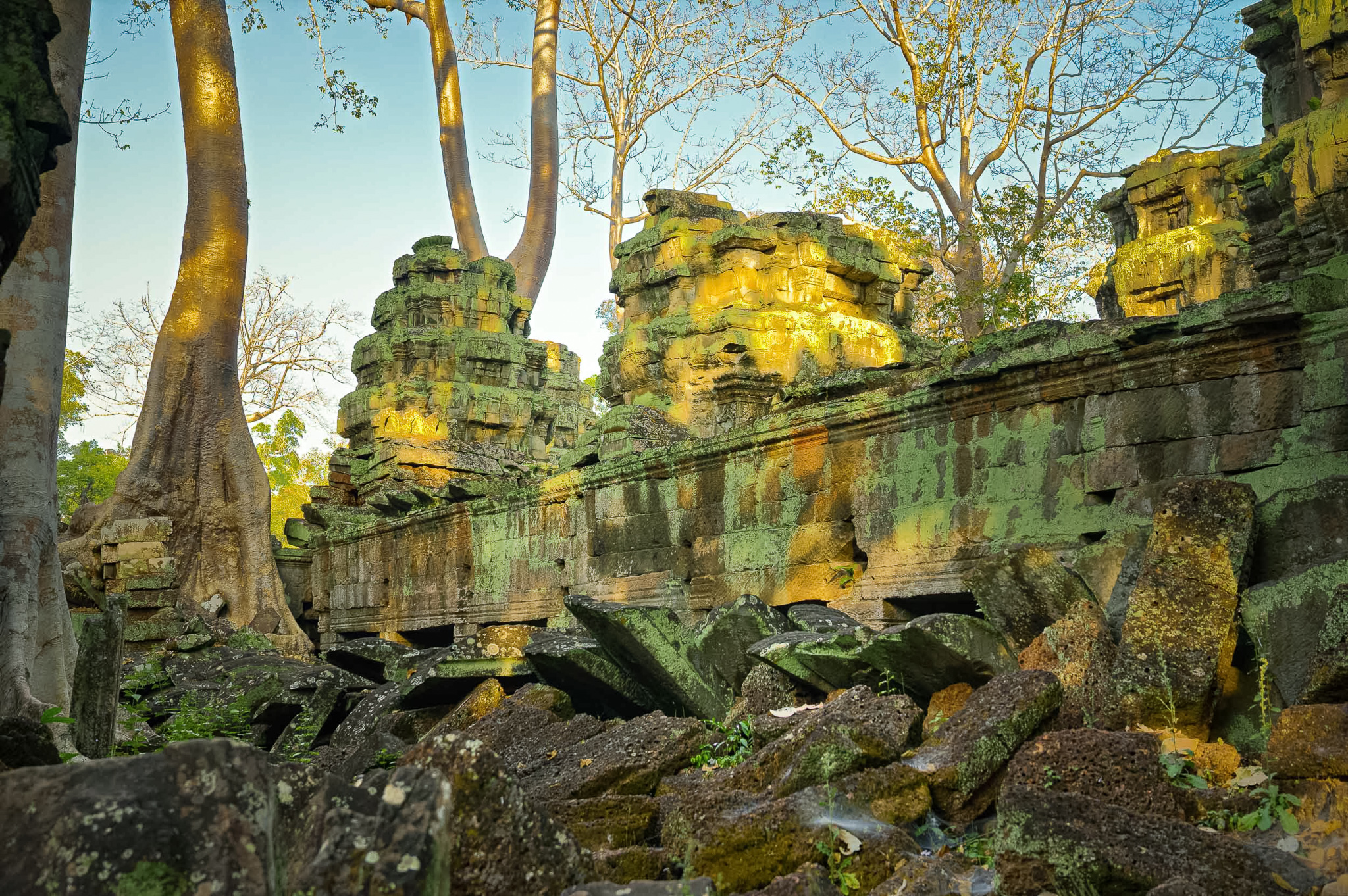
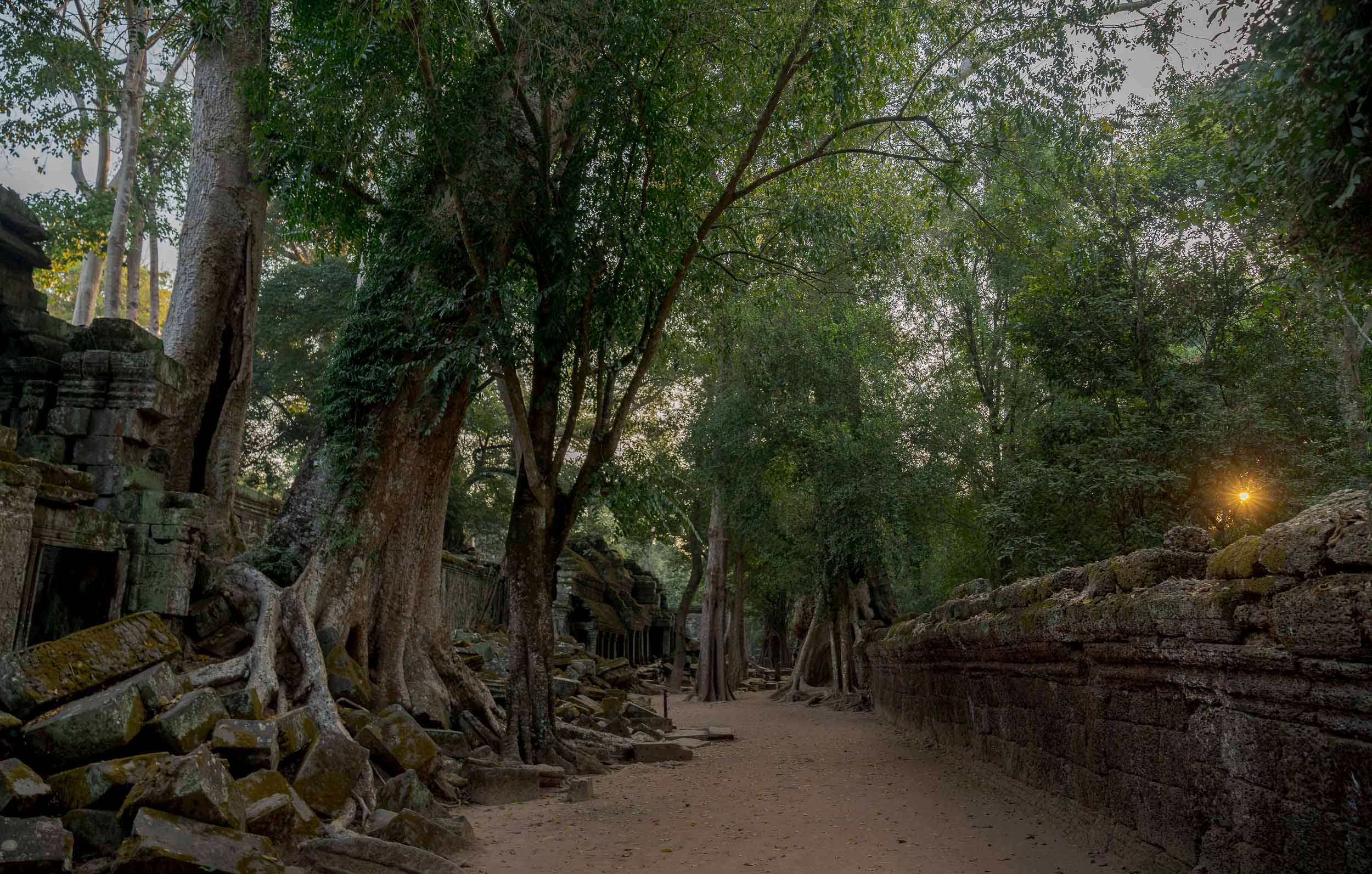
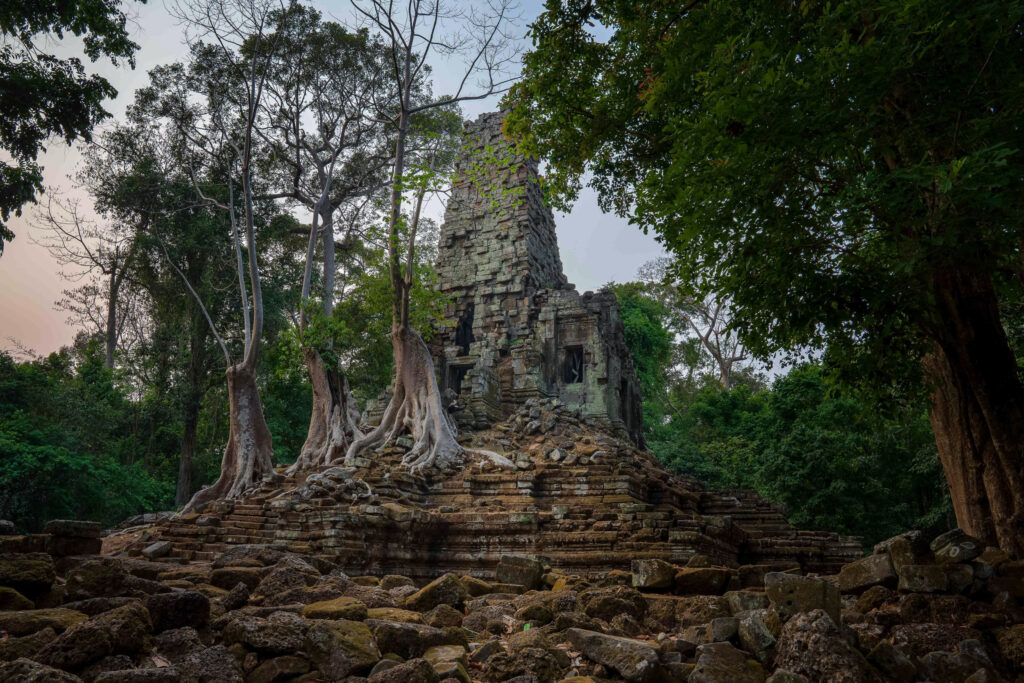
Ancient towers and jungle ruins inside Ta Prohm temple
A short history of Ta Prohm
Ta Prohm was founded in 1186 during the reign of King Jayavarman VII, one of the most important rulers of the Khmer Empire.
Originally known as Rajavihara, meaning “Royal Monastery”, it was established as a Buddhist monastery and university. The temple was dedicated to the king’s mother, who was represented in the form of Prajnaparamita, the personification of the perfection of wisdom.
Ta Prohm was not an isolated religious building. In its prime it was part of a much larger institution supported by thousands of people and considerable wealth.
After the decline of Angkor, the temple was gradually overtaken by the surrounding forest. Trees established themselves among the structures, roots penetrated gaps in the masonry and parts of the complex collapsed.
Those centuries of interaction between the ruins and forest created the Ta Prohm we recognise today.
The trees of Ta Prohm
for most visitors, the trees are the defining feature of Ta Prohm.
Some rise from the tops of walls before sending huge roots down towards the ground. Others appear to engulf entire sections of masonry. From certain angles it can be difficult to tell whether the roots are destroying the temple or holding it together.
In reality, both can be true.
Tree growth can place enormous pressure on ancient masonry, while removing a mature tree and its root system can also destabilise structures that have adapted around it. This is one of the reasons conservation at Ta Prohm is so complicated.
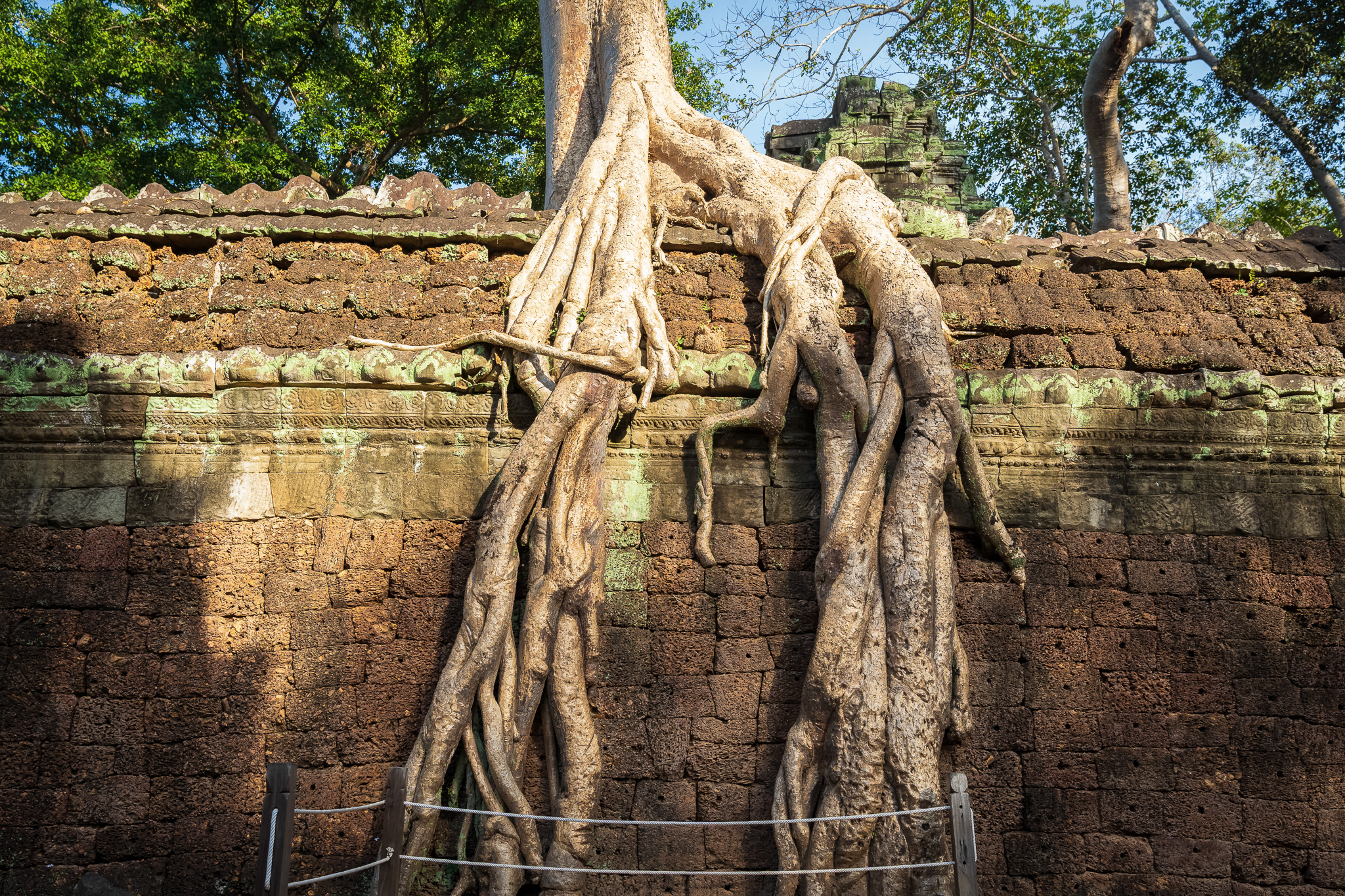
Giant tree roots growing over a stone wall at Ta Prohm temple
The famous tree-covered doorway
One of Ta Prohm’s most recognisable scenes is a small doorway almost completely framed by enormous roots.
It is also one of the busiest photography locations inside the temple.
During the main visiting hours, a queue can form as people wait to stand beneath the roots for photographs. If this particular view matters to you, timing makes an enormous difference.
Early in the morning, the experience can be completely different.
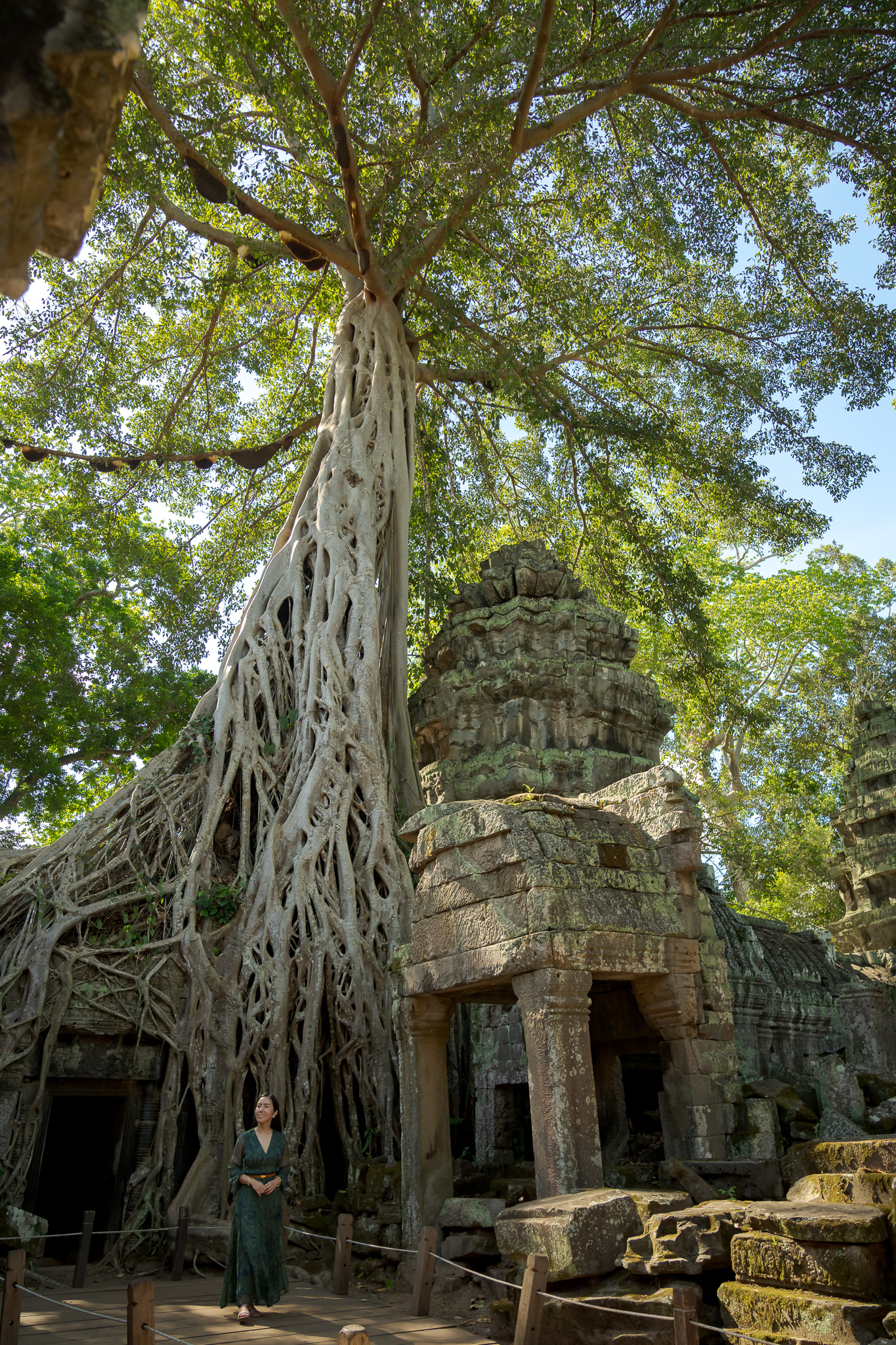
One of Ta Prohm's most famous sights, where enormous tree roots have grown over and around the ancient temple ruins.
Look beyond the famous trees
It is easy to move from one famous tree to another, take a photograph and leave.
We think that misses much of what makes Ta Prohm interesting.
There are beautiful combinations of roots, carved stone, moss, doorways and collapsed galleries throughout the complex. Some are dramatic; others are small details you may only notice when the temple is quiet enough to explore slowly.
This is one of the reasons we keep finding new photographs here even after many visits.
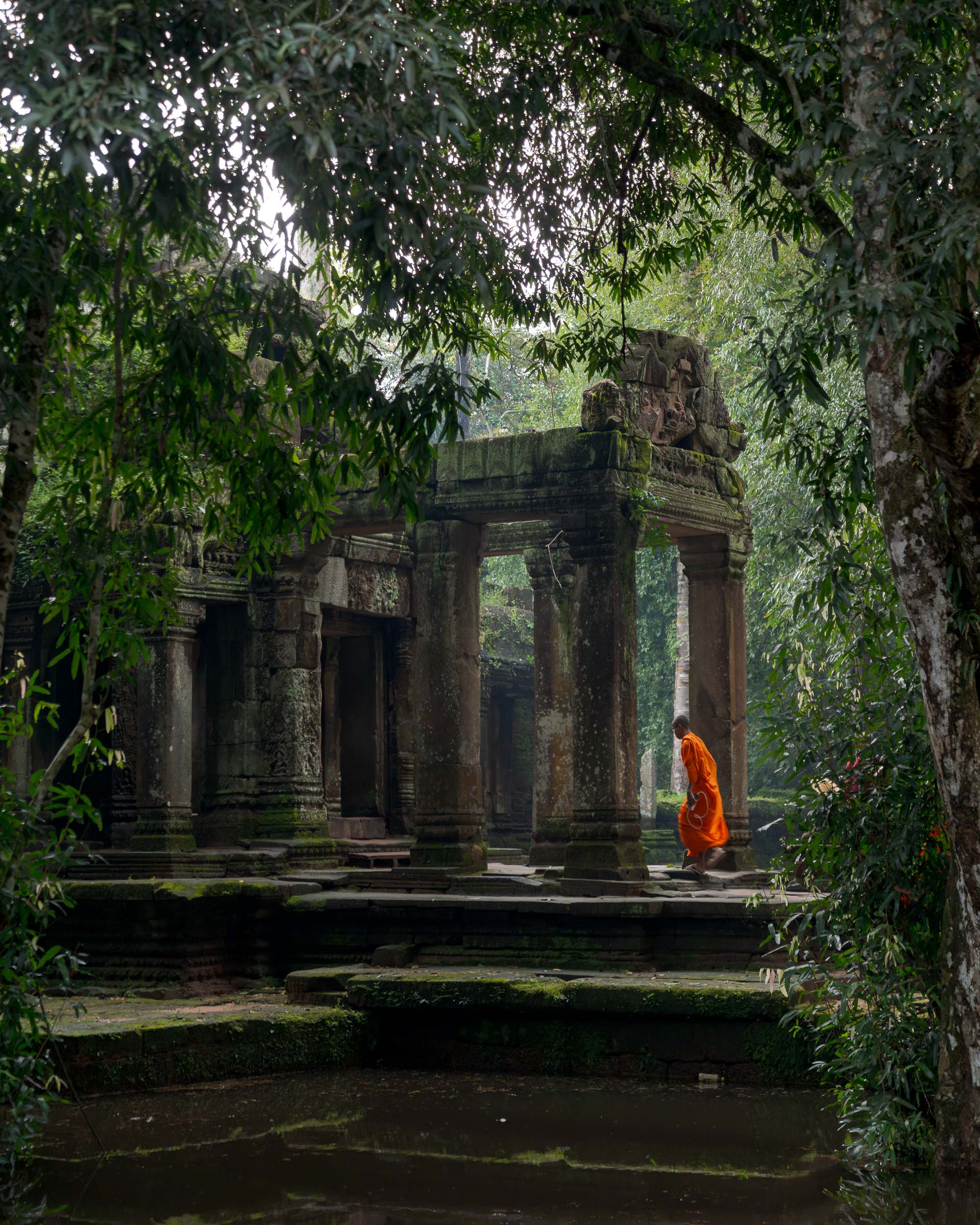
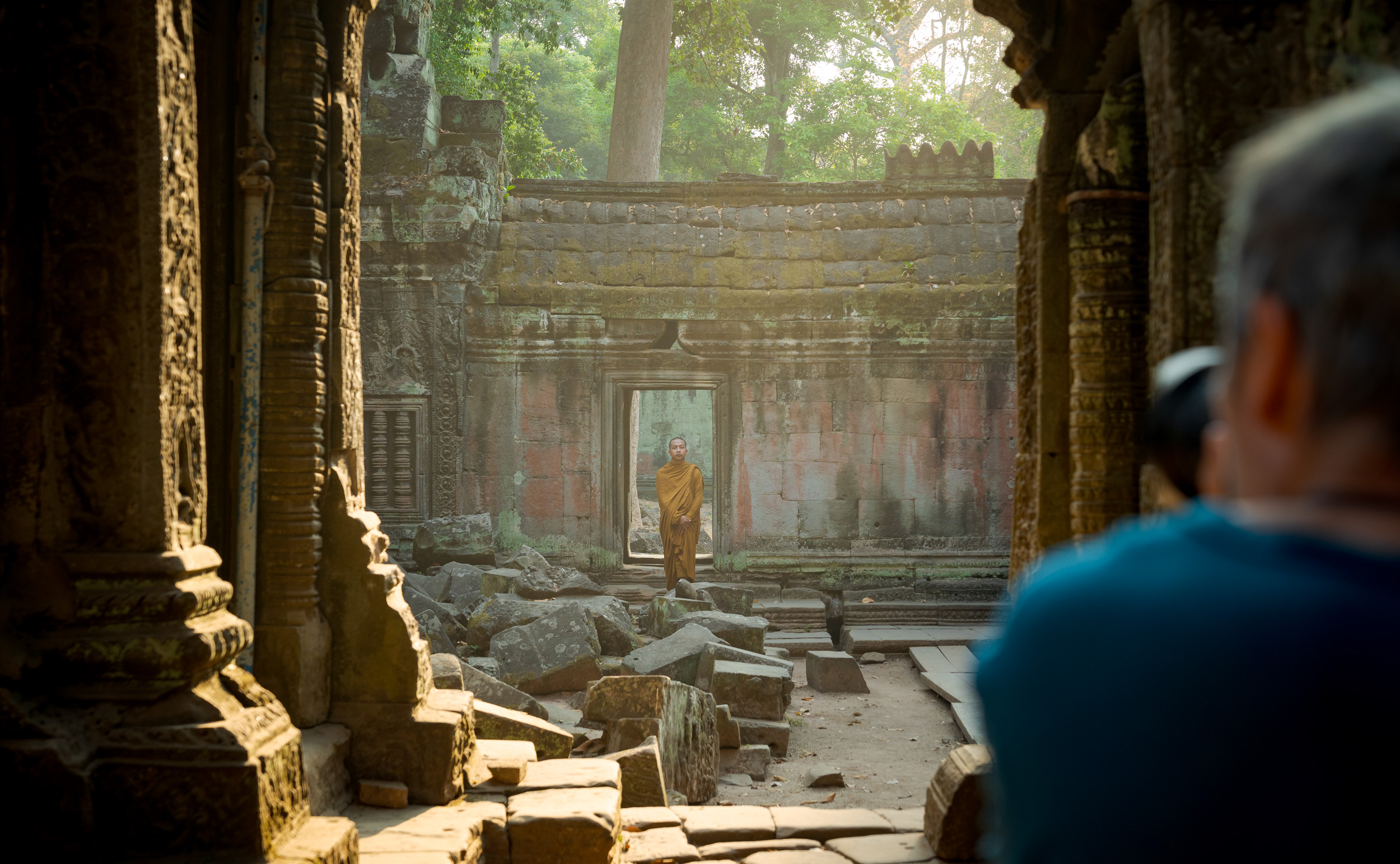
A Buddhist monk walking among the forest-covered ruins of Ta Prohm.
The most beautiful parts of Ta Prohm
Choosing the “best” parts of Ta Prohm is subjective, and some of our favourites aren’t necessarily the places that attract the biggest crowds. We prefer places lesser known, where the peaceful atmosphere adds to the experience.
Ancient stone carvings and jungle vegetation at Ta Prohm temple
The root-covered ruins
These are the scenes Ta Prohm is famous for and they absolutely deserve the attention.
The scale becomes much more apparent in person. In photographs, it can be difficult to appreciate just how large some of the trees and root systems are compared with the temple beneath them.
Giant tree roots growing over a stone wall at Ta Prohm temple
The inner courtyards
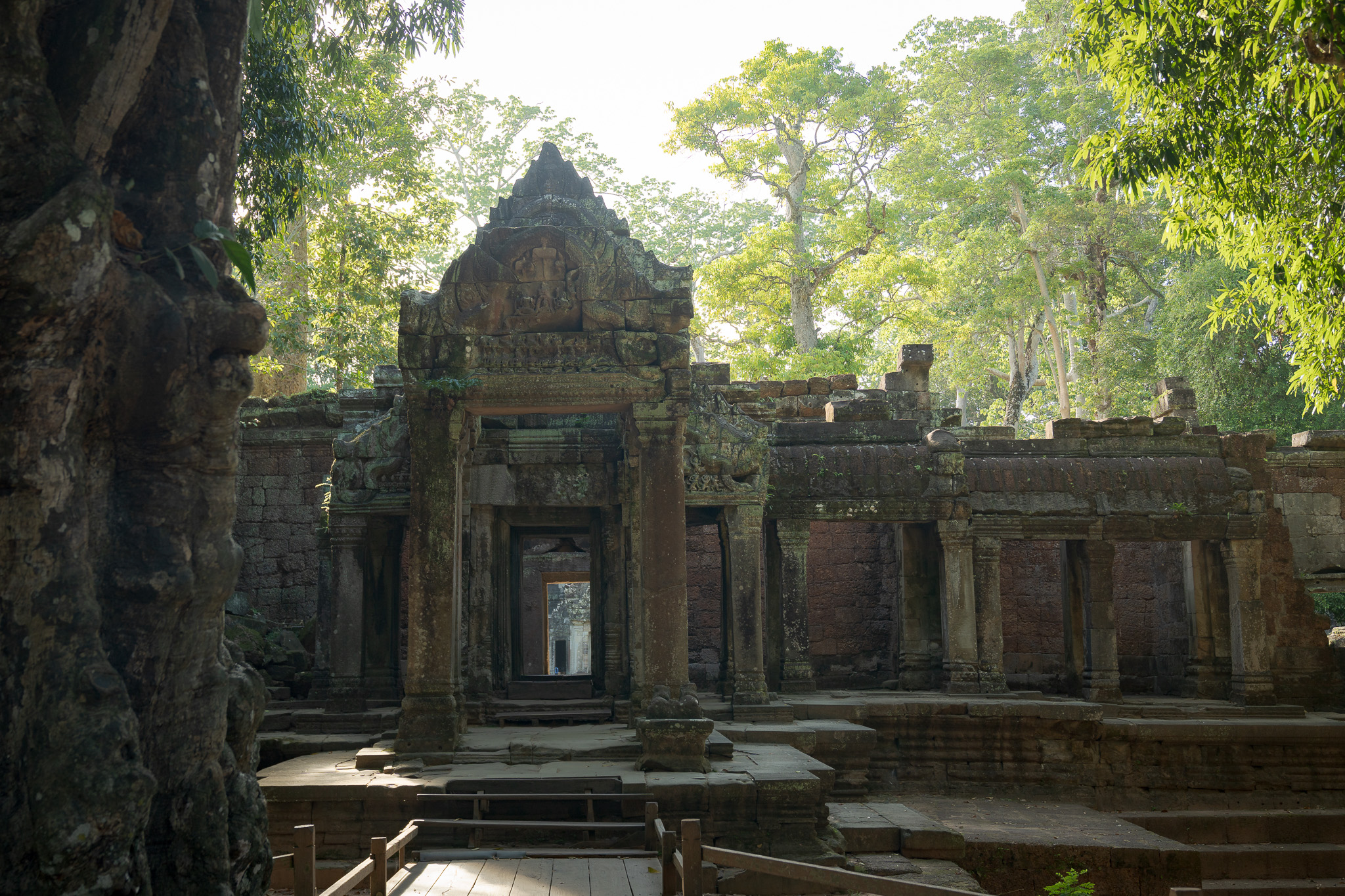
As you move deeper into Ta Prohm, layers of doorways and courtyards create some of the temple’s best views.
Standing in one chamber and looking through several successive stone doorframes gives you a completely different impression from the famous exterior tree photographs.
These areas can also be particularly atmospheric early in the day when there are very few people around.
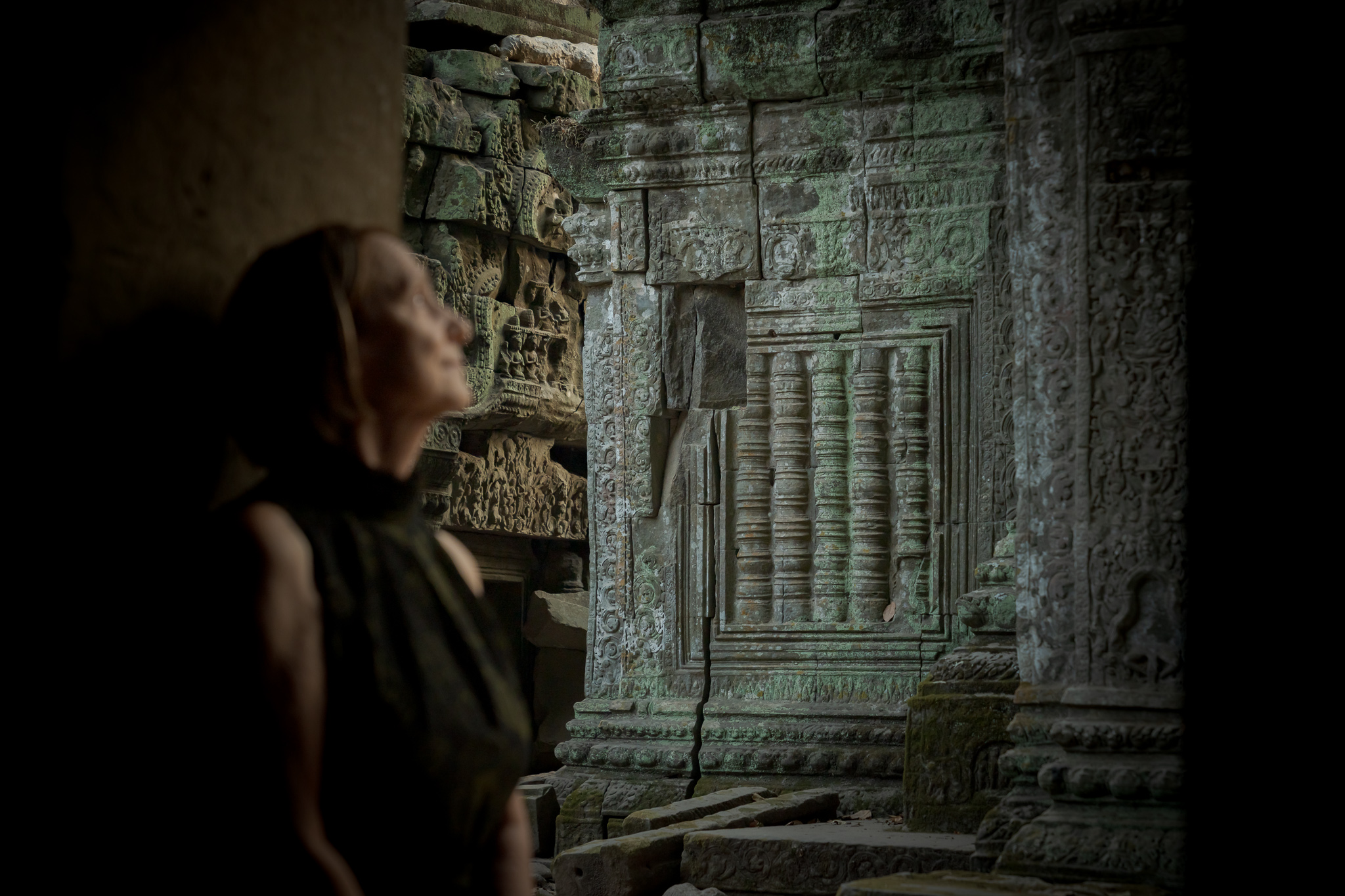
Detailed stone carvings in an inner courtyard are of the ancient ruins of Ta Prohm temple
The collapsed galleries
Some areas are partially ruined, with huge blocks of stone lying where sections of the structure have fallen.
We love these areas because they make Ta Prohm feel genuinely ancient. They also show just how much work is involved in conserving a monument of this scale.
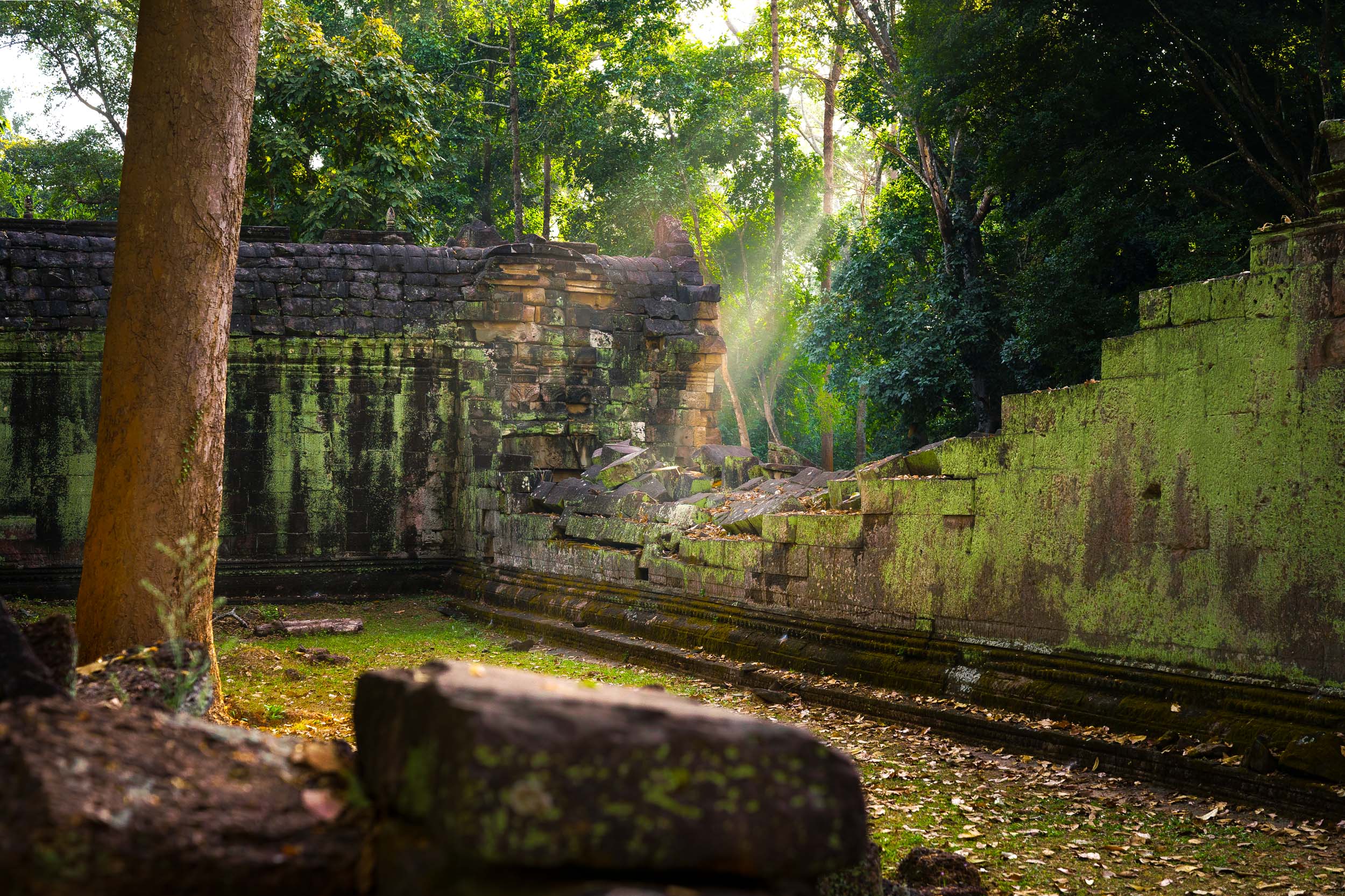
Weathered stone walls and ruins in a collapsed gallery at Ta Prohm
The outer walkways around the outside of the temple
Don’t assume that every interesting part of Ta Prohm will have a sign or a queue in front of it.
Moving away from the busiest central locations reveals smaller details, vegetation-covered walls and quieter perspectives that many visitors pass without stopping.
This is where having some extra time pays off.
Ta Prohm temple surrounded by jungle trees early in the morning with no crowds
Ta Prohm early in the morning
If we had to choose one thing that can completely change your experience of Ta Prohm and even Angkor in general, it would be when you visit.
Most Angkor itineraries begin with Angkor Wat, particularly when visitors are watching sunrise. This creates an opportunity elsewhere in the park.
Getting to Ta Prohm very early can mean experiencing parts of the temple with remarkably few people around. The difference is substantial. Corridors that become busy later in the day can be silent, and photographs that would normally require waiting become much easier.
There is also something particularly appropriate about experiencing Ta Prohm when it’s quiet. Without crowds, you notice the forest much more.
You hear birds, insects and leaves moving above the ruins. You notice the scale of the trees and the darkness of the corridors. It feels much closer to the atmosphere people imagine when they first see photographs of the temple.
As of August 2026Ta Prohm now officially opens at 6:30am, so you can get there before the crowds arrive.
Insider tip: head for the west entrance instead of the east. The east is the main entrance and gets busier, while entering from the west keeps things quieter. It also puts the rising sun behind the temple, giving you backlight that makes for a great photo opportunity.
Photographing Ta Prohm
Ta Prohm is one of our favourite temples to photograph because the scene changes constantly as you move through it.
You’re dealing with dark corridors, bright openings, patches of forest light, enormous trees and intricate stonework, sometimes within a few metres of each other.
Photographer taking a framed photo of a monk walking through a stone doorway at Ta Prohm temple
Early light
Early morning is particularly good for atmosphere and for avoiding crowds.
The forest canopy means Ta Prohm doesn’t receive the same broad, direct sunrise light as Angkor Wat. That’s not necessarily a disadvantage. Soft light suits the temple extremely well, particularly around moss-covered stone and tree roots.
Morning light breaking through the trees over the ancient ruins of Ta Prohm
Use the doorways
Some of the strongest compositions inside Ta Prohm come from using its architecture as a frame.
Instead of photographing every subject straight on, move backwards through adjoining chambers and use successive doorways to create depth.
The Green season - our favorite time to visit Ta Prohm
Ta Prohm is one of the places where rain can actually improve the atmosphere.
Wet stone becomes darker, greens become more saturated and reflections can appear on the ground. The forest canopy also provides intermittent protection from lighter rain.
If you’re visiting Angkor during the green season, don’t automatically see a shower as the end of your photography.
Walking through Ta Prohm
Ta Prohm is much larger and more complex than the handful of photographs most people recognise.
There is a designated route through Ta Prohm that most visitors follow, and that’s fine. But this is also a wonderful temple to get a little lost in. Wander away from the main flow where access allows and you’ll find quieter corridors, small courtyards, intricate carvings and unexpected views through the ruins. Take a turn and you can suddenly find yourself somewhere that feels completely different.
As you explore, you’ll move from forest into ruined gateways, through dark galleries and courtyards, past collapsed structures and into areas dominated by Ta Prohm’s enormous trees and roots. There is much more to Ta Prohm than its famous tree. Some of our favourite parts are the quieter interiors and details that many visitors walk straight past.
Visitor exploring the intricate galleries inside Ta Prohm temple, Siem Reap, Cambodia
Our tip: if you visit early in the morning, consider entering from the west. Most visitors approach from the east, so the western side can be exceptionally quiet at this time of day. For photographers, there is another advantage: with the sun rising in the east, the morning backlight filtering through the trees, doorways and ruins can be spectacular.
Ta Prohm western entrance, backlit by the morning sun
Details to look for
The trees naturally command your attention, but don’t forget that Ta Prohm was an extraordinarily important Khmer temple long before the jungle became part of it.
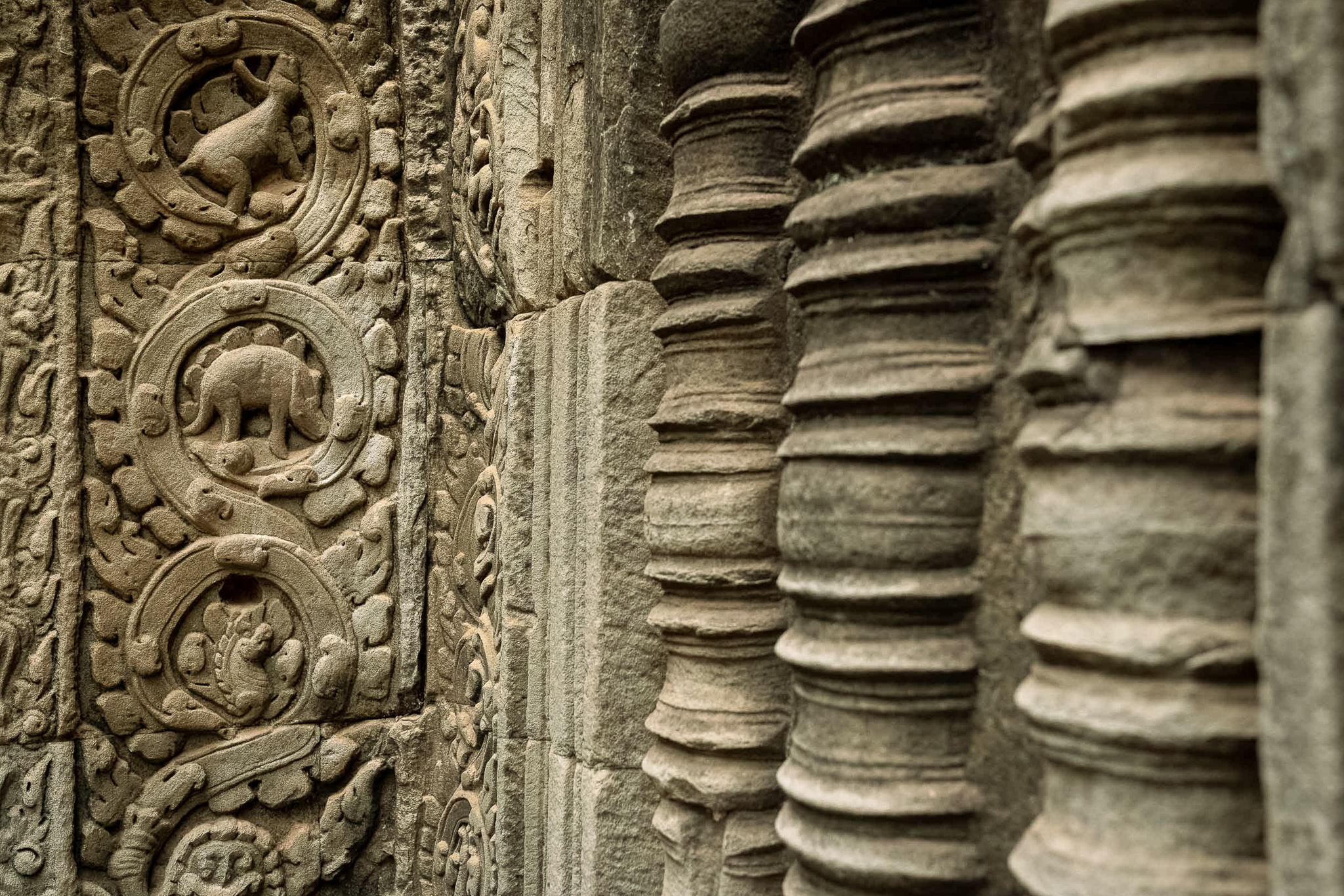
Look closely at door lintels, devatas, carved stonework and surviving decorative details as you move through the complex.
One particularly famous carving is sometimes claimed online to depict a stegosaurus. It’s an entertaining detail to find, although interpretations of exactly what the carving represents vary considerably.
The famous Ta Prohm “dinosaur” carving, often said to resemble a stegosaurus.
Restoration and conservation
The romantic image of Ta Prohm as an untouched ruin is only part of the story.
Conserving a temple where enormous living trees have become intertwined with ancient masonry presents unusual challenges. Structures need to be stabilised, collapsed sections studied and restored, and decisions made about trees that may simultaneously contribute to the temple’s appearance and threaten its structure.
As a result, Ta Prohm continues to change.
If you’ve visited several years apart, you may notice restored sections, new supports, altered walking routes or areas temporarily closed for conservation work.
For us, documenting those changes is another reason to keep returning.
Ta Prohm and Tomb Raider
We’re often asked – will we go to the “Tomb Raider Temple today?” The answer is usually yes – if you’ve booked a small loop tour, or an Angkor Wat Sunrise tour, Ta Prohm is one of the ‘big three’ temples that you see along with Angkor Wat and Bayon.
Ta Prohm became internationally famous after appearing in Lara Croft: Tomb Raider, released in 2001 and starring Angelina Jolie.
The association remains strong enough that you’ll still hear Ta Prohm called the “Tomb Raider Temple” around Siem Reap.
The film undoubtedly introduced the temple to millions of people, but Ta Prohm is much more interesting than its movie connection. Its history stretches back more than eight centuries, and the relationship between the forest and Khmer architecture is the real reason the temple is extraordinary.
If Tomb Raider is what first made you want to see Ta Prohm, though, you certainly won’t be disappointed.
Planning your visit to Ta Prohm
Although this page is primarily our exploration of the temple, there are a few practical things worth knowing before you arrive.
Location: Ta Prohm is inside Angkor Archaeological Park and is normally visited as part of the Small Circuit.
Ticket: Entry is covered by the standard Angkor Pass.
Time needed: Allow roughly one hour for a normal visit. If you enjoy photography, history or exploring slowly, it’s very easy to spend longer.
Best time: We strongly favour early morning if you want to experience the atmosphere of the temple with fewer people.
What to bring: Water, comfortable footwear and a camera or phone. Surfaces can become slippery after rain, particularly during the green season.
For ticket prices, transport, dress requirements, seasonal conditions and planning your wider visit, see our complete Angkor Wat Guide.
Ta Prohm is often visited on the same temple circuit as Bayon in Angkor Thom. If you’re planning to visit both, our Bayon Temple Guide includes our advice on when to visit, what to see and why we particularly like experiencing Bayon early in the morning.
Our final thoughts on Ta Prohm
There are grander temples at Angkor. There are temples with more imposing architecture, more intricate carvings and greater historical importance.
But very few places have the atmosphere of Ta Prohm.
The combination of Khmer architecture, enormous trees, collapsed stone and forest creates somewhere that feels different every time we visit. Light changes, vegetation grows, restoration progresses and even familiar corners reveal photographs we hadn’t noticed before.
That’s why this page won’t ever really be finished.
We’ll continue photographing, filming and documenting Ta Prohm as we explore it, adding new details, changing conditions and things we think are worth noticing.
If you’re visiting Angkor, don’t come to Ta Prohm only to photograph the famous tree.
Give it some time. Walk slowly. Look through the doorways. Explore the quieter corners.
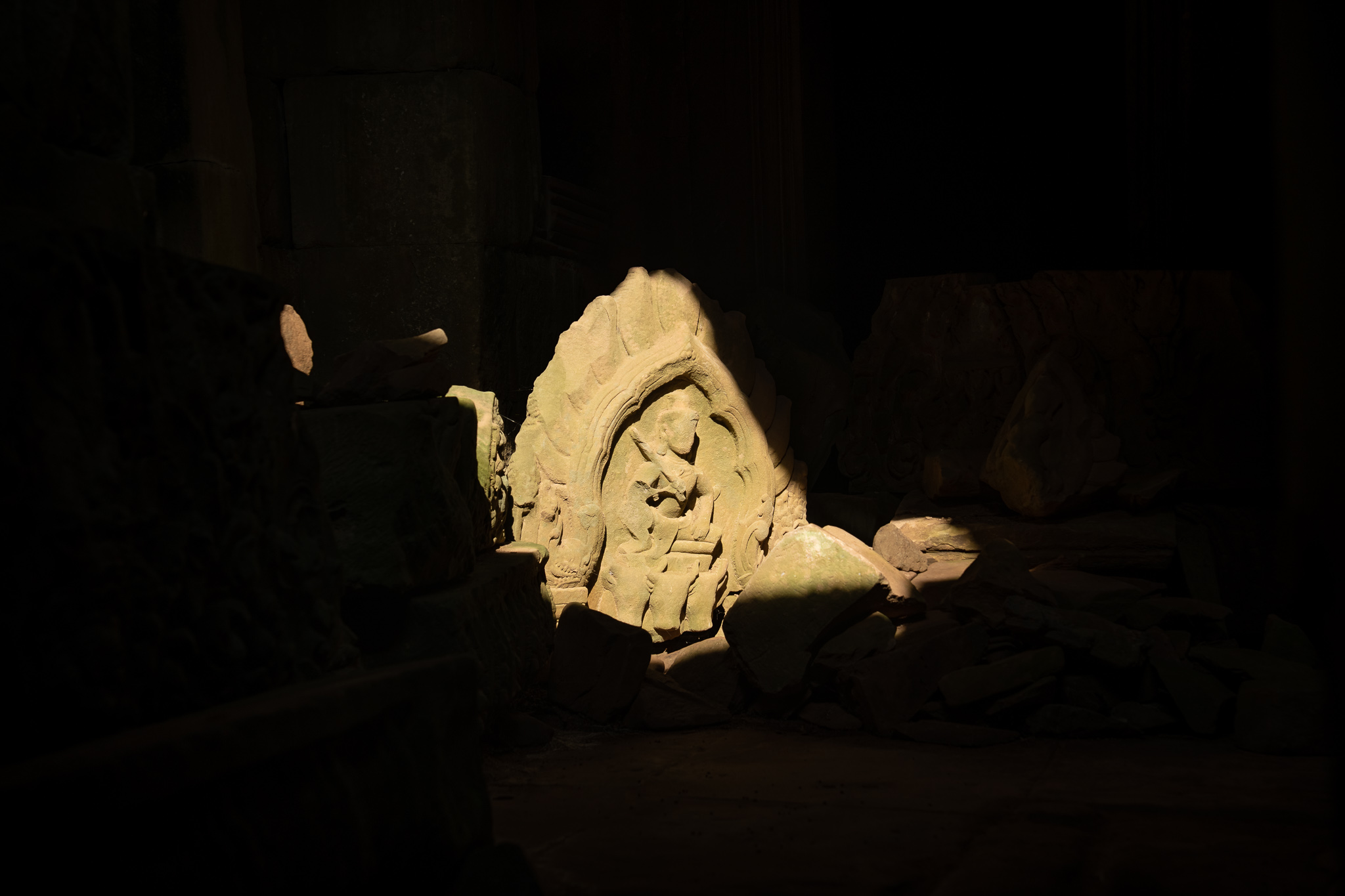
A small stone detail on the ground inside Ta Prohm, caught by a shaft of sunlight in an otherwise dark area of the temple. It was something we had likely passed on previous visits without noticing, reflecting how Ta Prohm continues to reveal new details each time we return.
Continue exploring Angkor
Angkor is much more than just Angkor Wat. Our Angkor temple guides are based on repeated visits and first hand experience, with practical advice on when to go, what to look for and which temples are worth including in your itinerary. Explore more of our guides below, or visit our complete Angkor Wat guide to start planning your time at Angkor.
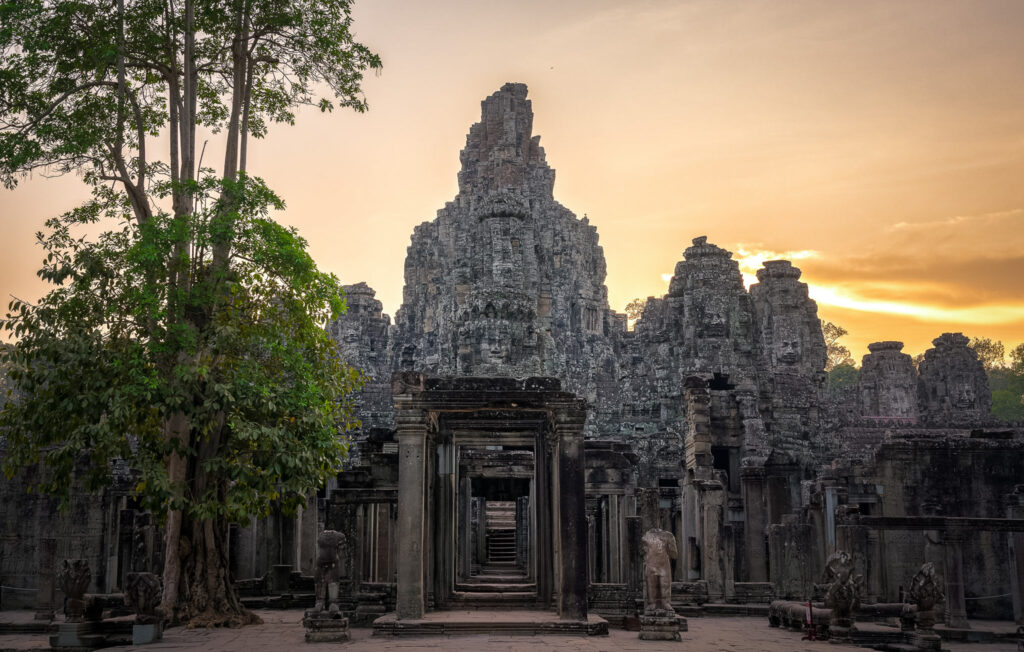
Bayon is one of Angkor’s most remarkable temples, famous for its enormous stone faces and maze of carved galleries. We recommend visiting early, when the temple is quieter and the soft morning light brings the faces to life.
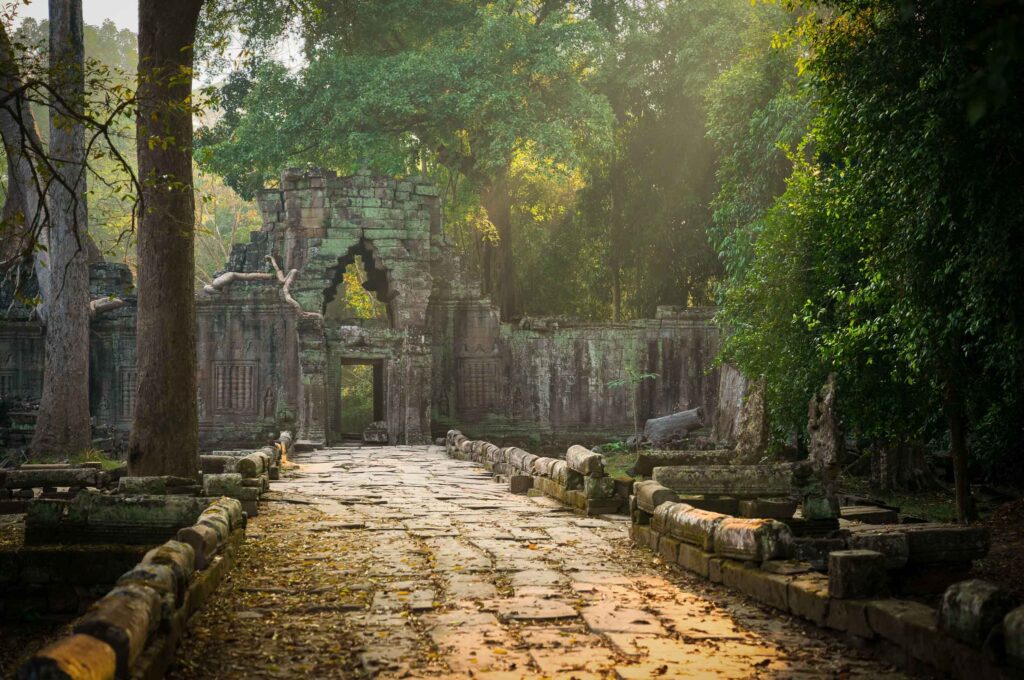
Explore Preah Khan, one of Angkor’s largest temples, known for its atmospheric corridors, ancient carvings and impressive tree roots. Our guide covers what to see and how to plan your visit.
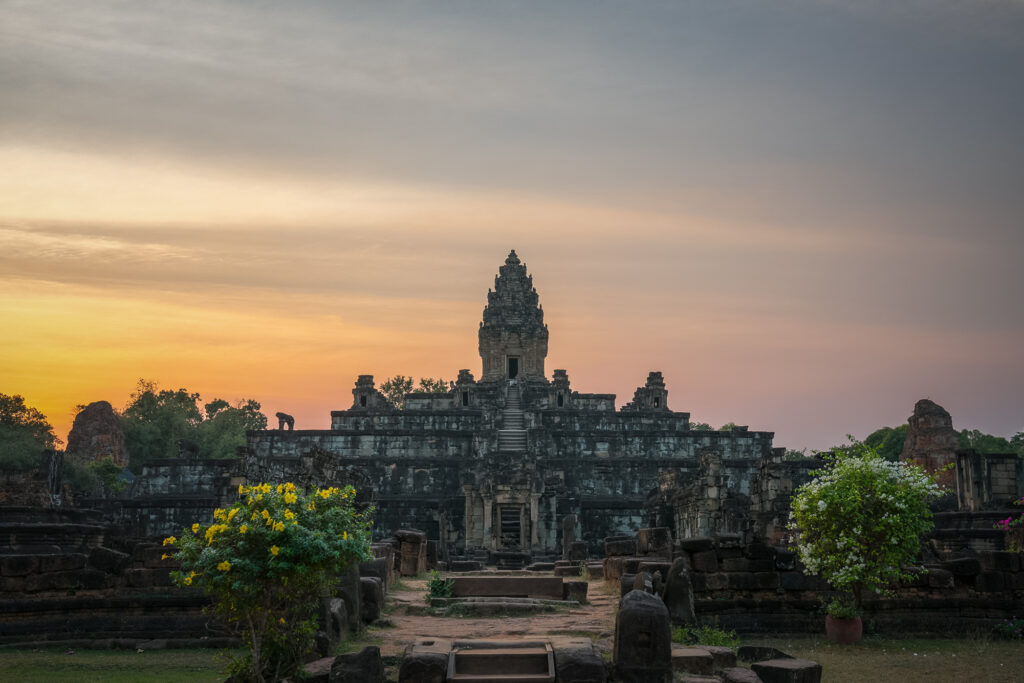
Bakong is one of the oldest temple mountains in the Angkor region. Discover its impressive stepped pyramid, stone elephants and what to know before visiting this historic temple near Siem Reap.
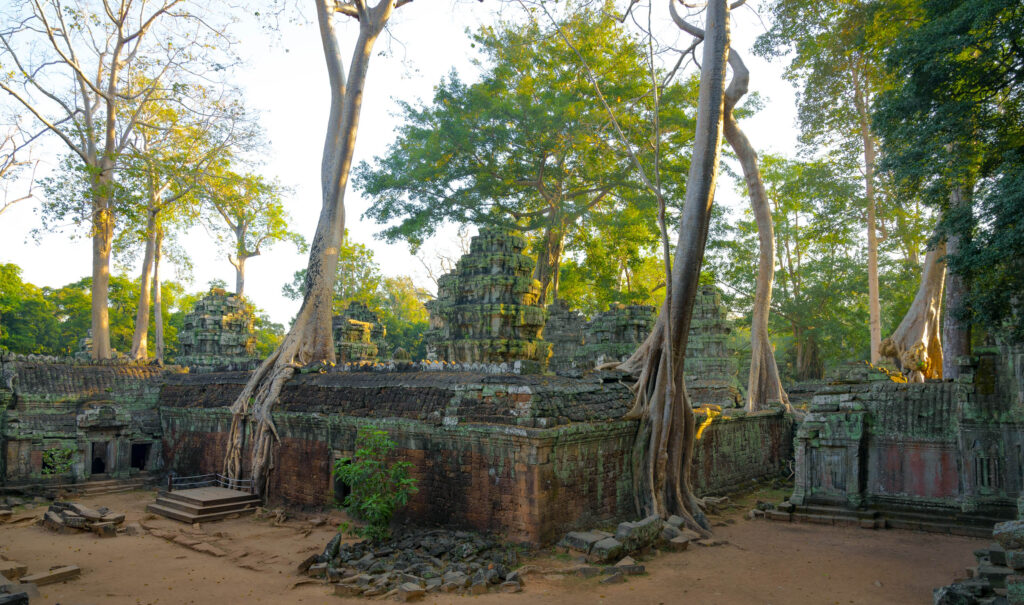
Ta Prohm is famous for its enormous trees growing through the ruins, but there is much more to explore beyond the best-known viewpoints. We recommend visiting early, when its corridors and courtyards are quieter and the temple is at its most atmospheric.
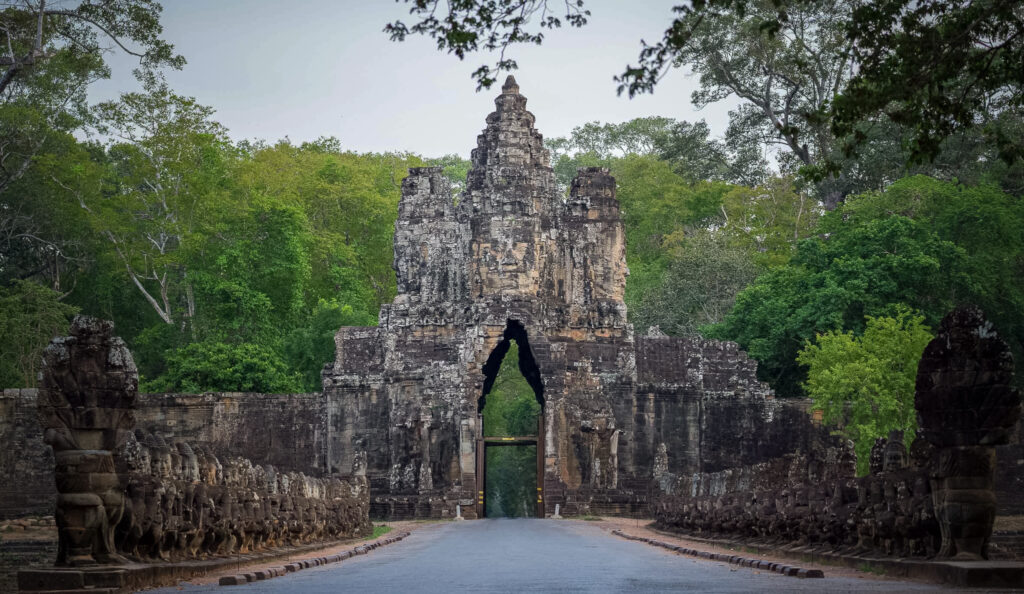
Visit Angkor Thom South Gate, the monumental entrance to the ancient city. Learn what to look for, when to visit, how to avoid the busiest times, and where to find the best views and photographs.
One of our favourite smaller temples at Angkor, Preah Palilay is especially atmospheric during the green season. It’s close to the Terrace of the Elephants, yet usually sees only a handful of visitors, making it an easy addition when exploring Angkor Thom.