The South Gate of Angkor Thom is the most famous entrance to the ancient walled city of Angkor Thom and one of the most recognisable sights in the Angkor Archaeological Park. Most visitors travelling from Angkor Wat towards Bayon pass through it as part of the Small Circuit, but it is worth stopping rather than simply driving through.
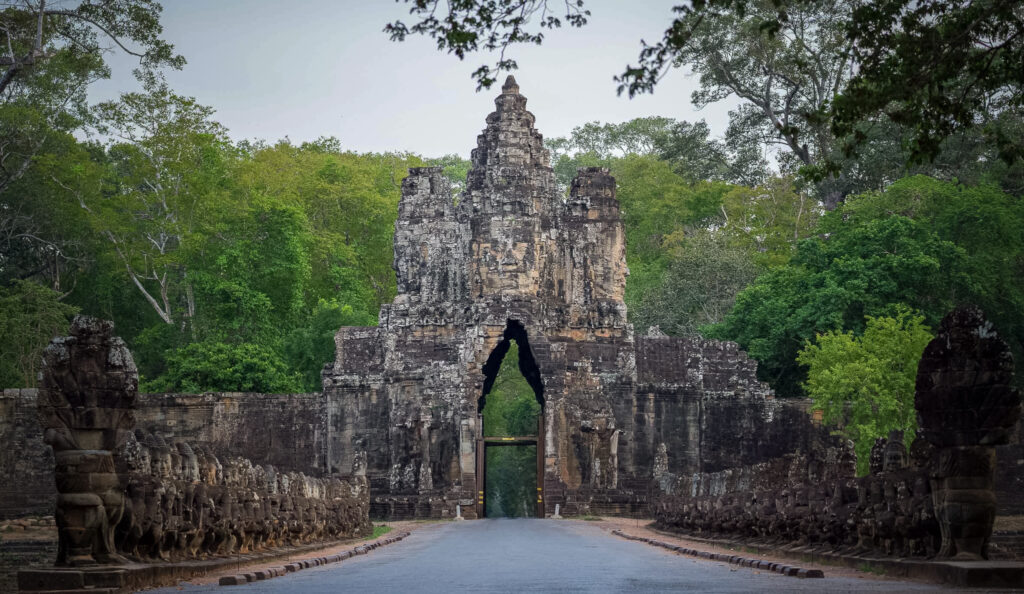
The approach crosses a moat on a causeway lined with large stone figures, before passing beneath a monumental gateway topped by four enormous faces. The combination makes the South Gate particularly impressive because you can see the entire entrance as it was intended to be approached.
Table of Contents
What Is the South Gate of Angkor Thom?
The South Gate is one of five monumental gateways into Angkor Thom, the great walled city established by King Jayavarman VII in the late 12th and early 13th centuries. Angkor Thom covers roughly 9 square kilometres, surrounded by an approximately 8-metre-high wall and a wide moat.
There is a gate at each of the four cardinal points, with an additional Victory Gate on the eastern side. The South Gate is by far the most commonly visited because it sits on the main route between Angkor Wat and Bayon.
Despite its monumental appearance, the gateway is still part of the working road into Angkor Thom. Cars, tuk-tuks, motorcycles, bicycles and pedestrians all pass through the relatively narrow opening.
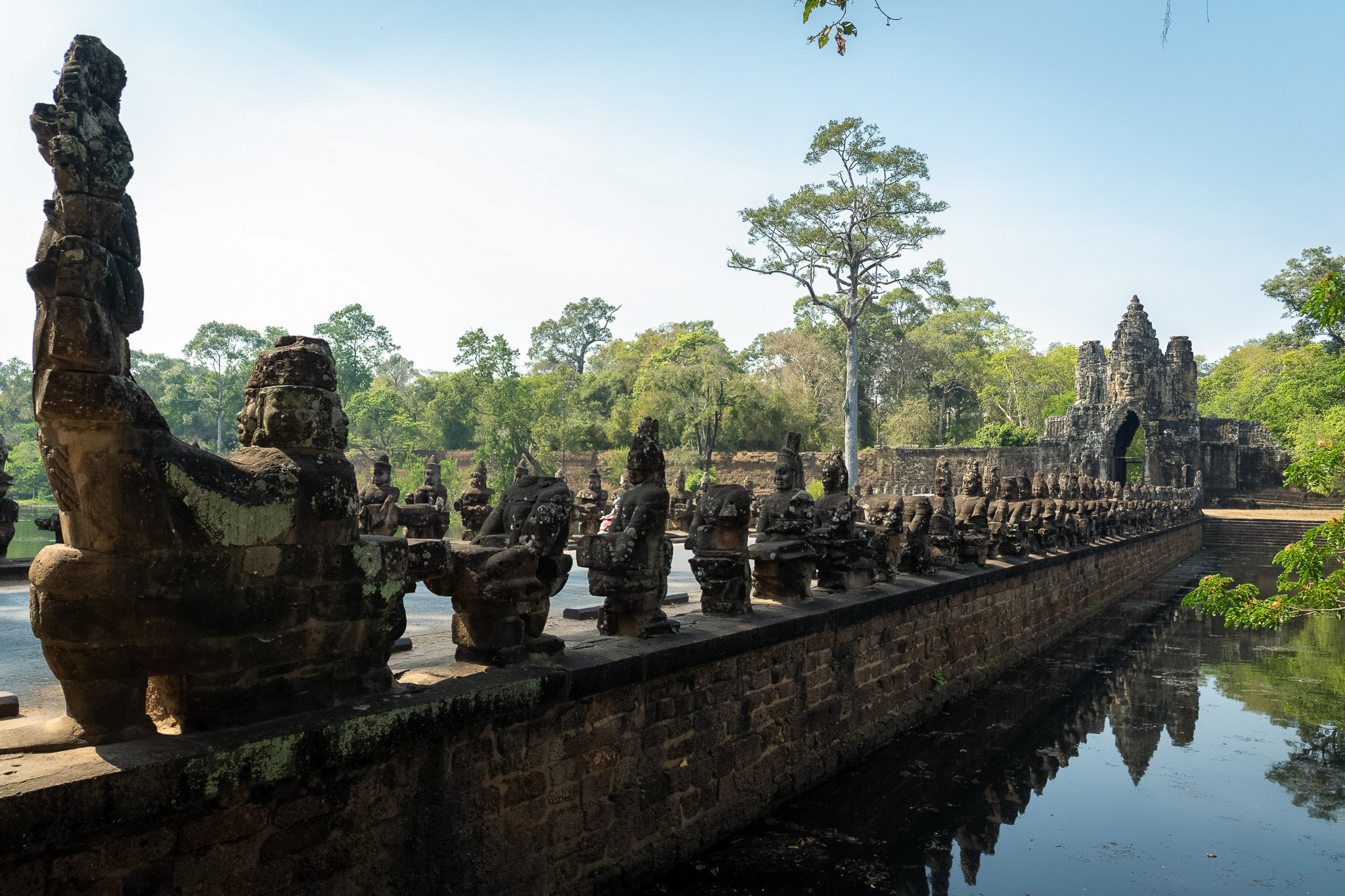
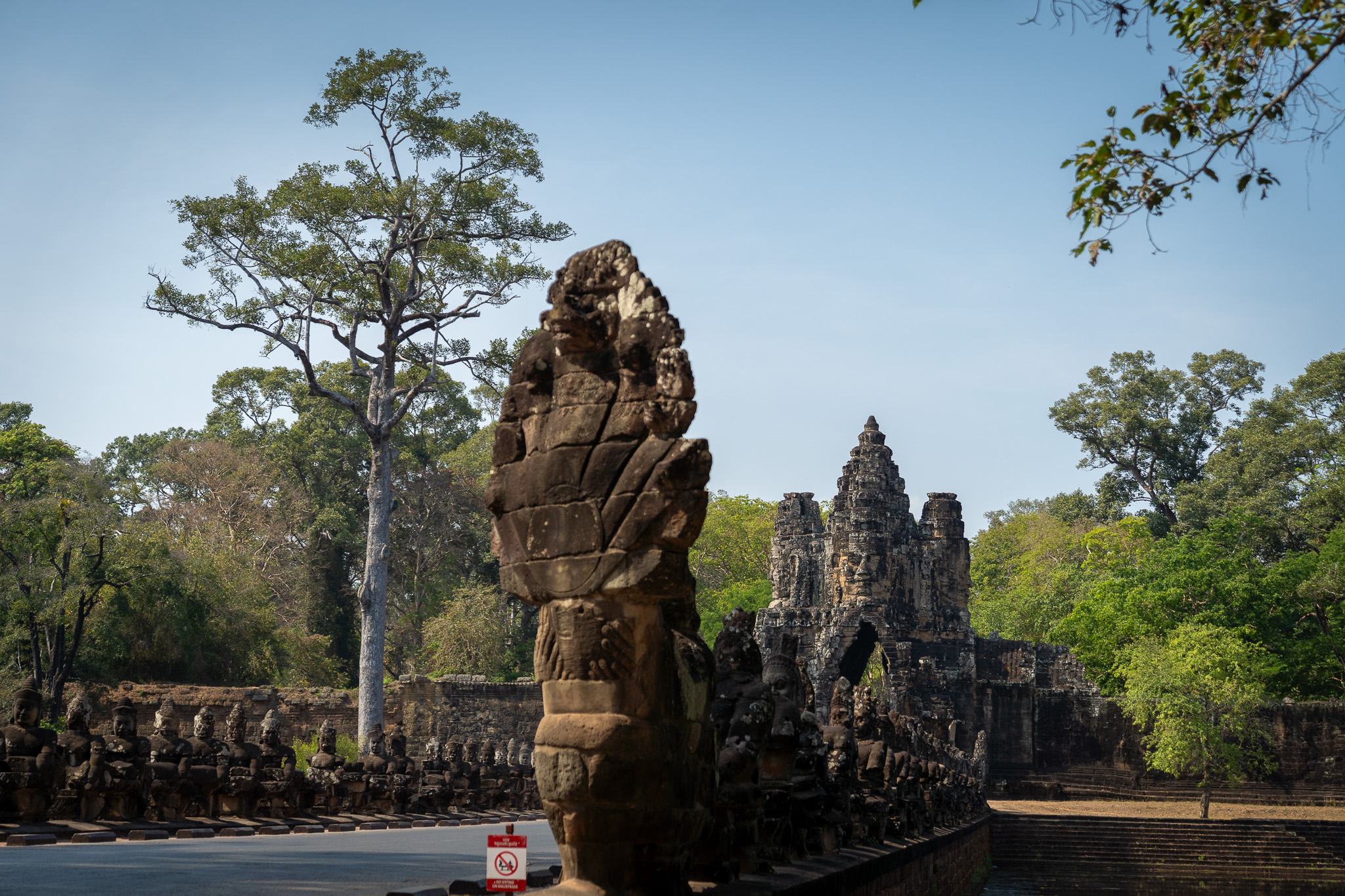
Angkor Thom South Gate causeway and moat
The Gods and Demons on the Causeway
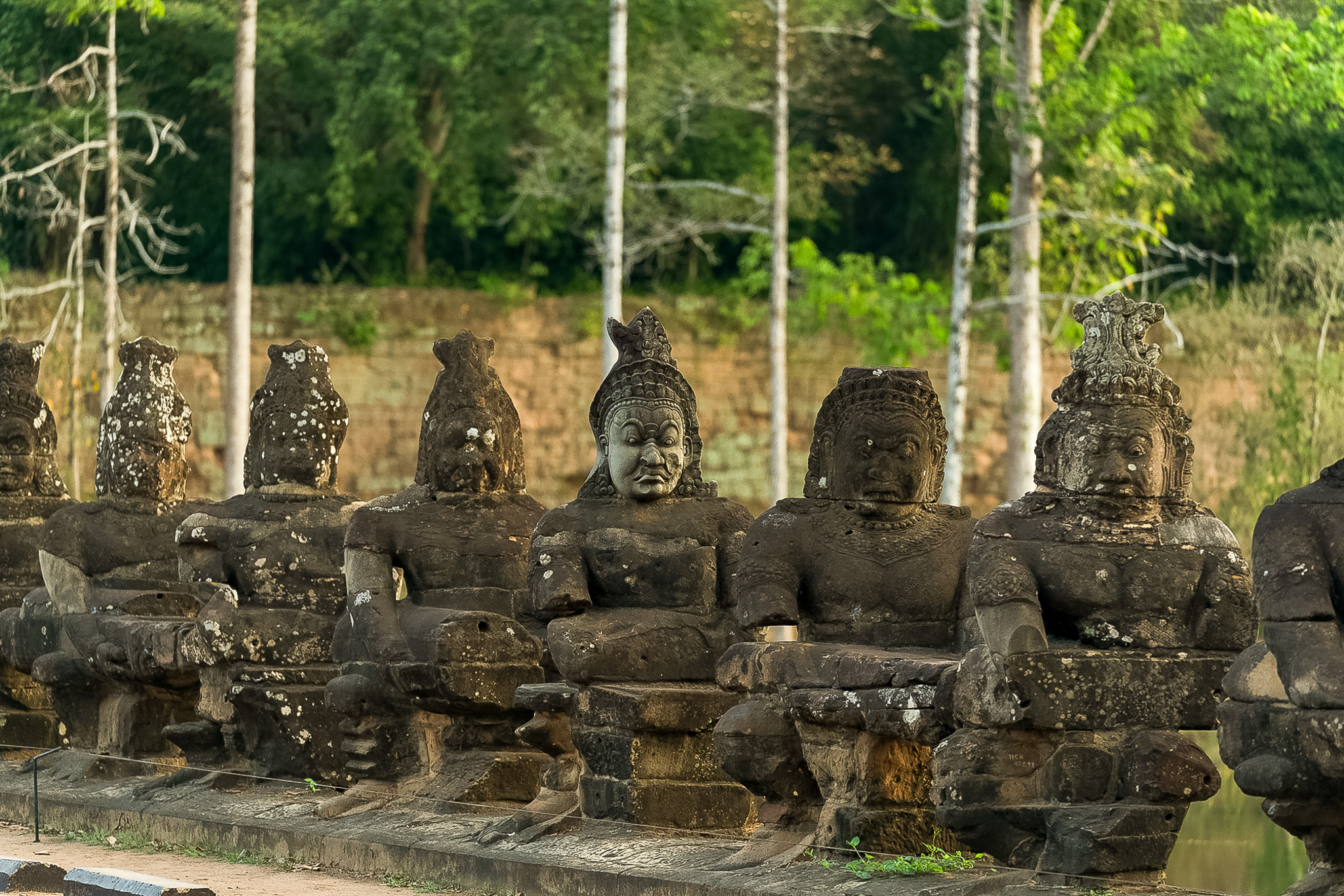
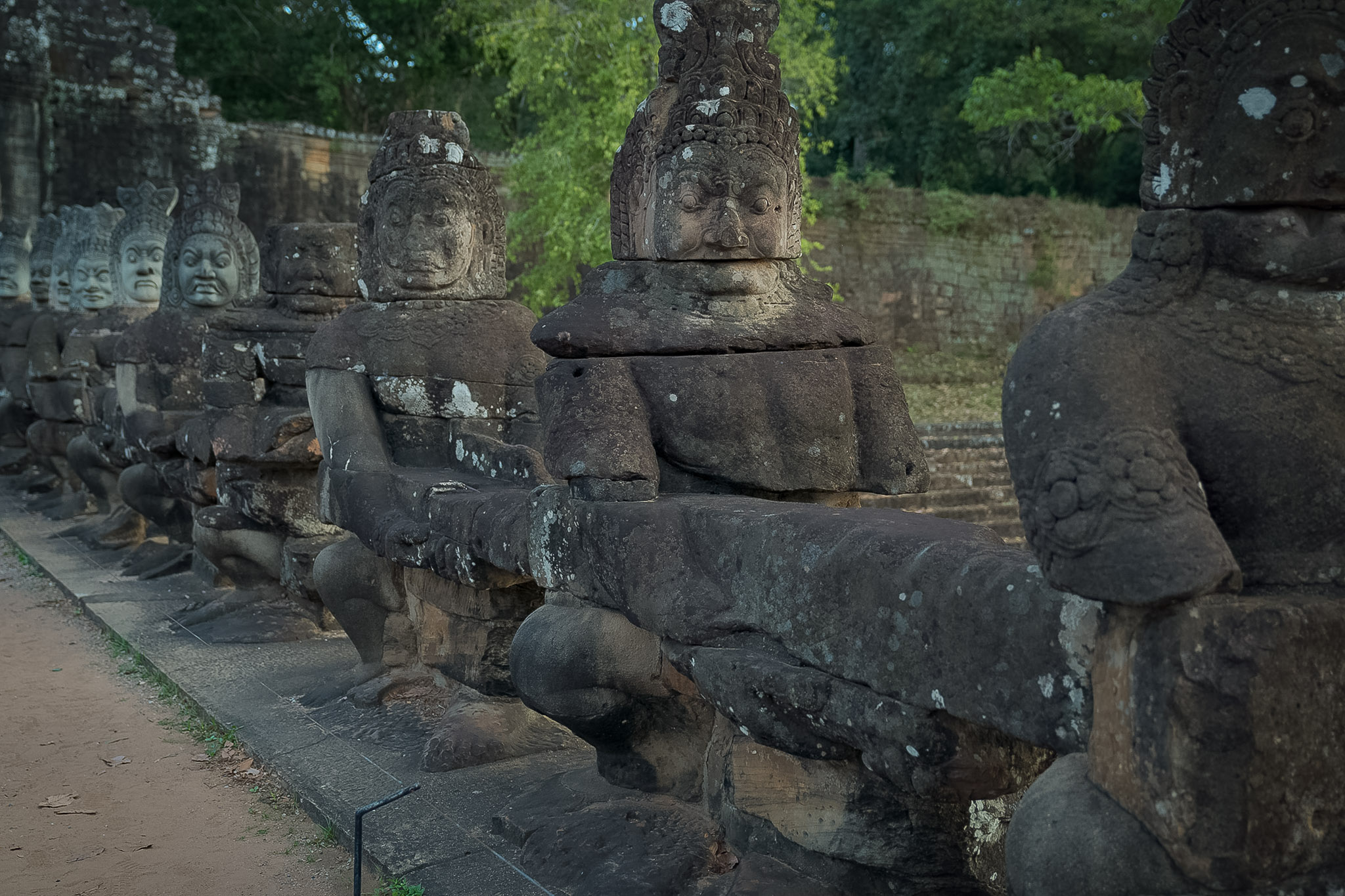
Before reaching the gate, you cross the moat on a causeway bordered by two rows of monumental figures. On one side are devas, or gods, and on the other asuras, or demons. Both groups hold the long body of a naga, or serpent.
The scene represents the Churning of the Ocean of Milk, one of the best-known stories in Hindu mythology. Gods and demons work together, pulling the serpent back and forth to churn the cosmic ocean in their search for the elixir of immortality.
You will see the same story depicted elsewhere at Angkor, most famously in the bas-reliefs at Angkor Wat. Here, however, the figures turn the story into part of the physical approach to the city.
Take a little time to walk along the causeway rather than only viewing it from your vehicle. From here you can examine the individual figures, look across the moat and get one of the best full views of the gate.
Stone devas lining the causeway at Angkor Thom South Gate
The Four Faces Above the Gate
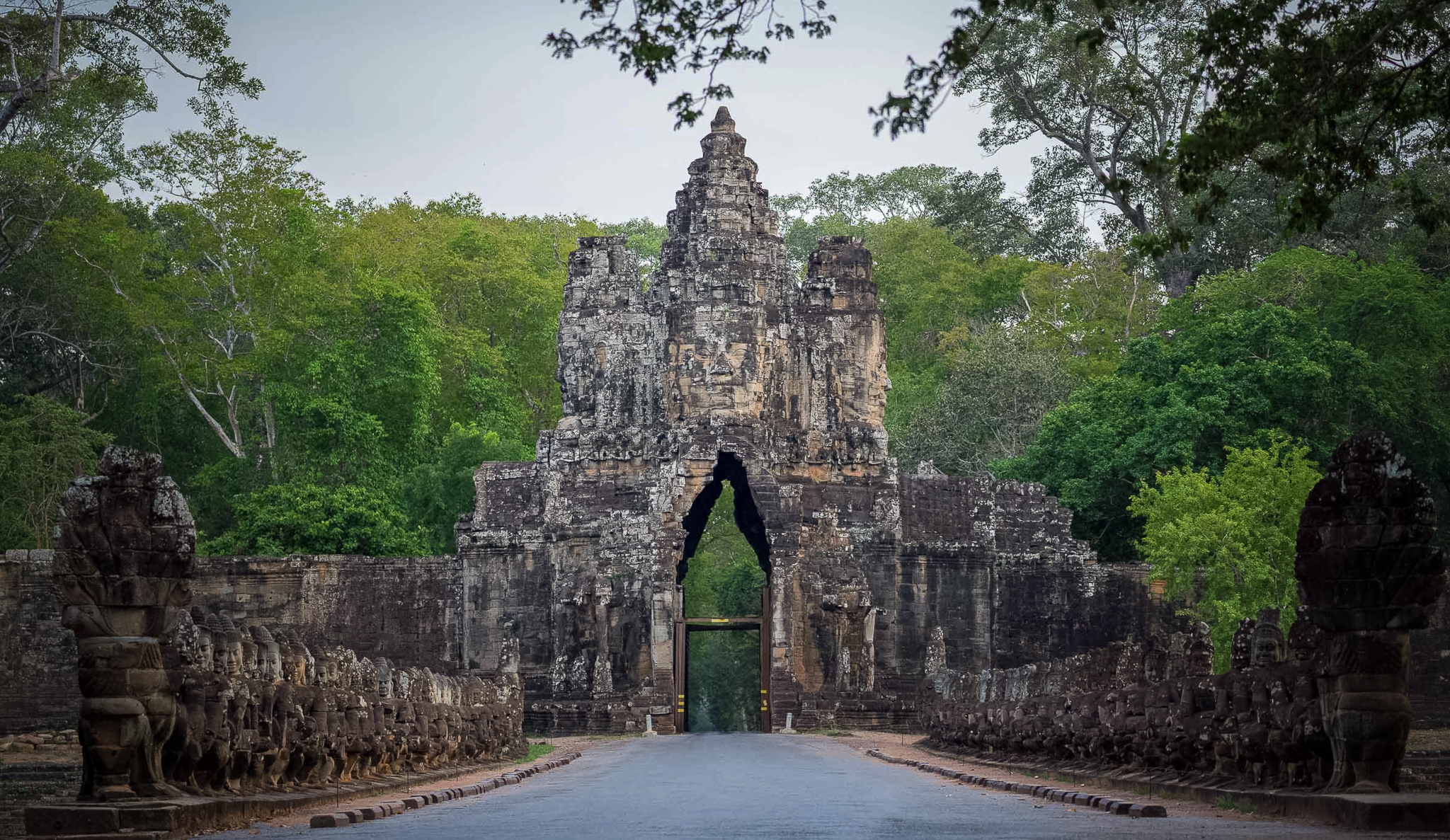
Above the entrance rises a large stone tower with four faces looking in the cardinal directions. The faces immediately recall those at Bayon, the state temple standing at the centre of Angkor Thom.
The exact interpretation of these faces has been debated. They are commonly associated with the bodhisattva Avalokiteshvara, while another interpretation connects their appearance with Jayavarman VII himself and the king’s representation of power throughout his capital.
Whatever their precise meaning, their placement creates a powerful effect: the faces look outward beyond the walls in every direction as visitors enter and leave the city.
The South Gate of Angkor Thom
Best Views and Photography at the South Gate
The classic photograph is taken from the southern approach, looking straight along the causeway towards the gateway. This includes the rows of gods and demons leading towards the face tower.
For a different view, move towards either side of the causeway and include some of the moat. Reflections can sometimes be visible when the water is calm, while the trees and vegetation around the walls help show how dramatically the stone gateway rises from the surrounding landscape.
The biggest difficulty is traffic and other visitors. The South Gate is on one of Angkor’s busiest routes, particularly during the main morning touring hours. Vehicles continually pass through the centre of the causeway and gateway.
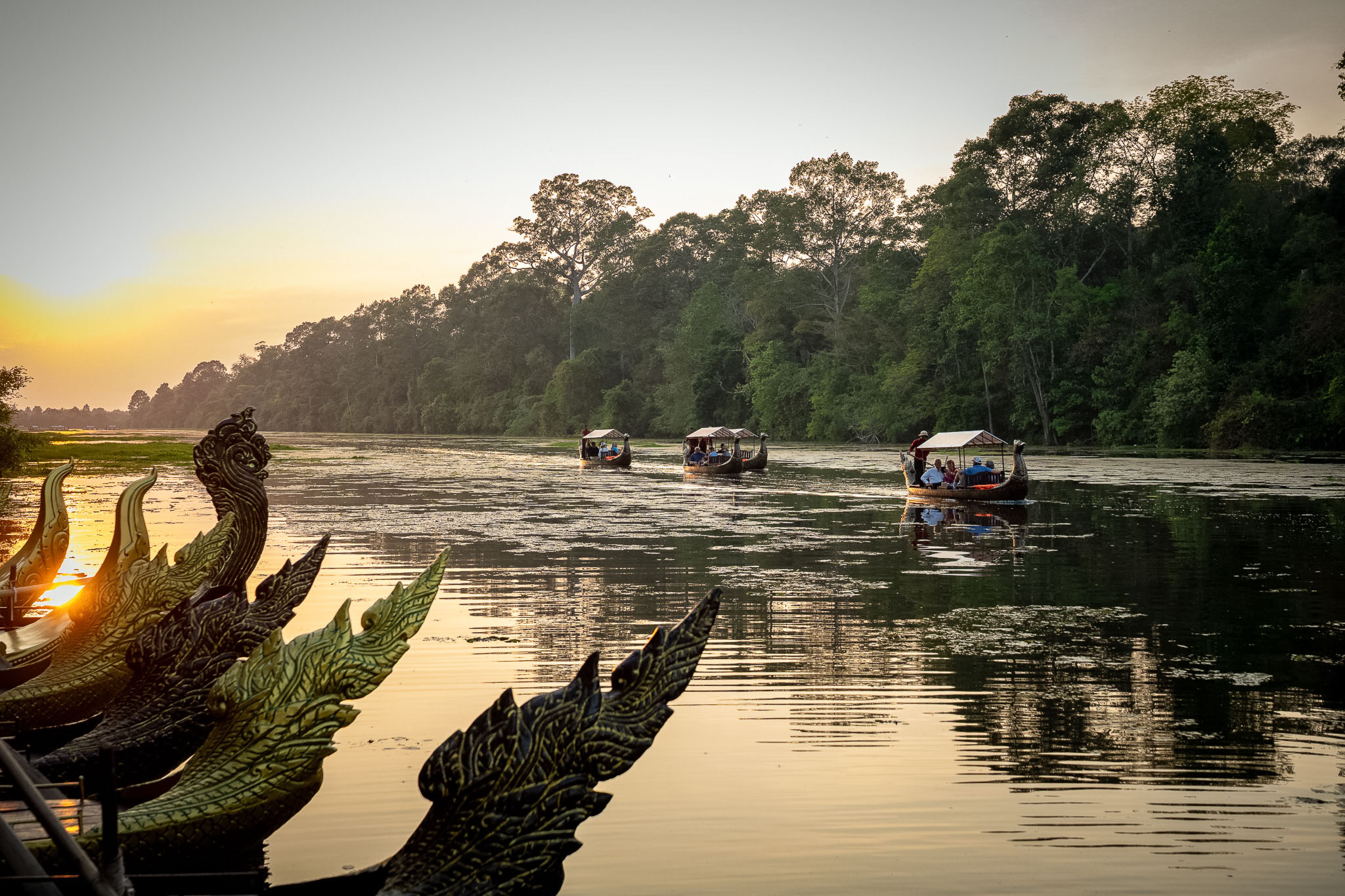
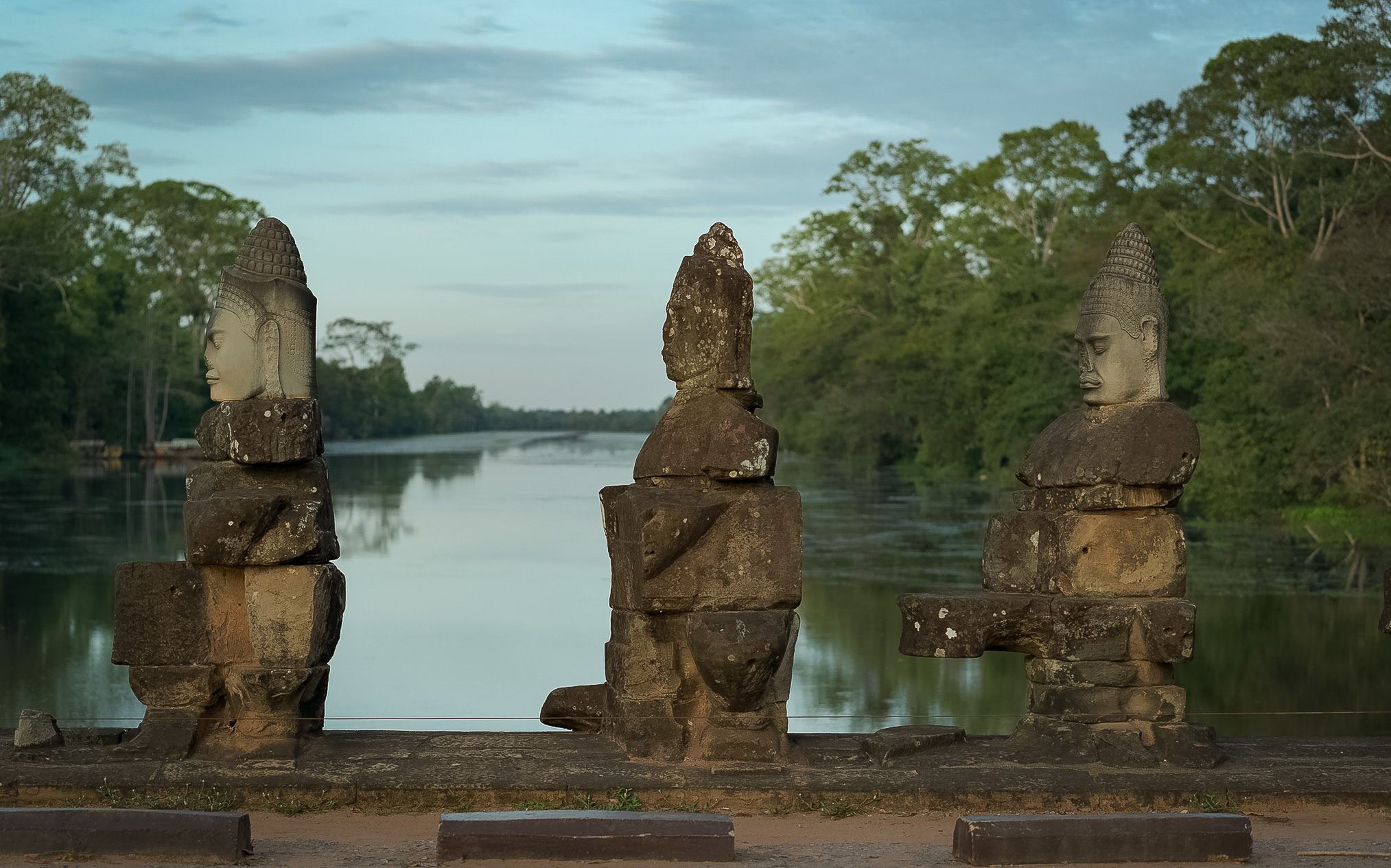
For a quieter view, walk away from the road around the parking area and towards the edge of the moat. We particularly recommend the side where the local wooden boats are moored. You can get further away from the traffic here and enjoy a more peaceful view across the water towards the gate and surrounding walls.
The boats you see here also offer short rides on the Angkor Thom moat. We’ll cover this separately in our upcoming guide to the experience.
If photography is important to you, arriving early or timing your stop between groups can make a considerable difference.
Local boats on the moat beside Angkor Thom South Gate
When Is the Best Time to Visit?
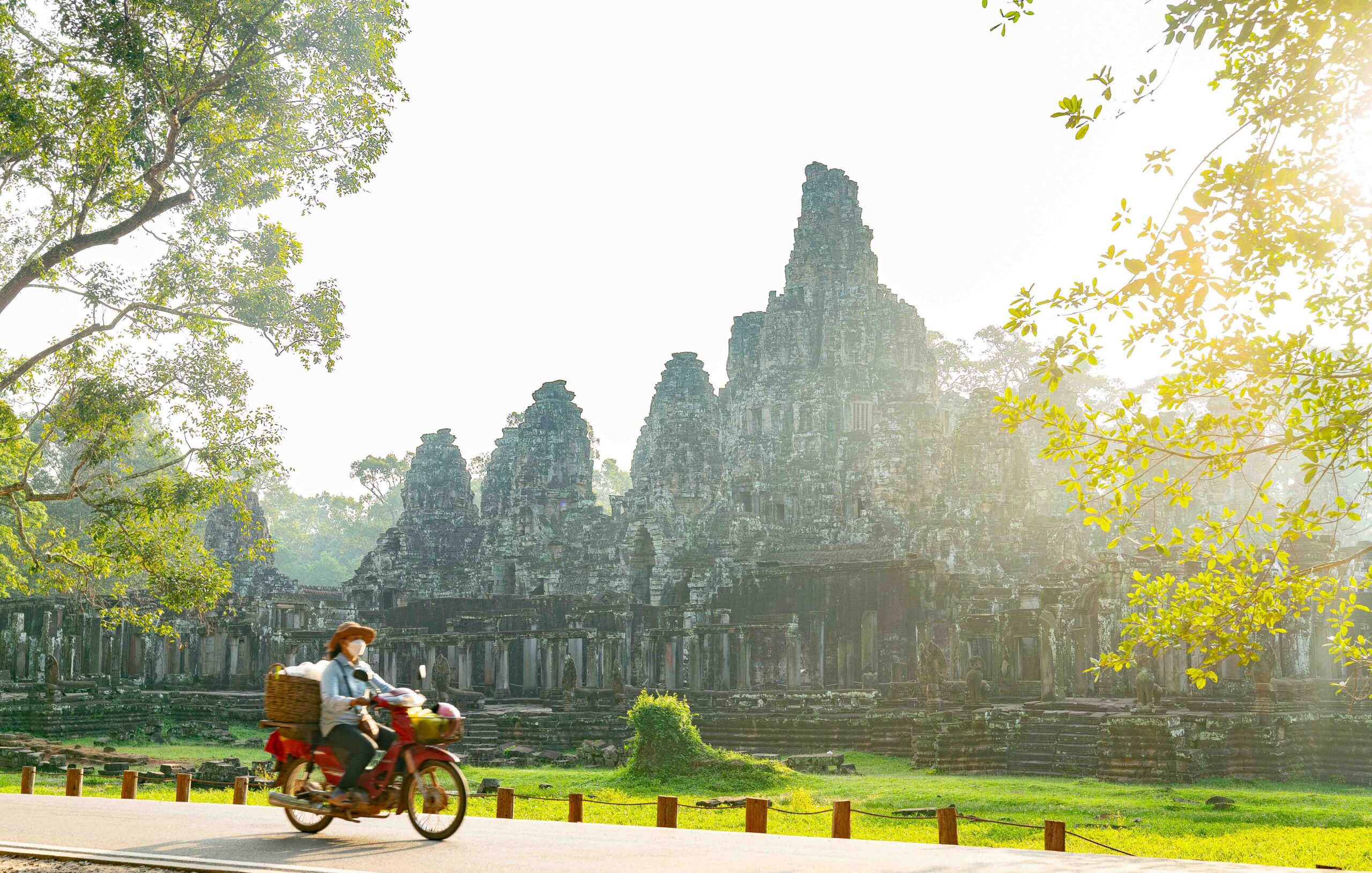
The South Gate has fewer tourists early in the morning, but don’t expect to have it completely to yourself. This is also a normal road used by local people travelling through Angkor Thom, so even before the tour groups arrive you’ll see motorcycles, cars and other traffic as people head to work, markets and nearby villages. The photograph of Bayon below is a good example: the woman on the motorcycle is carrying produce along the same road that runs through Angkor Thom and the South Gate.
For that reason, the South Gate is rarely completely peaceful or empty. Some of the empty photographs on this page were taken during the unusually quiet Covid period; others required us to wait for brief gaps in the traffic.
We wouldn’t recommend spending too much of your early morning waiting for a perfectly empty photograph. Accept that people and vehicles are part of the South Gate experience, take some time to explore the causeway and moat, and then continue to Bayon while it is still early and relatively quiet. In our view, that’s a much better use of the quieter morning hours.
For most visitors, 15–30 minutes is enough to walk part of the causeway, examine the statues, photograph the gate and enjoy the views across the moat before continuing into Angkor Thom.
Angkor Thom South Gate view of moat facing west
Can You Walk Through the South Gate?
Yes. You can walk across the causeway and through the gateway, and doing so gives you a much better sense of its scale than seeing it through a vehicle window.
Be particularly careful around the gateway itself. The opening is narrow and is shared by pedestrians, bicycles, tuk-tuks, motorcycles and vehicles.
Once through the gate, the road continues north through the forest towards Bayon, approximately 1.5 kilometres away at the centre of Angkor Thom.
What to Visit After the South Gate
For most visitors, the South Gate is the beginning of a much larger exploration of Angkor Thom.
Continue north to Bayon, famous for its towers covered with enormous stone faces. Nearby is Baphuon, followed by the former Royal Palace area, Phimeanakas, the Terrace of the Elephants and Terrace of the Leper King.
If you’re following the standard Small Circuit, you will eventually leave Angkor Thom and continue towards Ta Prohm and the other temples on the circuit.
The important thing to understand is that the South Gate is an entrance to Angkor Thom, not Angkor Thom itself. The walled city extends for several kilometres beyond the gateway and contains some of the most important monuments in the entire Angkor complex.
Local woman carrying produce past Bayon in the early morning. The roads through Angkor Thom are also used by local traffic throughout the day.
Practical Tips for Visiting the South Gate
Angkor Pass: The South Gate is inside the Angkor Archaeological Park and is covered by your Angkor Pass. You do not buy a separate ticket for the gate.
Time needed: Around 15–30 minutes is sufficient for most visitors.
Traffic: The gate remains an active road entrance, so watch carefully for vehicles when photographing or walking through it.
Walking: The causeway is straightforward to explore on foot, although surfaces are old and can be uneven in places.
Sun protection: Much of the causeway is exposed, so it can become hot during the middle of the day.
Guide: You don’t need a guide simply to visit the gate, but understanding the Churning of the Ocean of Milk and the symbolism of the entrance makes the stop considerably more interesting.
Is the Angkor Thom South Gate Worth Stopping At?
Yes. Although almost everyone entering Angkor Thom from Angkor Wat passes through the South Gate, driving straight through misses much of what makes it interesting.
Get out of your vehicle, walk along the causeway and look closely at the gods and demons holding the naga. Then step back and look at the four enormous faces above the entrance before continuing towards Bayon.
It doesn’t require a long detour, and it provides one of the clearest introductions to the scale, symbolism and ambition of Angkor Thom before you enter the ancient city.
Continue exploring Angkor
Angkor is much more than just Angkor Wat. Our Angkor temple guides are based on repeated visits and firsthand experience, with practical advice on when to go, what to look for and which temples are worth including in your itinerary. Explore more of our guides below, or visit our complete Angkor Wat guide to start planning your time at Angkor.
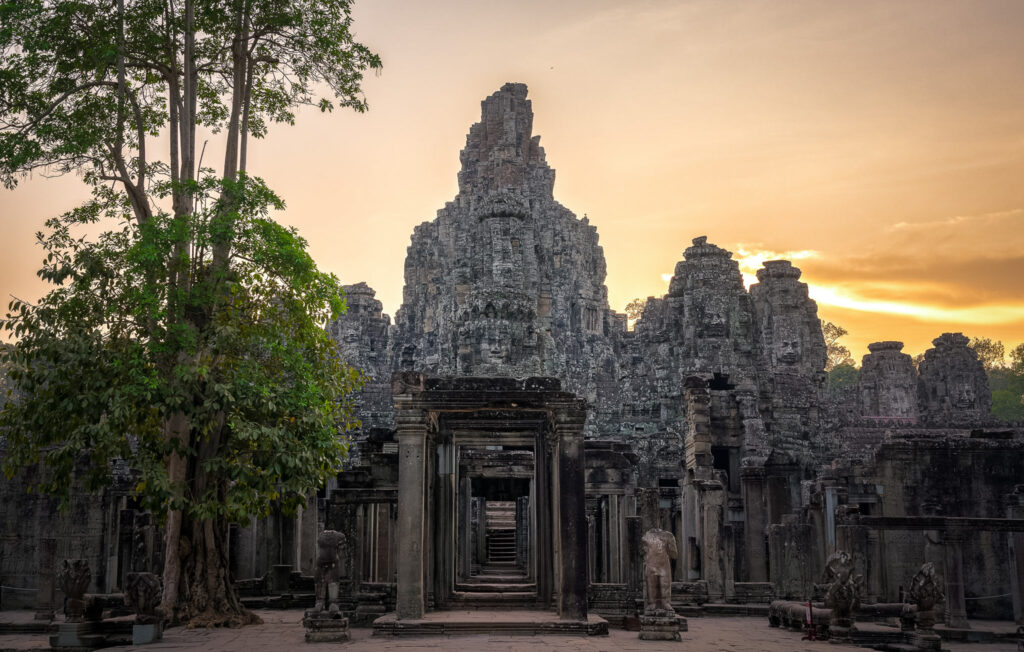
Bayon is one of Angkor’s most remarkable temples, famous for its enormous stone faces and maze of carved galleries. We recommend visiting early, when the temple is quieter and the soft morning light brings the faces to life.
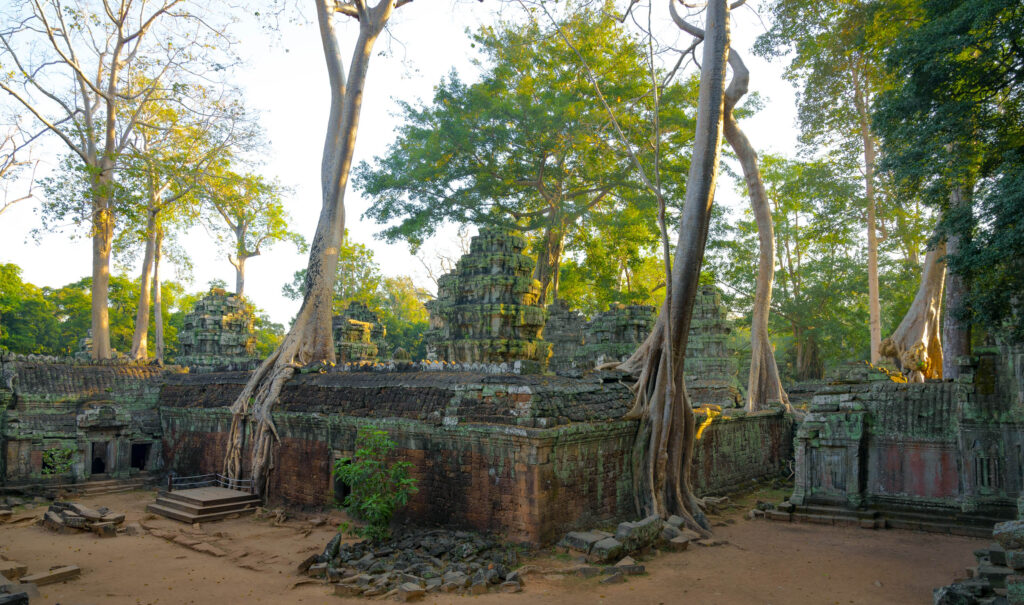
Ta Prohm is famous for its enormous trees growing through the ruins, but there is much more to explore beyond the best-known viewpoints. We recommend visiting early, when its corridors and courtyards are quieter and the temple is at its most atmospheric.
Visit Angkor Thom South Gate, the monumental entrance to the ancient city. Learn what to look for, when to visit, how to avoid the busiest times, and where to find the best views and photographs.
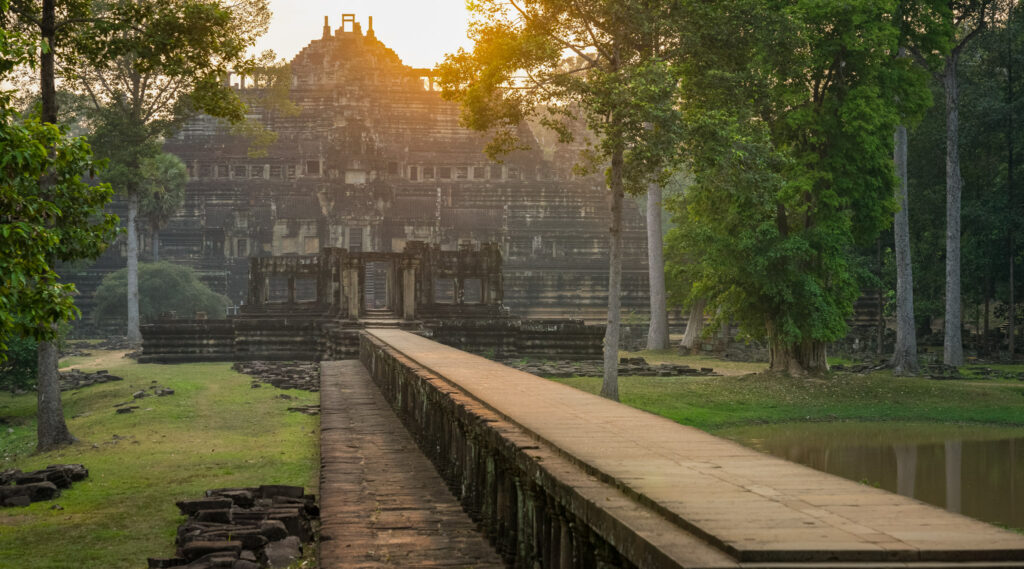
Baphuon is one of Angkor Thom’s most impressive temple mountains, with a long raised causeway, steep upper terraces and an enormous reclining Buddha. We recommend allowing time to climb and explore its remarkable architecture and restoration story.
We recommend Banteay Kdei for its atmospheric corridors, detailed carvings and quieter feel compared with nearby Ta Prohm. Visit early and you can often explore some of its most beautiful sections with very few other people around.
One of our favourite smaller temples at Angkor, Ta Nei is peaceful, atmospheric and still receives relatively few visitors. We recommend it for travellers who want to step beyond the standard temple circuit.