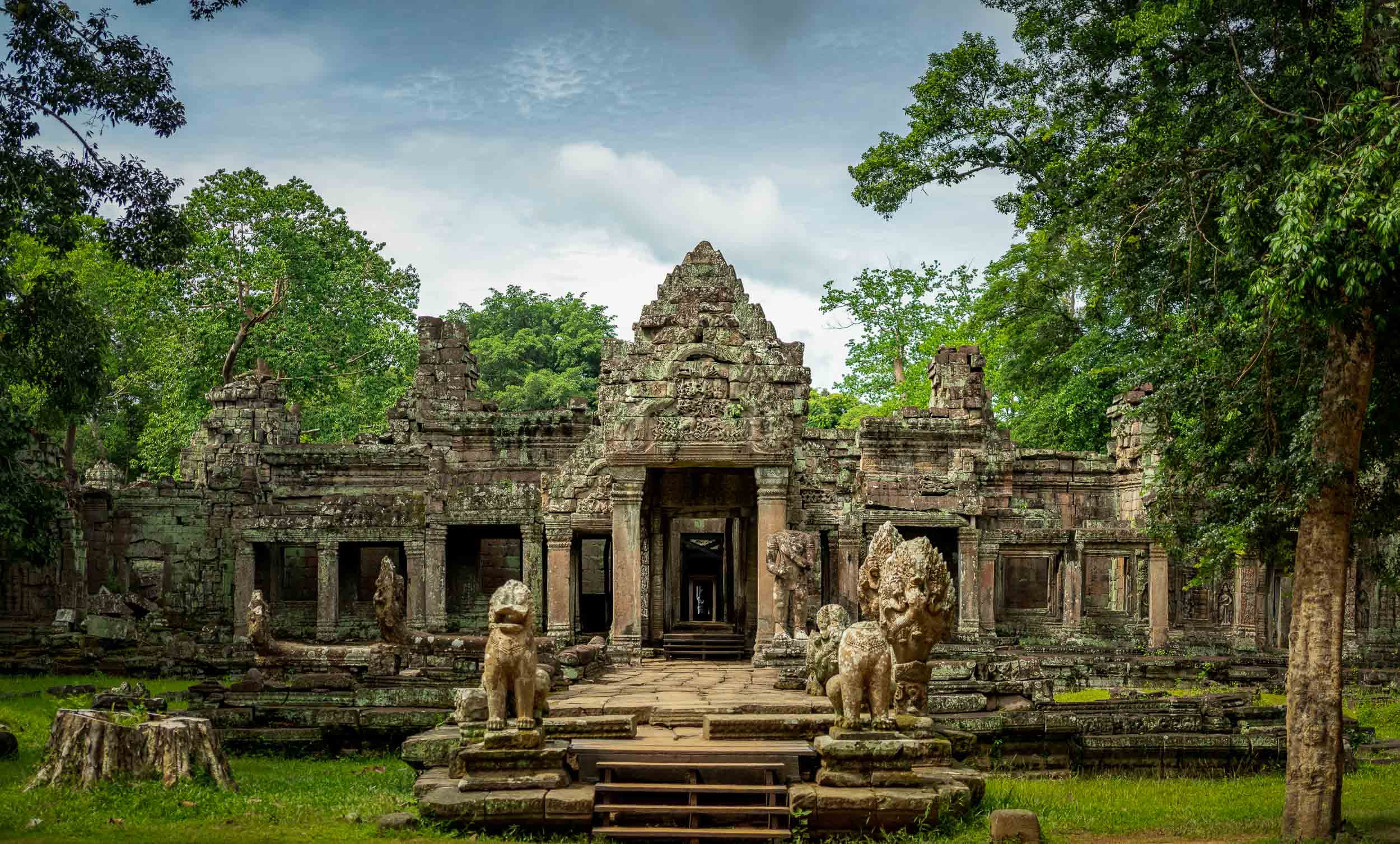
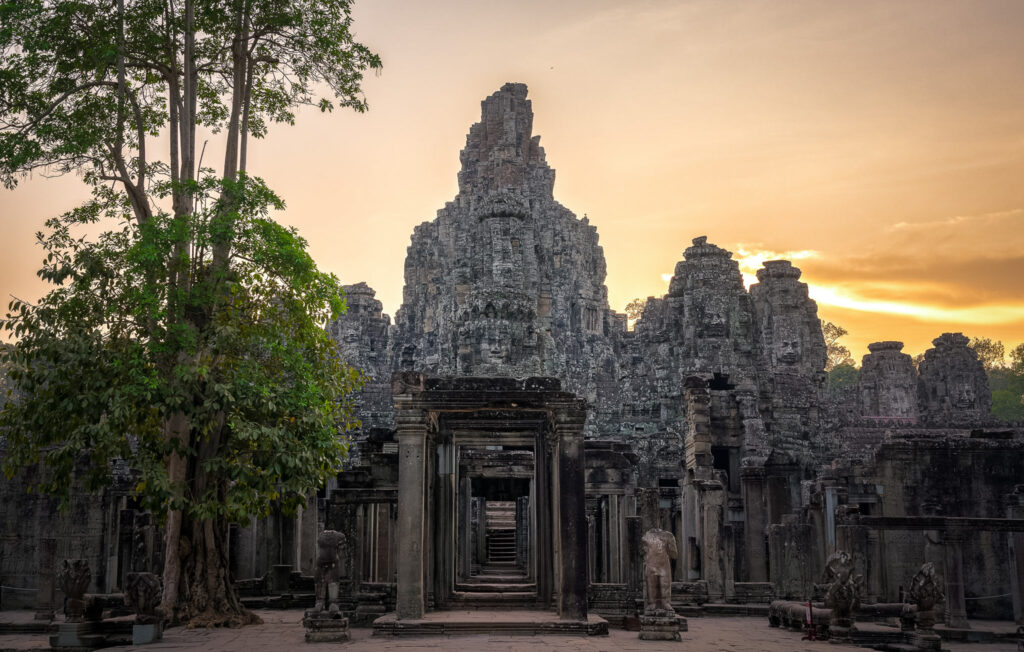
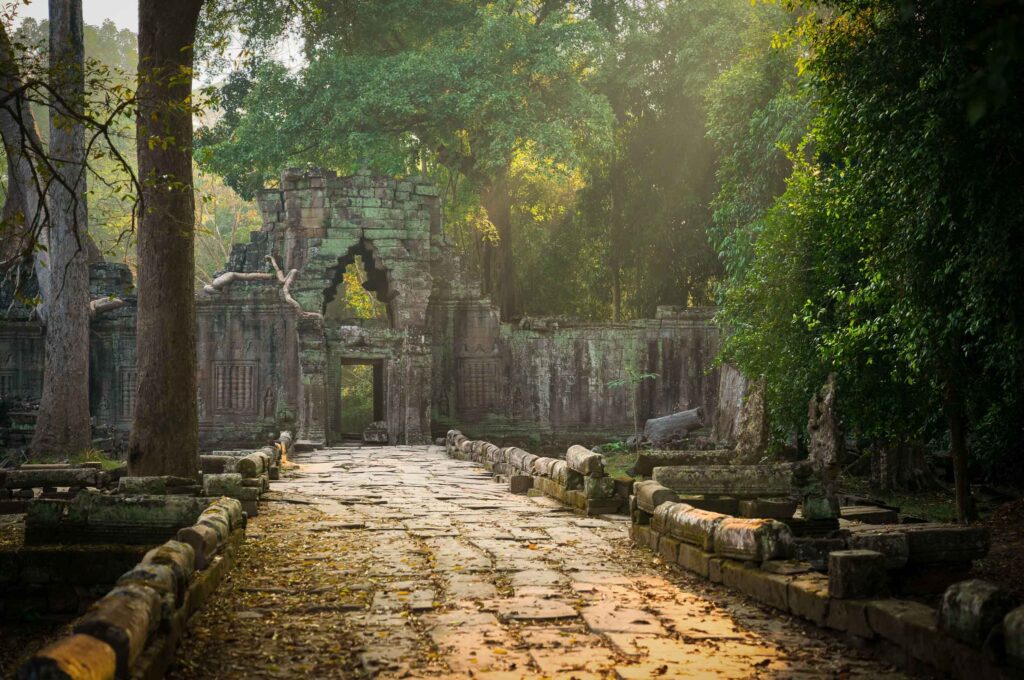
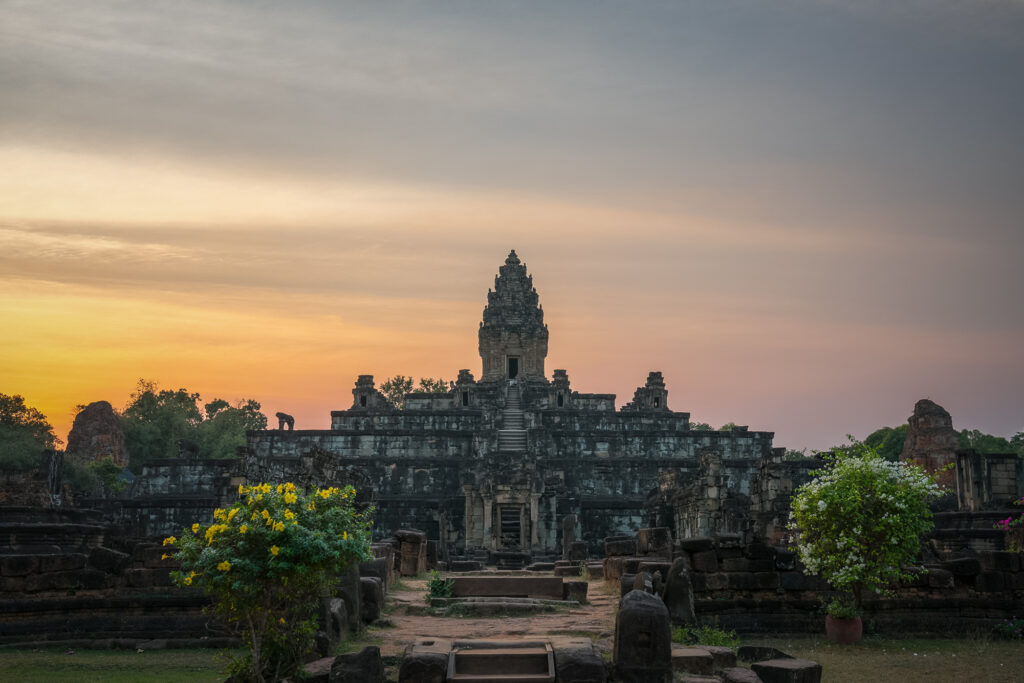
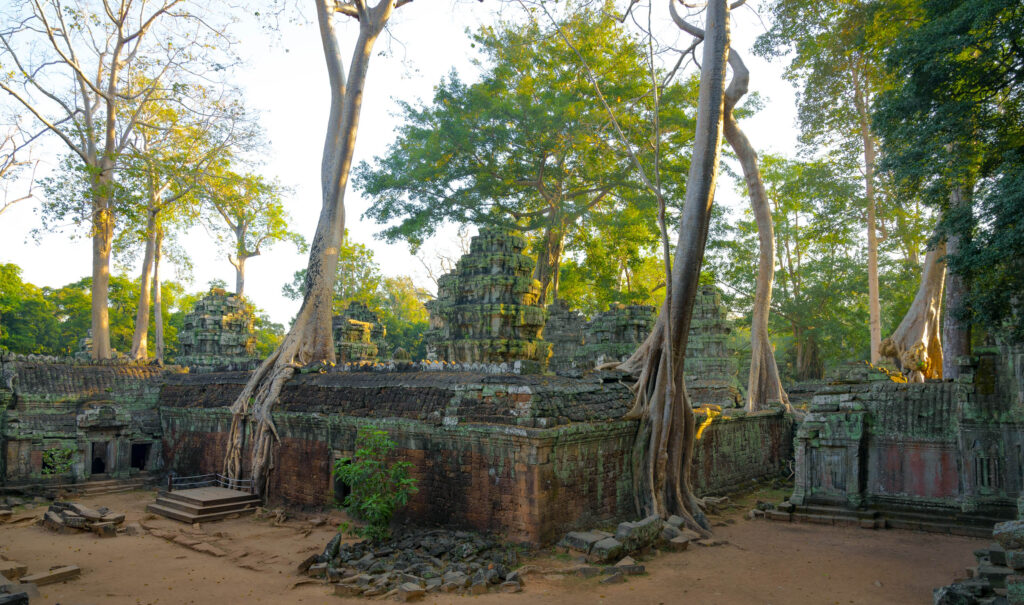
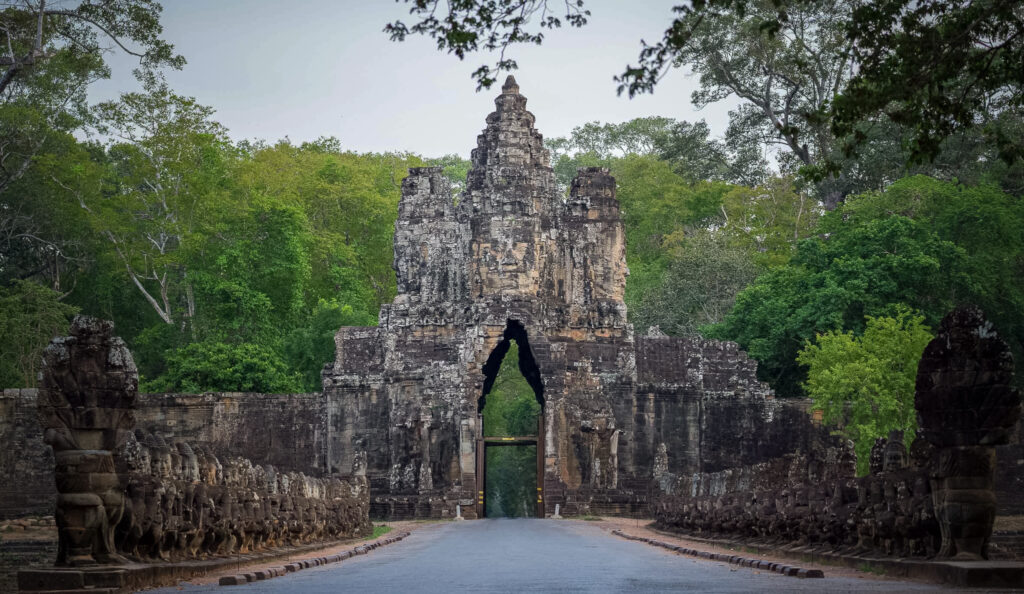
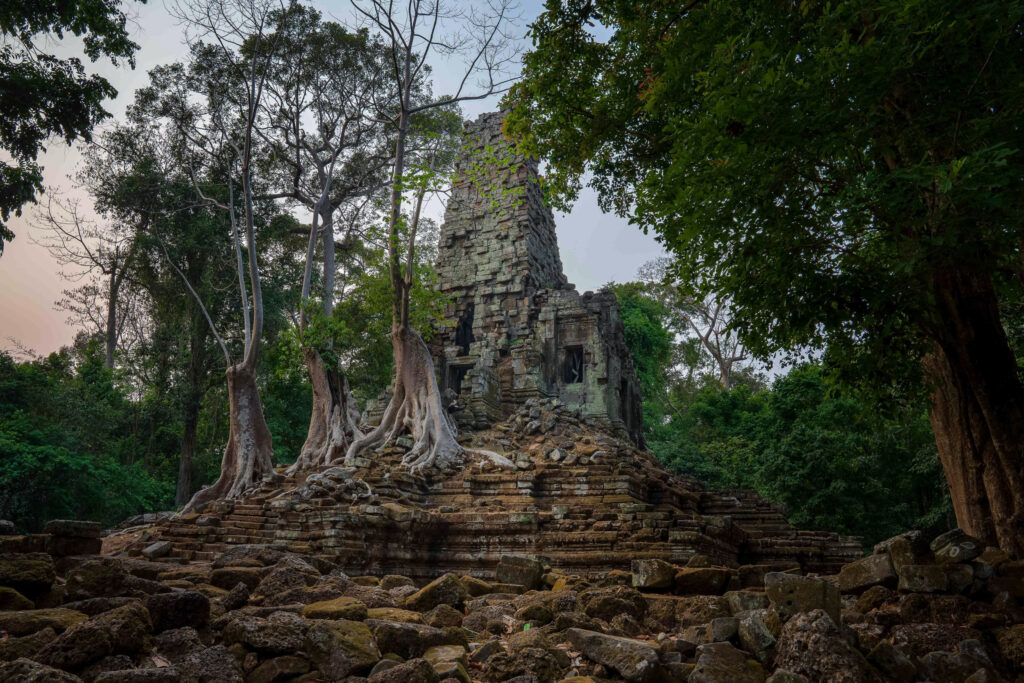
Preah Khan is one of our favourite temples in Angkor, and one that we think deserves more attention. In many ways, it’s similar to Ta Prohm, with atmospheric corridors, partially collapsed structures and enormous trees growing among the ancient stonework. Some of the trees here are every bit as impressive as those at Ta Prohm.
One of the best things about Preah Khan is that it’s much quieter than Angkor’s most famous temples. Located a little further out on the Grand Circuit, it doesn’t attract the same crowds, particularly early in the morning. Arrive shortly after opening and there’s a good chance you’ll have large sections of the temple entirely to yourself.
It’s also a surprisingly large complex, with long passageways, hidden courtyards and plenty of interesting corners to explore. If you enjoy the atmosphere of Ta Prohm, we highly recommend including Preah Khan in your itinerary.
Table of Contents
History of Preah Khan Temple
Preah Khan was built in the late 12th century by King Jayavarman VII, one of the most important rulers of the Khmer Empire. The temple was dedicated to his father and is believed to stand on the site of a significant Khmer victory over the Cham.
The name Preah Khan translates to “Sacred Sword”, and the temple was much more than a place of worship. It formed part of a large religious and educational complex, with inscriptions recording thousands of people associated with its operation, including teachers, dancers and attendants.
Originally dedicated to Buddhist worship, Preah Khan also contains Hindu shrines, reflecting the different religious traditions that influenced Angkor over the centuries.
Like Ta Prohm, Preah Khan was left with many of its trees and partially collapsed structures in place during conservation work. This has helped preserve the atmosphere that makes the temple so interesting to explore today.
What to see at Preah Khan
Preah Khan is a large temple, and there’s considerably more to explore than you might expect from the entrance. Its layout consists of a series of galleries, courtyards, shrines and passageways, with something interesting around almost every corner.
The long corridors and galleries
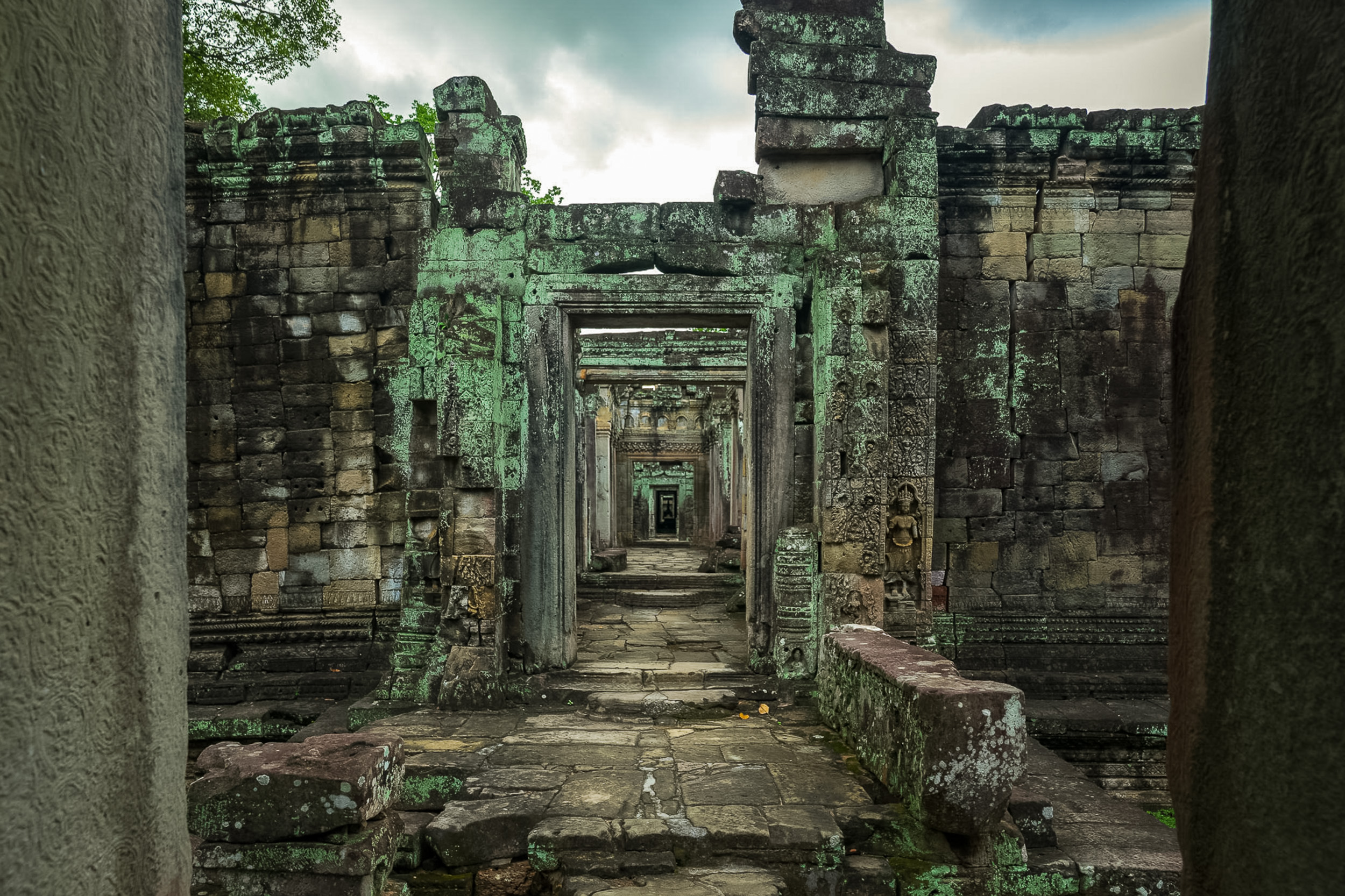
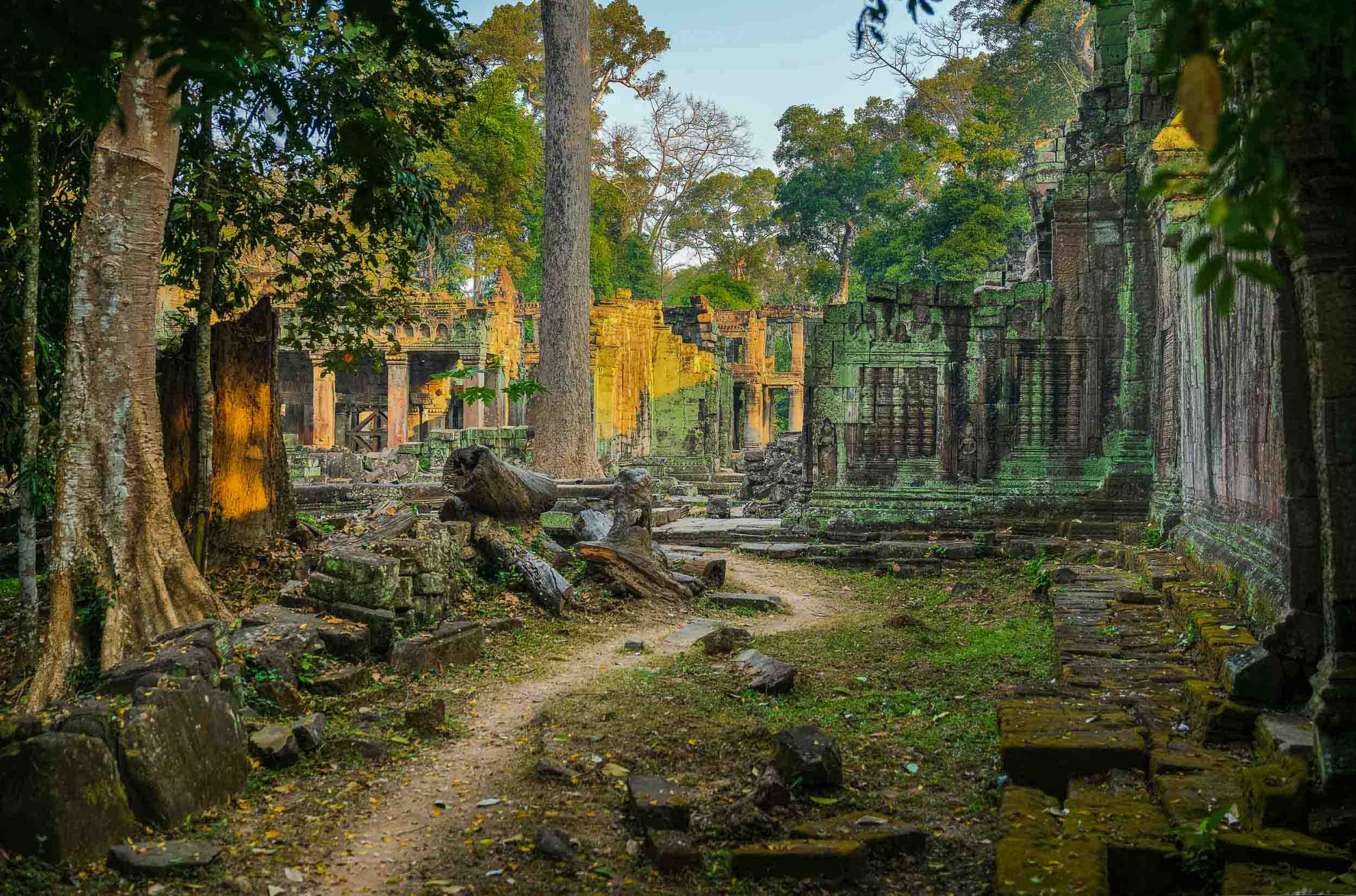
One of Preah Khan’s most distinctive features is its long, interconnected stone corridors. Some remain remarkably intact, while others have partially collapsed, leaving piles of sandstone blocks and openings where sunlight filters through.
Walking through these passageways is one of the highlights of visiting Preah Khan. The temple feels less open than Angkor Wat, and its complicated layout makes exploring particularly enjoyable.
The enormous trees and roots
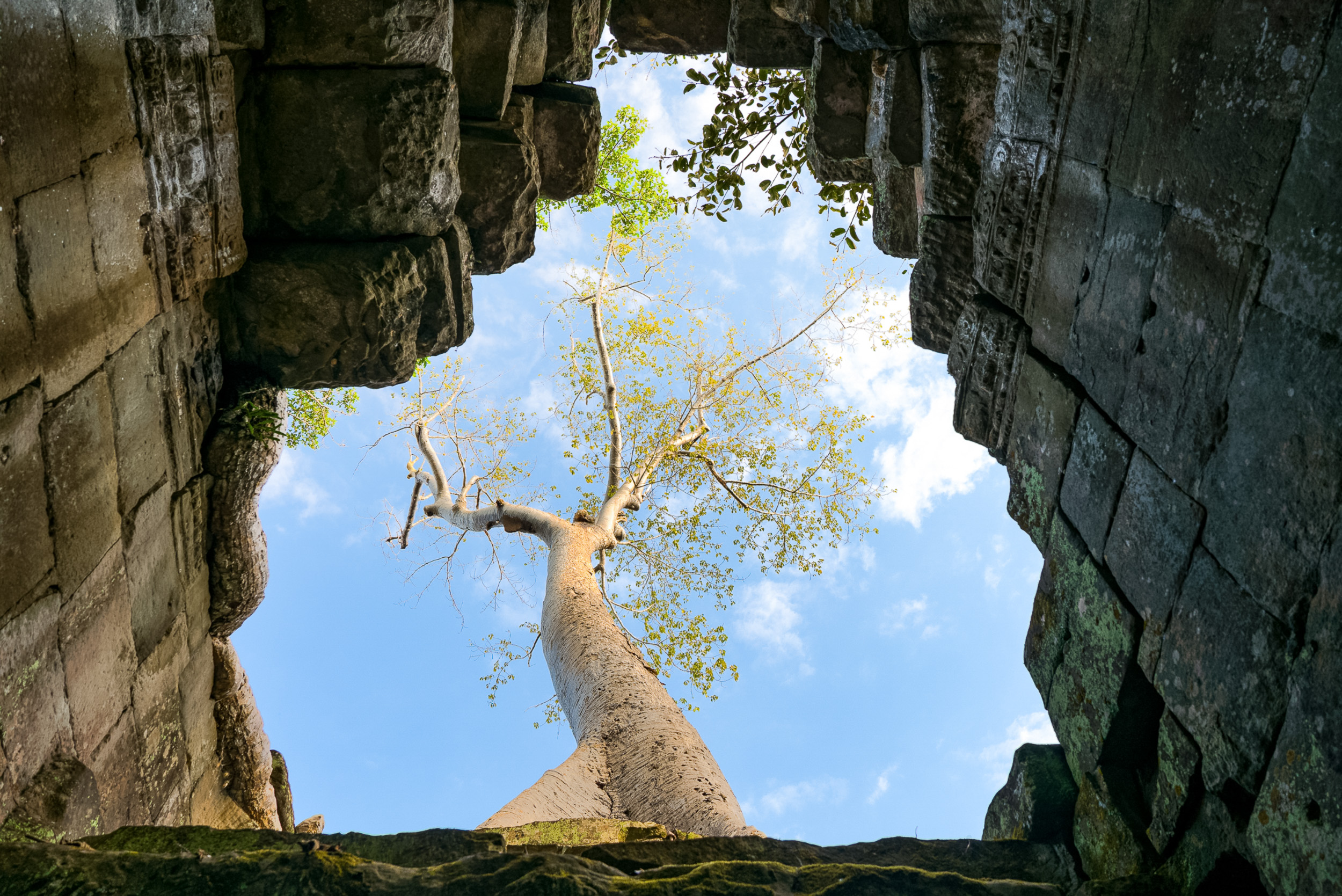
Some of the trees at Preah Khan are just as impressive as those at Ta Prohm. Their enormous roots wrap around doorways, walls and collapsed stonework, creating some of the most memorable scenes in the temple.
Because Preah Khan generally receives fewer visitors, it’s often easier to spend time appreciating these areas without large groups gathering around you.
If you enjoy photographing the relationship between nature and ancient architecture, Preah Khan is one of the best temples in Angkor to visit.
The two-storey building
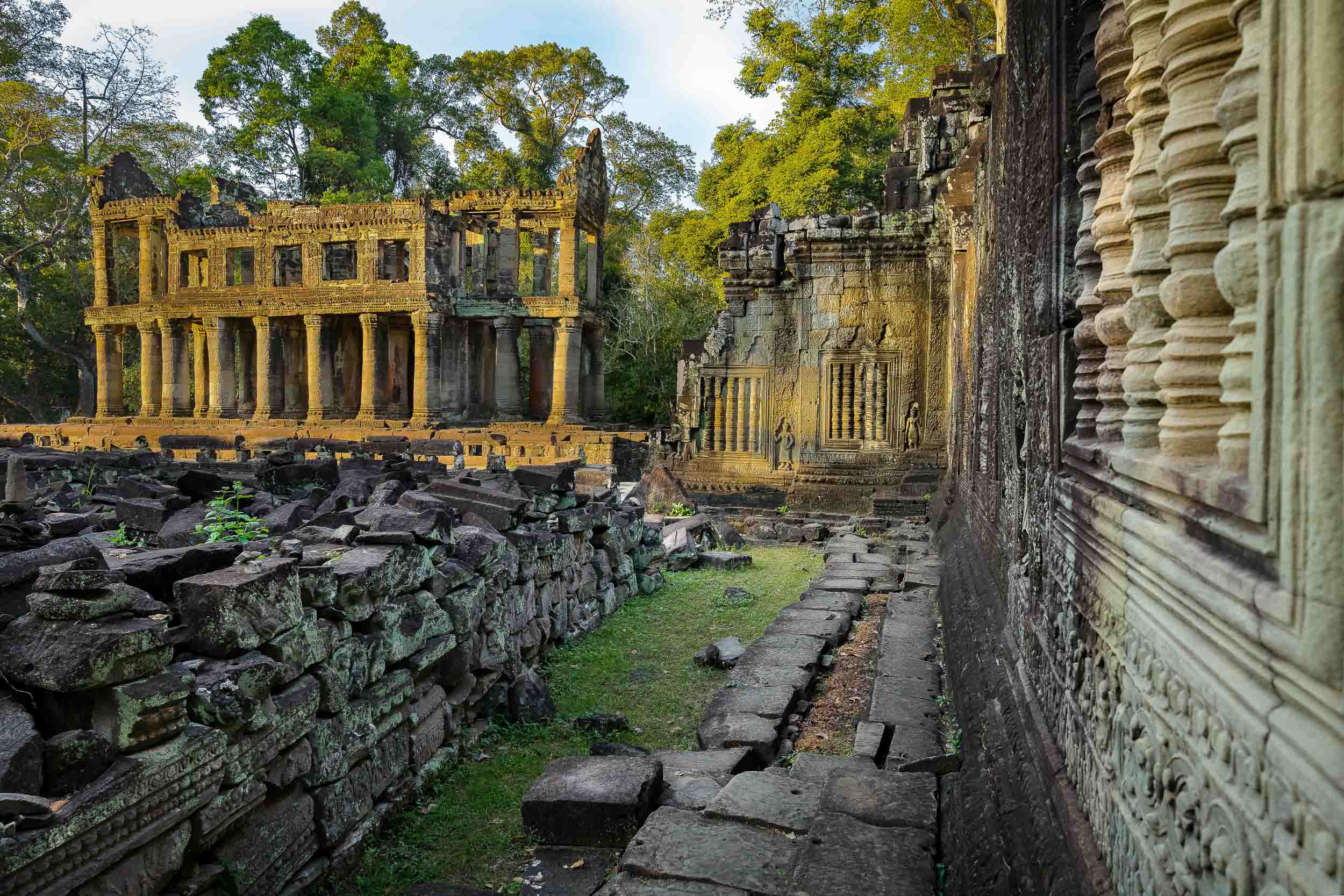
One of Preah Khan’s more unusual structures is a two-storey stone building supported by round columns, sometimes referred to as the House of Fire or the Building of the Sacred Sword.
Its architecture is quite different from the surrounding galleries, and its original purpose remains uncertain. It’s one of the most recognisable structures within the complex and worth seeking out as you explore.
The carvings and hidden courtyards
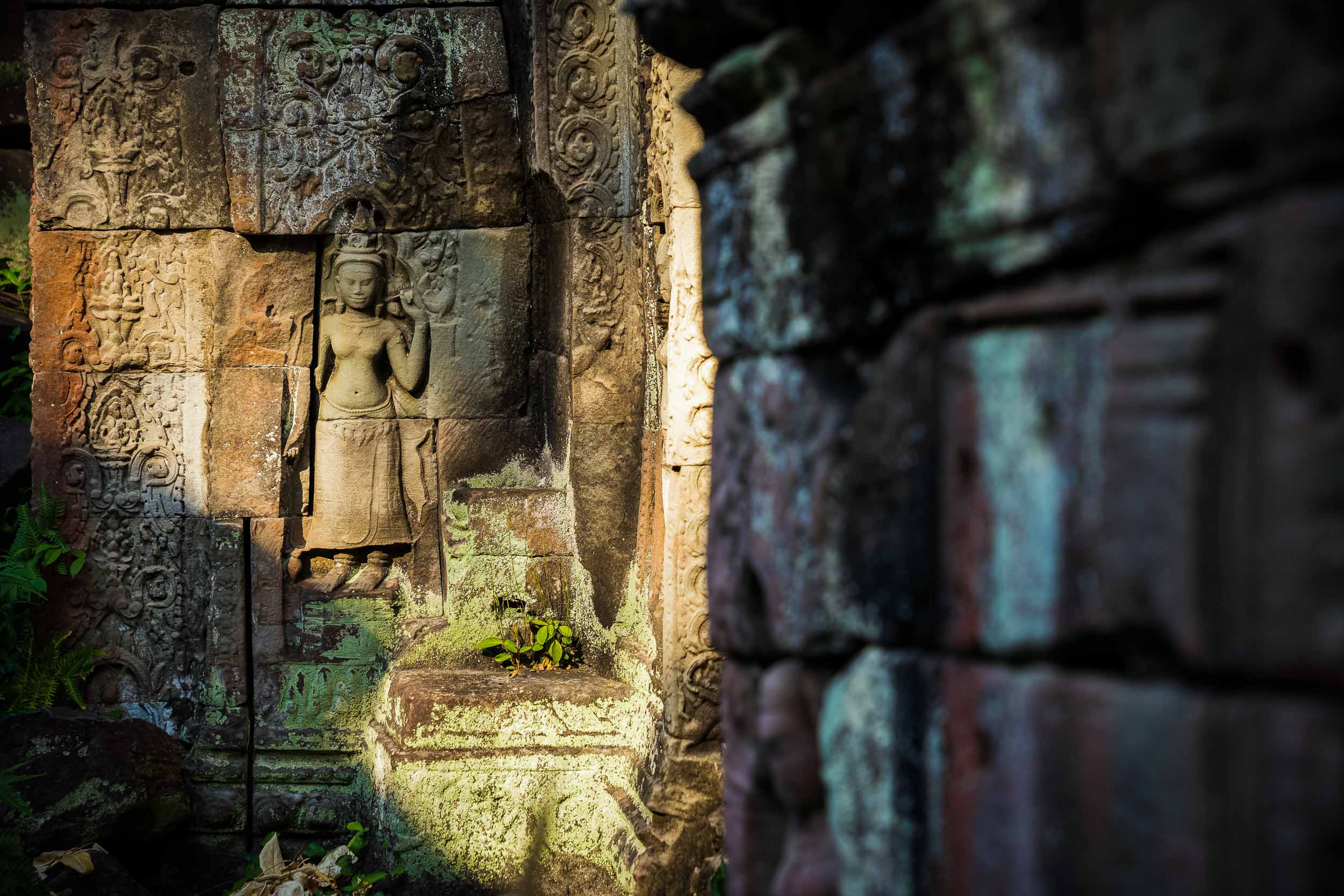
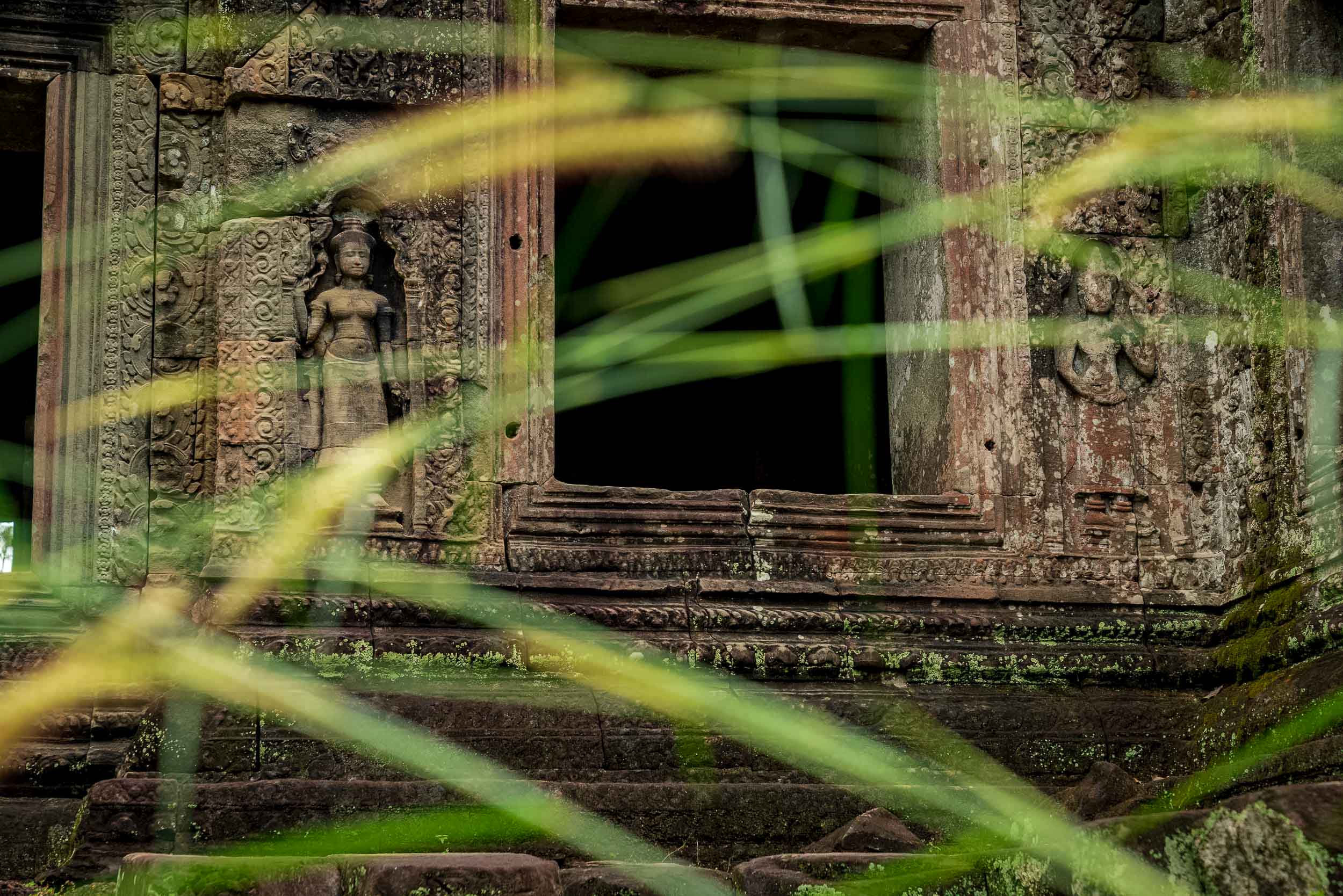
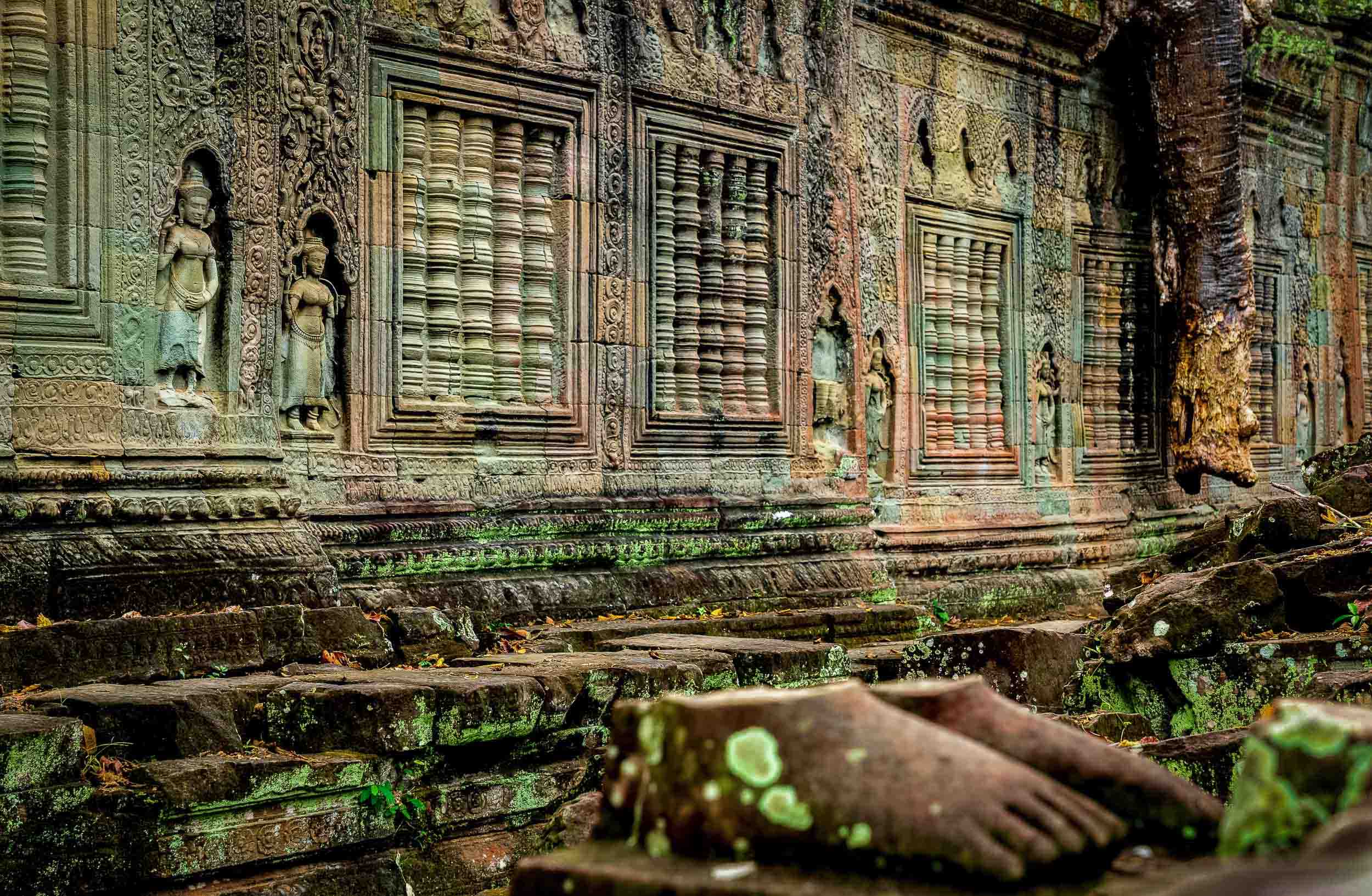
Throughout Preah Khan, you’ll find decorative lintels, carved figures, devatas and religious imagery. Some carvings are remarkably well preserved, while others have suffered centuries of weathering and damage.
There are also numerous smaller courtyards and chambers away from the main route. Take your time exploring, as it’s easy to walk past interesting details when concentrating on getting through the temple.
How long do you need at Preah Khan?
We recommend allowing at least 60–90 minutes to explore Preah Khan, although you could easily spend longer if you enjoy photography or exploring the smaller passages and courtyards.
Preah Khan is considerably larger than some visitors realise, and rushing through it in half an hour means missing much of what makes it special.
If you’re visiting with a guide, allow enough time to stop and learn about the temple’s history and architectural details.
Best time to visit Preah Khan
Early morning is our favourite time to visit Preah Khan. Because it’s located further from Angkor Wat and the busiest temples, relatively few visitors make it here first thing in the morning.
Most tourists begin their day at Angkor Wat, particularly for sunrise, before continuing to Bayon or Ta Prohm. Visiting Preah Khan early gives you a good opportunity to explore its corridors and courtyards with very few people around.
The temple is also partially shaded by large trees, making it a reasonable option later in the morning or afternoon.
Visiting during the green season
Preah Khan is particularly atmospheric during Cambodia’s green season, roughly May to October. The surrounding vegetation becomes lush, moss develops on the stonework, and the enormous trees look especially impressive.
The combination of greenery, ancient stone and quieter visitor numbers makes this one of our favourite times to explore the temple.
Rain can make some of the stone surfaces slippery, so take care when walking through the more uneven sections.
Including Preah Khan in your Angkor itinerary
If you have two or three days to explore Angkor, we’d strongly recommend including Preah Khan in your plans.
A typical Grand Circuit itinerary might include:
Preah Khan
Neak Pean
Ta Som
East Mebon
Pre Rup
This is a logical route that allows you to explore several very different temples without too much backtracking.
Our recommendation is to visit Preah Khan early, particularly if you’ve already experienced sunrise at Angkor Wat on another day. You’ll have a better chance of enjoying its quieter atmosphere before other visitors arrive.
If you only have one day in Angkor, the main highlights of Angkor Wat, Bayon and Ta Prohm will usually take priority. However, Preah Khan is an excellent addition if you have extra time.
Preah Khan Temple visitor information
Information
Details
Location
North of Angkor Thom, Angkor Archaeological Park
Built
Late 12th century
King
Jayavarman VII
Religion
Originally Buddhist, with Hindu shrines
Opening hours
Generally 7:30 AM – 5:30 PM
Entrance fee
Included in the Angkor Pass
Recommended visit
60–90 minutes
Best time to visit
Early morning
Circuit
Angkor Grand Circuit
Is Preah Khan worth visiting?
Absolutely. Preah Khan is one of our favourite temples in Angkor, and we’d encourage anyone spending more than a day exploring the archaeological park to include it.
It offers much of what makes Ta Prohm so memorable, including enormous trees, atmospheric ruins and ancient corridors, but often with significantly fewer visitors.
It’s also large enough to spend a good amount of time exploring, and there’s a real sense of discovery as you move between its different sections.
If you’ve already visited Angkor Wat, Bayon and Ta Prohm, Preah Khan should be high on your list of temples to see next.
Continue exploring Angkor
Angkor is much more than just Angkor Wat. Our Angkor temple guides are based on repeated visits and first hand experience, with practical advice on when to go, what to look for and which temples are worth including in your itinerary. Explore more of our guides below, or visit our complete Angkor Wat guide to start planning your time at Angkor.
Bayon is one of Angkor’s most remarkable temples, famous for its enormous stone faces and maze of carved galleries. We recommend visiting early, when the temple is quieter and the soft morning light brings the faces to life.
Explore Preah Khan, one of Angkor’s largest temples, known for its atmospheric corridors, ancient carvings and impressive tree roots. Our guide covers what to see and how to plan your visit.
Bakong is one of the oldest temple mountains in the Angkor region. Discover its impressive stepped pyramid, stone elephants and what to know before visiting this historic temple near Siem Reap.
Ta Prohm is famous for its enormous trees growing through the ruins, but there is much more to explore beyond the best-known viewpoints. We recommend visiting early, when its corridors and courtyards are quieter and the temple is at its most atmospheric.
Visit Angkor Thom South Gate, the monumental entrance to the ancient city. Learn what to look for, when to visit, how to avoid the busiest times, and where to find the best views and photographs.
One of our favourite smaller temples at Angkor, Preah Palilay is especially atmospheric during the green season. It’s close to the Terrace of the Elephants, yet usually sees only a handful of visitors, making it an easy addition when exploring Angkor Thom.