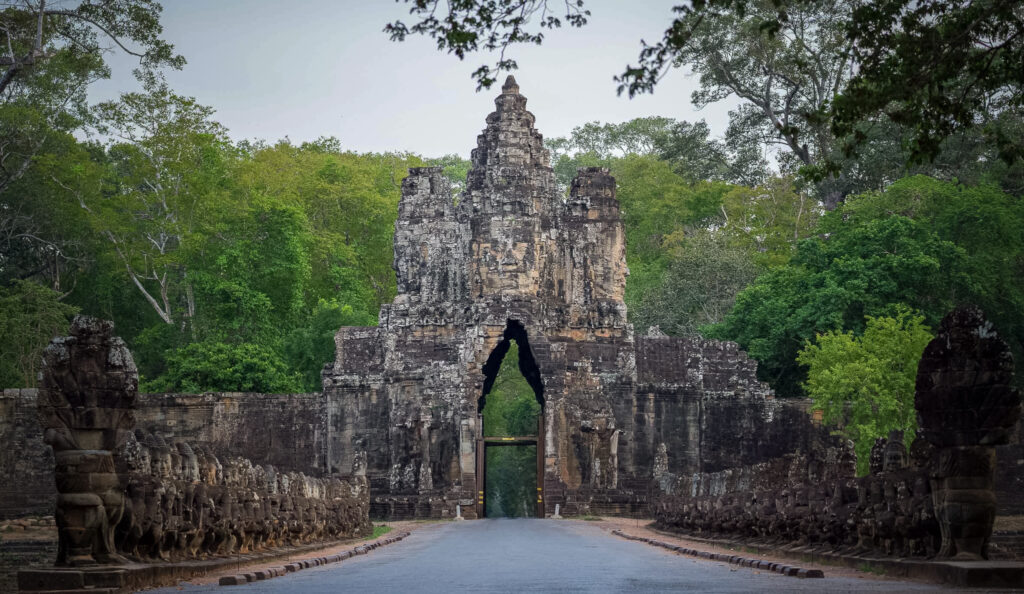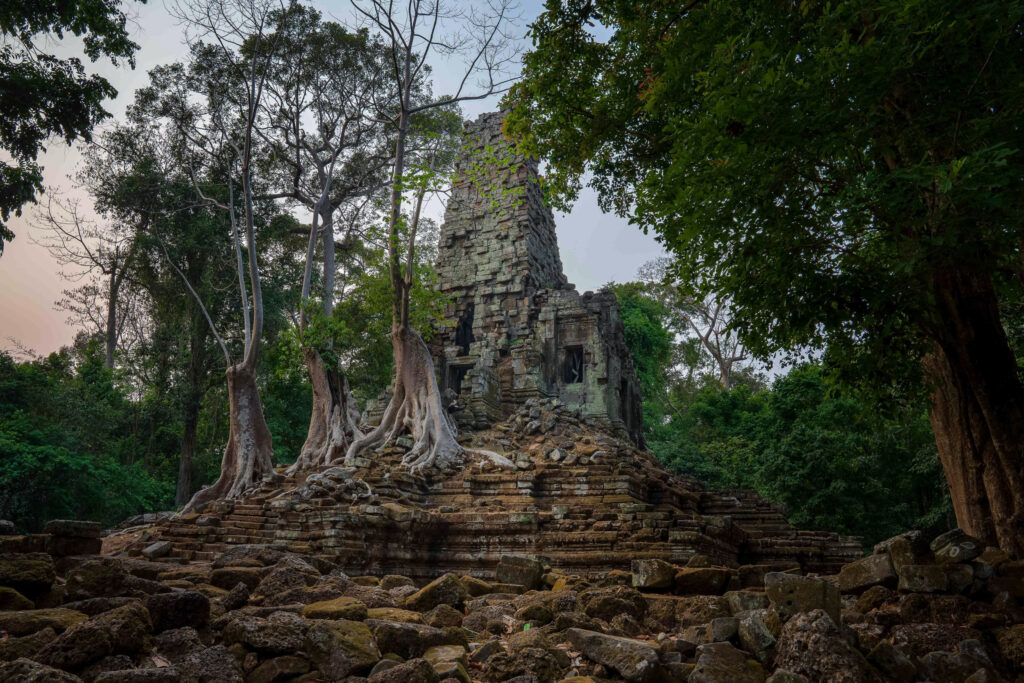
Bakong is one of the oldest and most impressive temple mountains in the Angkor region, yet it receives far fewer visitors than the famous temples around Angkor Wat. Located in the Roluos group, around 15 kilometres southeast of Siem Reap, it offers an opportunity to explore an important part of Cambodia’s early Khmer history without the crowds.
Built in the late 9th century, Bakong predates Angkor Wat by more than 200 years. Its distinctive stepped pyramid, stone elephants and central sanctuary make it quite different from many of the temples visitors see on the main Angkor circuits.
For anyone interested in the history of Angkor, or simply looking to explore somewhere a little quieter, Bakong is well worth considering, particularly if you have more than one day to spend visiting the temples.
Bakong was constructed during the reign of King Indravarman I and dedicated in 881 AD. At the time, the Khmer capital was located at Hariharalaya, in what is now the Roluos area.
The temple was dedicated to Shiva, one of the principal deities of Hinduism, and is widely recognised as one of the earliest major sandstone temple mountains built by the Khmer Empire.
Its design represents Mount Meru, the sacred mountain at the centre of the universe in Hindu cosmology. This concept would become fundamental to Khmer temple architecture, influencing the construction of many later monuments, including Angkor Wat.
Bakong is particularly significant because it helped establish the architectural style that would define the great temple mountains of Angkor.
Although parts of the original structure have been lost or altered over the centuries, much of the temple’s layout remains recognisable today.
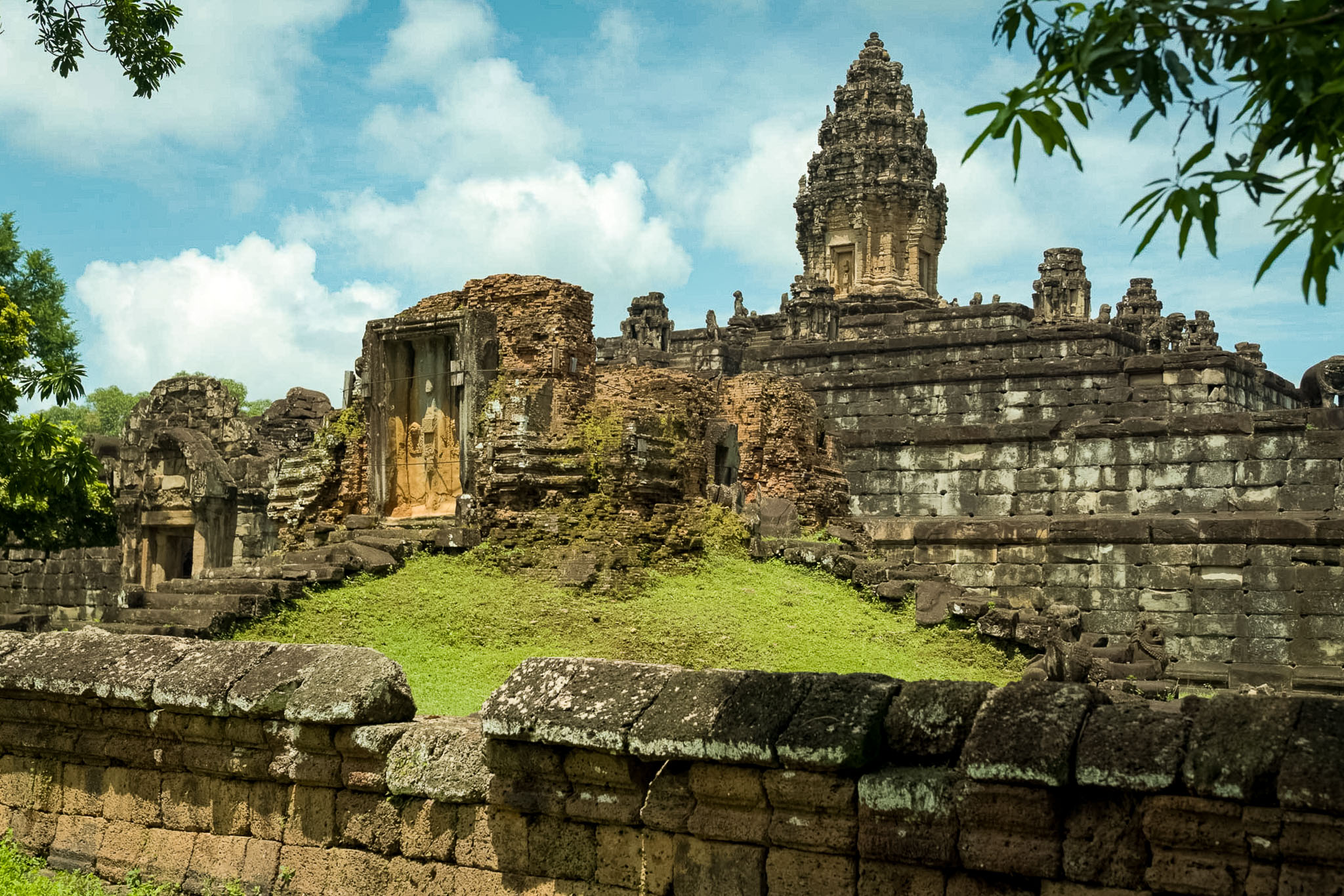
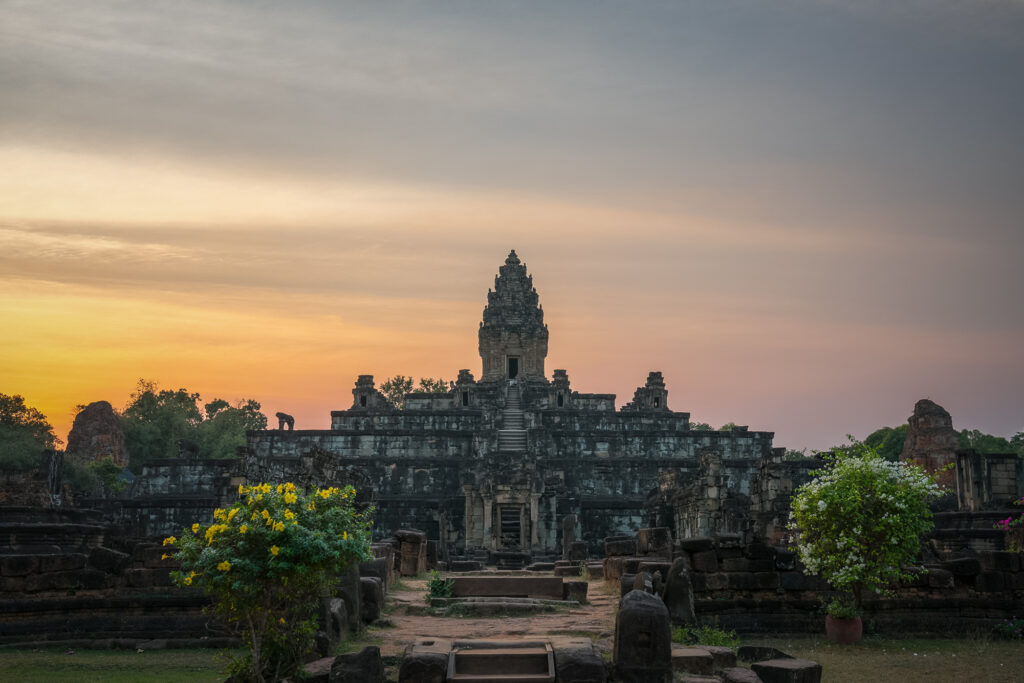
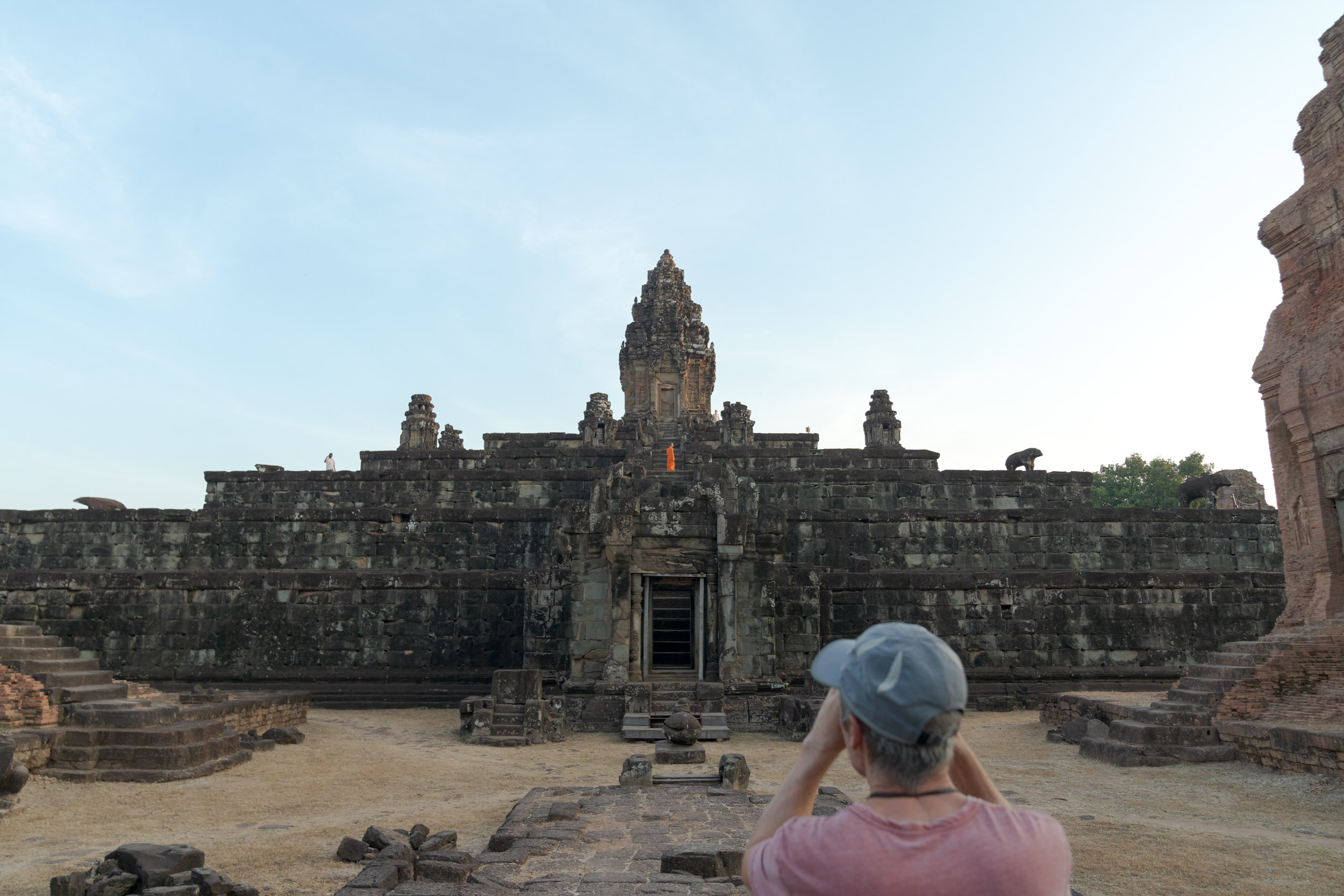
The most striking feature of Bakong is its enormous stepped pyramid, which rises in five levels towards a central sanctuary.
Unlike the long galleries and enclosed courtyards of Angkor Wat, Bakong has a relatively open design. You can appreciate the shape of the pyramid from a distance before approaching the steep stairways that lead towards the upper levels.
The terraces are decorated with stone elephants, while the central tower provides an impressive focal point above the surrounding structures.
The central sanctuary visible today dates from a later period than the original 9th-century pyramid, illustrating how Khmer temples were sometimes modified and expanded over generations.
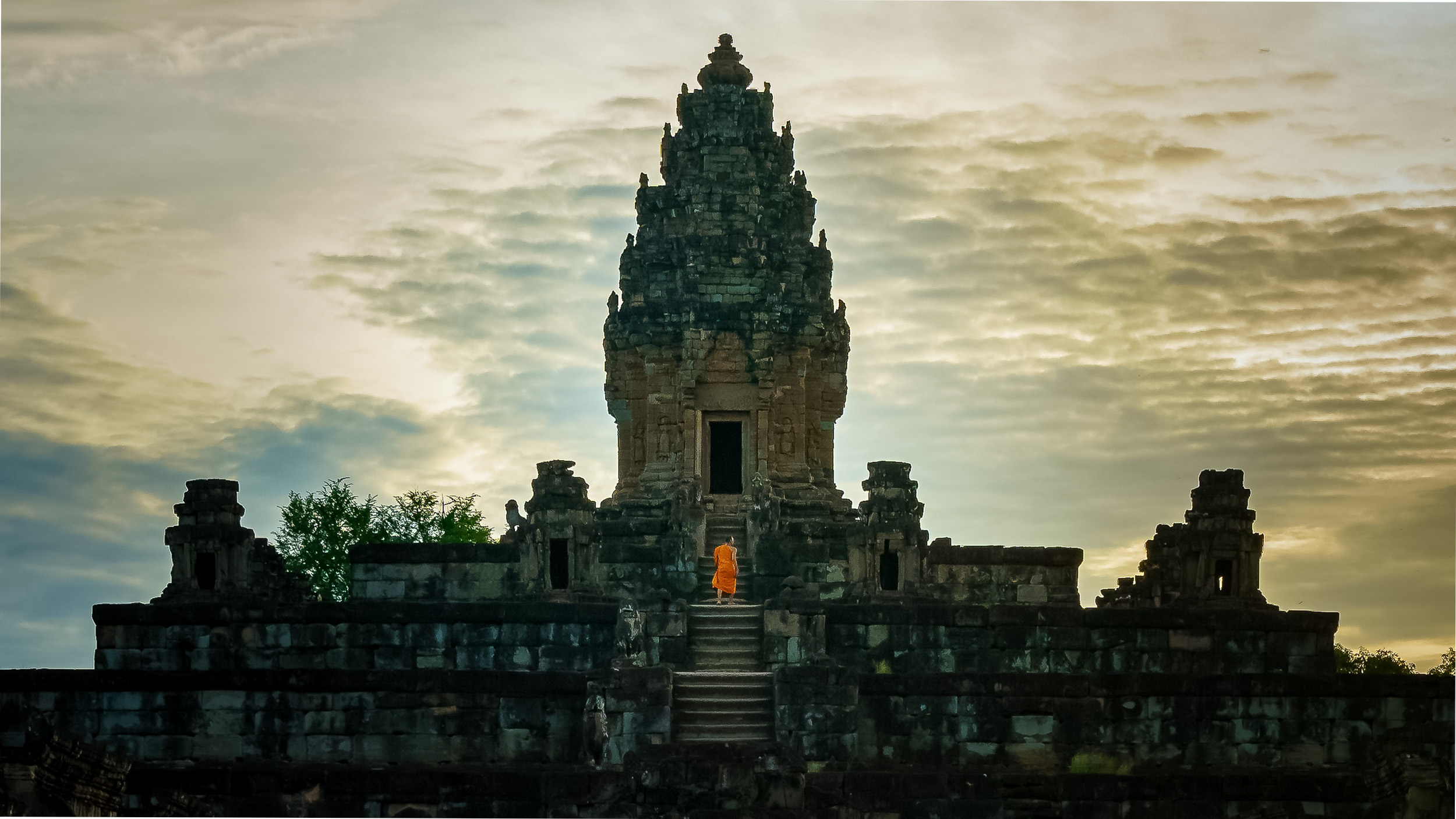
The most striking feature of Bakong is its enormous stepped pyramid, which rises in five levels towards a central sanctuary.
Unlike the long galleries and enclosed courtyards of Angkor Wat, Bakong has a relatively open design. You can appreciate the shape of the pyramid from a distance before approaching the steep stairways that lead towards the upper levels.
The terraces are decorated with stone elephants, while the central tower provides an impressive focal point above the surrounding structures.
The central sanctuary visible today dates from a later period than the original 9th-century pyramid, illustrating how Khmer temples were sometimes modified and expanded over generations.
One of Bakong’s most memorable features is the collection of stone elephant sculptures positioned around the pyramid’s terraces.
These elephants once formed part of a much larger decorative scheme. Although many are damaged or incomplete, they remain impressive examples of early Khmer stonework.
They are also an interesting detail for photography, particularly when viewed against the temple’s sandstone terraces and central tower.
Bakong is more than just its central pyramid. The wider complex includes smaller brick towers, gateways, enclosure walls and the remains of other structures.
It’s worth taking some time to explore these areas instead of heading directly up the main pyramid and leaving.
The contrast between the brick towers and the sandstone pyramid also provides a useful glimpse into the development of Khmer construction techniques.
Bakong was designed within a large rectangular enclosure surrounded by a moat, reflecting the symbolic relationship between the temple mountain and the cosmic ocean.
Today, the setting feels quite different from the busier temple complexes around Angkor Wat. Trees, open spaces and the surrounding village environment give Bakong a quieter, more relaxed atmosphere.
Yes, particularly if you have already visited Angkor Wat, Bayon and Ta Prohm, or if you’re interested in the earlier history of the Khmer Empire.
Bakong doesn’t have the extensive galleries of Angkor Wat or the giant faces of Bayon, but it offers something different. Its architectural importance, relatively compact layout and impressiIs Bakong temple worth visiting?
ve pyramid make it a rewarding place to explore.
It’s also a good option for visitors who enjoy photography or prefer temples where they can take their time without constantly encountering large tour groups.
However, if you only have one day in Siem Reap, I would generally recommend concentrating on the main Angkor temples first. Bakong becomes a particularly worthwhile addition when you have two or three days available.
Bakong is also conveniently located near the main road between Siem Reap and Siem Reap Angkor International Airport (SAI). If you’re travelling to or from the airport and have some extra time, it can make an excellent stop along the way. Allow around an hour to explore the temple, plus time for the short detour from the main road.
Bakong is located approximately 15 kilometres southeast of central Siem Reap, near the town of Roluos.
The journey generally takes around 25 to 35 minutes by private car, depending on where you’re staying and traffic conditions.
Unlike the main Angkor Small Circuit, Bakong is situated southeast of Siem Reap, so visiting it requires a separate route.
The easiest way to reach the temple is by private car or tuk-tuk. Both are practical options, although an air-conditioned vehicle is more comfortable during Cambodia’s hotter months.
The central pyramid is relatively exposed, and the sandstone terraces can become extremely hot during the middle of the day.
Morning visits are a gooWhen is the best time to visit Bakong?
d option if you want cooler temperatures and time to explore the other Roluos temples afterwards.
Late afternoon can also be attractive for photography, when the lower sunlight brings out the textures of the stonework.
During Cambodia’s green season, the surrounding vegetation becomes particularly lush, adding colour to the temple landscape.
Visitors can generally climb the central pyramid using the designated stairways, subject to any restrictions in place at the time of their visit.
The steps are steep and uneven in places, so take care, particularly during or after rain.
There are excellent views of the temple complex from the upper terraces, but you don’t need to climb to appreciate Bakong. Much of its architecture and decorative stonework can be enjoyed from ground level.
Visitors with limited mobility should be aware that the historic surfaces, steps and uneven paths can make access difficult.
Bakong is included in the Angkor Archaeological Park ticket system, so you don’t need to purchase a separate ticket if you already have a valid Angkor Pass.
The standard Angkor Pass options are:
1-day pass: USD 37
3-day pass: USD 62
7-day pass: USD 72
These passes also cover the main Angkor temples, including Angkor Wat, Bayon and Ta Prohm.
For more information about where to purchase your pass, the available ticket options and what you need to know before visiting, see our complete guide to buying Angkor Wat tickets.
See our Angkor Wat ticket guide for more information about buting an Angkor Pass.
Bakong is part of the Roluos group, a collection of early Khmer temples associated with the former capital of Hariharalaya.
The three best-known temples are Bakong, Preah Ko and Lolei.
Preah Ko is particularly interesting for its beautifully carved brick towers and decorative details. It predates Bakong and provides another example of the early architectural development of the Khmer Empire.
Lolei is smaller and has undergone considerable restoration, but it remains historically important as another temple associated with the early Khmer capital.
Visiting all three temples provides a more complete understanding of the period before the great monuments of Angkor were constructed.
Allow approximately two to three hours for a relaxed visit to the Roluos group, excluding the journey from Siem Reap.
es. Bakong can be included in a longer day of sightseeing, although its location means it doesn’t fit naturally into the usual Angkor Small Circuit or Grand Circuit routes.
One possibility is to combine the Roluos group with a visit to Beng Mealea, which lies farther east of Siem Reap. This makes a good alternative to spending another full day around the main Angkor temples.
Another option is to visit Bakong, Preah Ko and Lolei in the morning, then return to Siem Reap for a relaxed afternoon.
For visitors with several days in Siem Reap, this can be a particularly enjoyable way to explore some of the lesser-visited temples without rushing.
Bakong offers some excellent photographic opportunities, especially if you enjoy architecture and the details of ancient stonework.
The stepped pyramid provides strong geometric compositions, while the elephant sculptures and smaller surrounding towers make interesting subjects in their own right.
Early morning and late afternoon generally produce more attractive light than the harsh midday sun.
One advantage of photographing Bakong is that it’s often easier to find clear compositions without large numbers of visitors in the background, although this naturally depends on the day and time of your visit.
Take some time to walk around the different sides of the pyramid. The temple’s appearance changes considerably depending on the angle and direction of the light.
Bring drinking water. Much of the central temple is exposed to direct sunlight.
Wear comfortable footwear. The historic steps and stone surfaces can be uneven.
Dress appropriately. As with other Angkor temples, clothing should cover your shoulders and knees.
Allow time for the surrounding structures. The central pyramid is the main attraction, but there is more to see.
Consider combining the Roluos temples. Preah Ko and Lolei are nearby and complement a visit to Bakong.
Avoid the hottest part of the day if possible. The exposed sandstone terraces can be uncomfortable in the afternoon heat.
Bakong is an excellent reminder that the history of Angkor began long before the construction of Angkor Wat.
Its impressive stepped pyramid, stone elephants and early Khmer architecture make it one of the most interesting temples outside the main Angkor circuits.
It may not be the first temple I’d recommend to someone spending just one day in Siem Reap, but for visitors with more time, Bakong and the surrounding Roluos temples offer a worthwhile look at the origins of the Khmer Empire.
If you’re planning a longer stay, take a look at our complete Angkor Wat guide for more information about the temples, suggested itineraries and practical advice for exploring the Angkor region.
Angkor is much more than just Angkor Wat. Our Angkor temple guides are based on repeated visits and first hand experience, with practical advice on when to go, what to look for and which temples are worth including in your itinerary. Explore more of our guides below, or visit our complete Angkor Wat guide to start planning your time at Angkor.