At the heart of Angkor Thom, Bayon is one of the most distinctive temples in the Angkor Archaeological Park. Best known for the enormous stone faces looking out from its towers, it is a temple that changes dramatically depending on when you visit and where you stand.
In this guide, we’ll share our own experience of Bayon, including the areas we think are worth spending time at, when we like to visit, practical advice, and some of the details that are easy to miss. All of the photography in this guide is our own, taken during our many visits to the temple.
Table of Contents
When to visit Bayon Temple
Most visitors who wake up early for sunrise head straight to Angkor Wat. Once sunrise is over, the crowds begin moving towards Angkor Thom and Bayon, so Bayon can go from remarkably peaceful to busy within a relatively short period of time.
If you visit Bayon for sunrise, the experience is completely different. While large crowds gather around the reflecting ponds at Angkor Wat, Bayon is often almost deserted at this time of the morning.
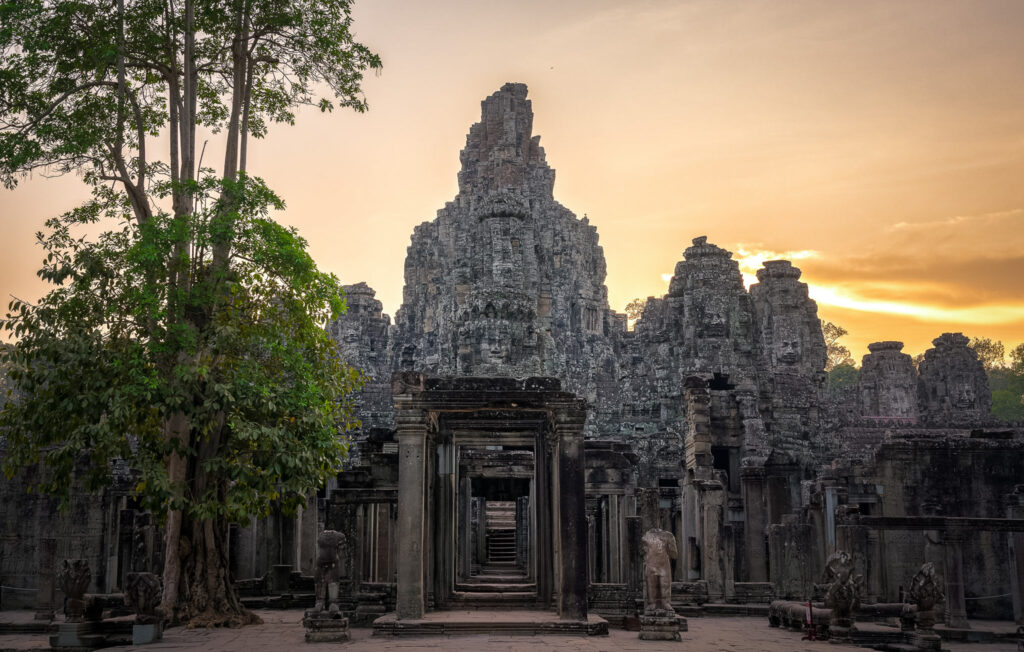
Bayon currently officially opens at 6:30 AM, although opening times within the Angkor Archaeological Park can occasionally change under the APSARA National Authority. You won’t be able to enter the temple before it opens, but Bayon is completely visible from outside. You can stand directly in front of the temple and watch the morning light appear behind its towers.
Once the temple opens, you’ll be among the first people inside. It can remain very quiet for some time before visitors who watched sunrise at Angkor Wat begin arriving at Angkor Thom.
If you visit later in the morning, expect considerably more people, particularly along the standard Angkor Wat, Bayon and Ta Prohm route.
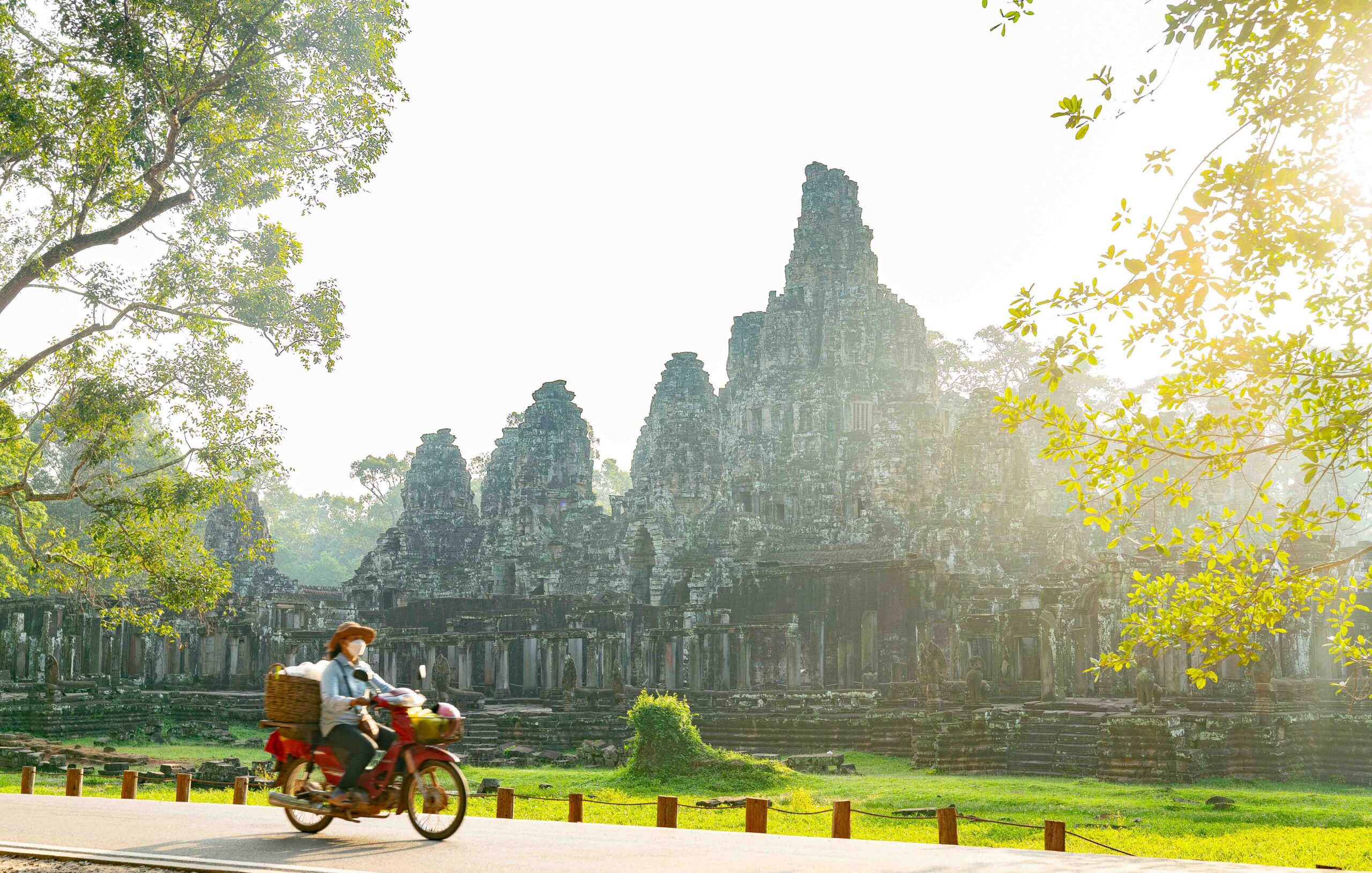
Local woman carrying produce past Bayon in the early morning. The roads through Angkor Thom are also used by local traffic throughout the day.
Visiting Bayon as part of an Angkor sunrise tour? Our private Angkor Wat Sunrise Tour visits Angkor Wat at sunrise before continuing to Angkor Thom, Bayon and Ta Prohm. Because it’s a private tour, we can also adjust the route and timing if you’d like to experience Bayon when it’s quieter.
Our take
If you have more than one morning in the Angkor Archaeological Park, we think Bayon is well worth considering for sunrise.
In our experience, nine times out of ten we’re alone when we arrive at Bayon this early. Watching the sun come up in front of such an extraordinary temple, without hundreds of other people around you, is a very different experience from sunrise at Angkor Wat.
Being among the first people inside is just as special. We think temples like Bayon are at their best when they’re quiet. You have time to slow down, look at the enormous stone faces and carvings, and take in the atmosphere without groups constantly moving around you.
If you have a multi-day Angkor pass, you don’t have to choose between the two experiences. See the famous sunrise at Angkor Wat on one morning, then start another day at Bayon. For us, Bayon at dawn is one of the best ways to experience the temple.
Exploring inside Bayon
From the outside, Bayon can look like a dense collection of stone towers. Once you step inside, it becomes a maze of narrow galleries, corridors, small chambers and open courtyards, with the famous stone faces appearing above you as you move through the temple.
It’s worth taking your time here. Some of our favourite parts of Bayon aren’t necessarily the grand viewpoints, but the smaller details you notice while walking through the galleries.
The faces of Bayon
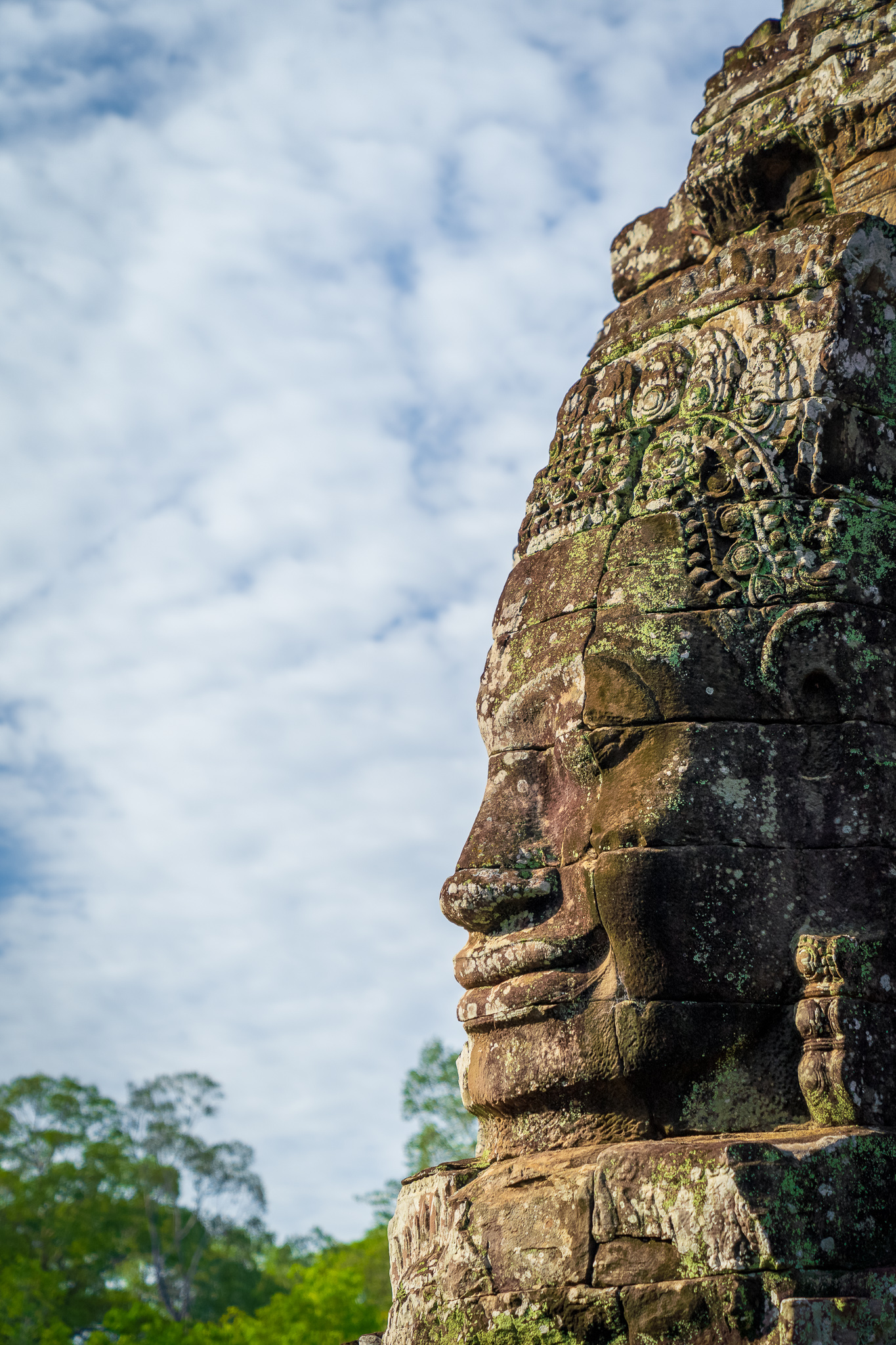
One of Bayon’s stone faces photographed from the upper level before it closed for restoration.
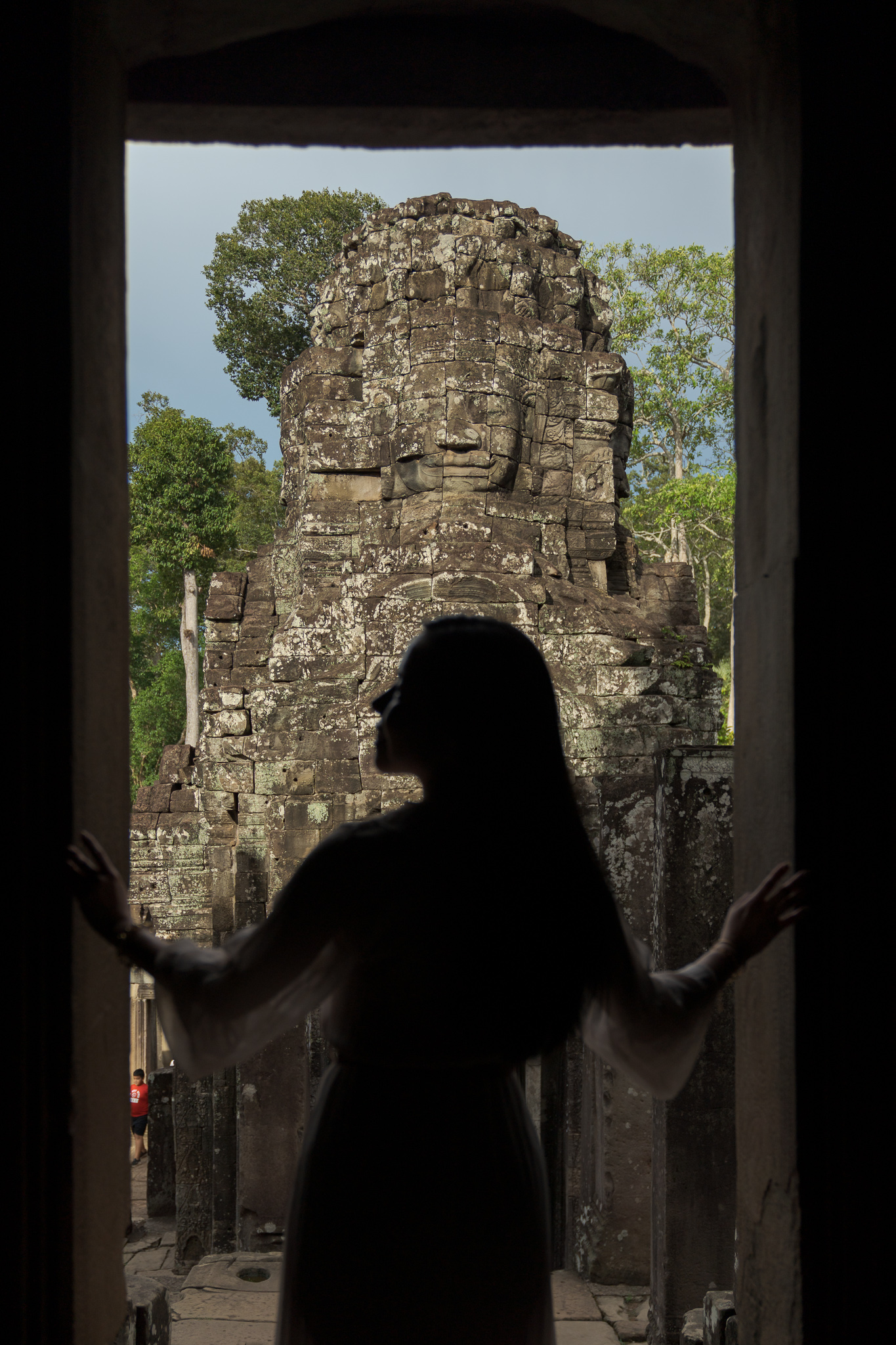
Visitor viewing one of Bayon’s stone faces through a doorway on the temple’s middle level.
The enormous stone faces are Bayon’s most recognisable feature. As you move through the temple, the faces appear from different angles, above walls and through doorways, and you can get much closer to some of them than you might expect.
For many years, visitors could climb to Bayon’s upper terrace and walk among the face towers. The upper level is currently closed for restoration, so some of the close-up viewpoints you may have seen in older photographs are no longer accessible. The photograph on the left was taken by us several years ago from the upper level, before the closure.
You can still get close to the faces from the areas that remain open. The photograph on the right was taken recently from a doorway on Bayon’s middle level, showing one of the face towers directly outside.
Don’t be put off by the upper-level closure. The faces are visible throughout your visit, and looking for them through Bayon’s corridors and doorways is one of the most interesting parts of exploring the temple.
Access can change as restoration work progresses, so areas that are closed today may be different when you visit.
The bas-reliefs
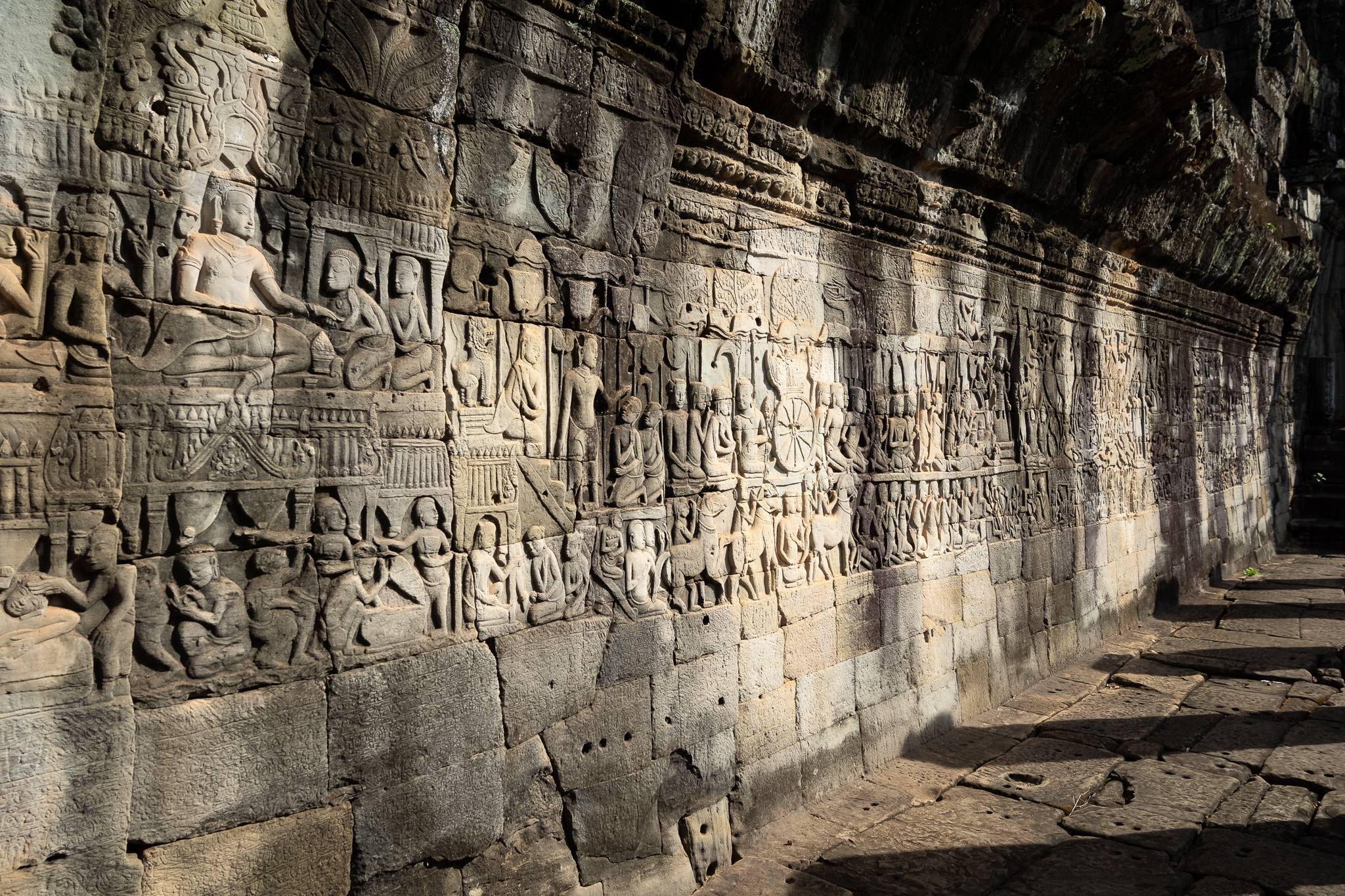
Bas-relief gallery at Bayon Temple, where detailed scenes of processions and everyday life cover the walls.
One of the things we particularly like about Bayon is its long galleries of bas-relief carvings. At first they can look like one continuous wall of figures, but spend a few minutes looking closely and individual stories begin to emerge.
Unlike temple carvings that focus entirely on gods and mythology, Bayon’s reliefs include warfare, military processions and scenes from everyday life during the Khmer Empire. Soldiers march alongside commanders, while elsewhere the carvings show markets, cooking, fishing, animals and ordinary families. Some scenes even include people identified as Chinese, reflecting the presence of foreign communities and soldiers at Angkor.
Our guide pointed out something useful when we photographed this particular wall: look at the size, position, clothing and surroundings of individual figures. Important figures are often given greater visual prominence, while the surrounding rows of smaller figures help build the procession or scene around them.
You don’t need to understand every carving to enjoy them. Get close and look at one small section at a time. Details that are almost invisible when you first enter the gallery start appearing everywhere.
For us, this is one of the parts of Bayon where having a knowledgeable licensed guide adds real value. A wall that initially looks like hundreds of carved figures becomes much more interesting when someone can point out what you’re actually looking at.
A little history of Bayon
Bayon was built around the late 12th and early 13th centuries during the reign of King Jayavarman VII, one of the most important rulers of the Khmer Empire. It stands at the centre of Angkor Thom, the enormous walled capital established under his reign.
Unlike Angkor Wat, which was originally built as a Hindu temple, Bayon was founded as a Buddhist state temple. Jayavarman VII followed Mahayana Buddhism, and Bayon formed part of a much wider programme of construction that transformed Angkor during his reign.
The temple didn’t remain unchanged. Under later rulers, Bayon was converted to Hindu worship and much of its Buddhist imagery was altered or removed, before Buddhism again became established at the site. These different periods of construction and alteration help explain why Bayon can feel so complex when you’re walking through it today.
And what about the famous faces? There isn’t a universally agreed answer to exactly who they represent. Over the years they have been associated with figures including the Bodhisattva Lokesvara and Jayavarman VII himself. More recent research has added further interpretations, so we think it’s better to acknowledge the mystery than give visitors one definitive answer.
For us, you don’t need to know Bayon’s entire history before visiting. A little context does make the temple more interesting, especially when you realise that the building you’re walking through has been changed, adapted and restored repeatedly over more than 800 years.
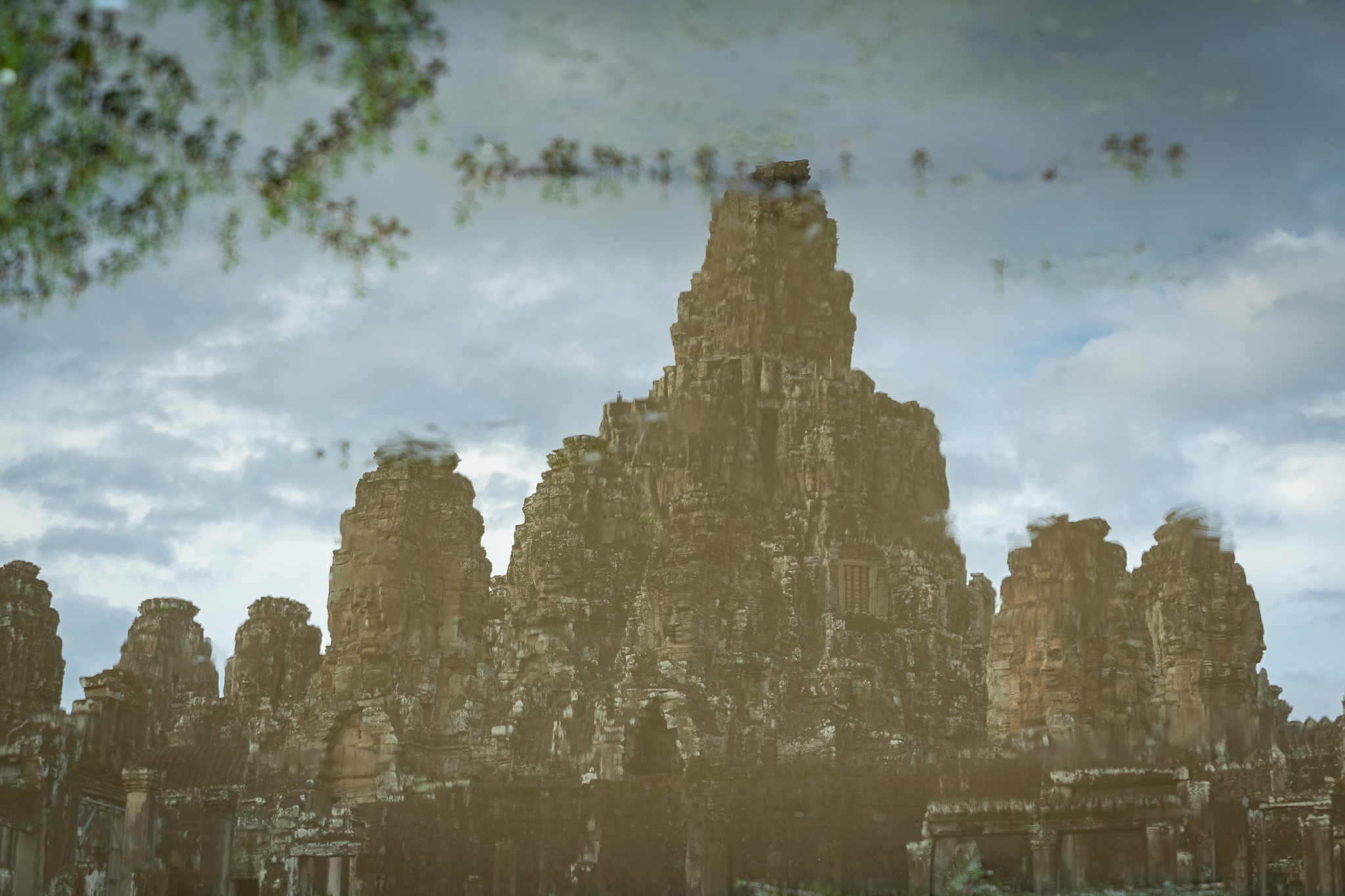
Bayon reflection in a puddle, commonly seen during the rainy season (green season)
How long to spend at Bayon
For most visitors, around one hour at Bayon is enough to explore the temple without feeling rushed. This gives you time to walk through the galleries, see the bas-reliefs and get a good look at the famous stone faces.
If you’re particularly interested in Khmer history, architecture, carvings or photography, we’d allow closer to two hours. There’s considerably more detail here than you might notice on a quick walk through.
If you follow our advice and visit very early in the morning, you may find yourself wanting to stay longer anyway. Bayon is incredibly atmospheric when it’s quiet, and without the usual flow of visitors there’s much less reason to hurry through it.
Our recommendation: Allow at least one hour, but keep your itinerary flexible if you’re visiting early. Bayon is one of those temples where an extra half hour can be well spent.
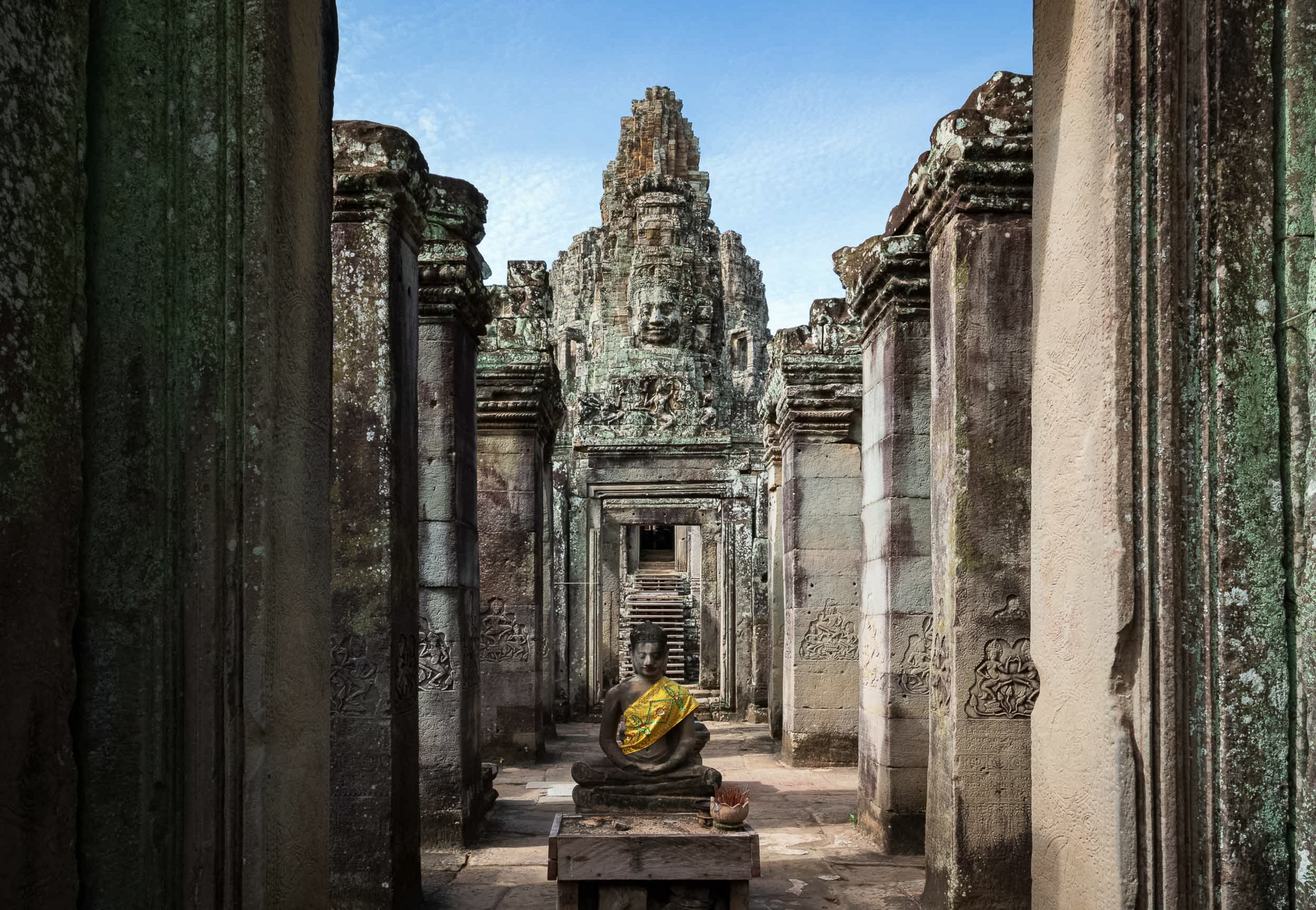
A quiet corridor inside Bayon, with a Buddha statue and one of the temple’s face towers visible beyond.
Practical tips for visiting Bayon
A few things we’ve learned from spending time at Bayon can make your visit easier.
Be careful around the monkeys. There are often macaques around Bayon and the surrounding Angkor Thom area, and we’ve personally seen them take food, drinks and belongings from visitors on several occasions. Avoid carrying visible food, especially fruit such as bananas, and don’t try to feed them.
If a monkey approaches you aggressively because you’re carrying food or a drink, don’t fight with it over the item. Put it down and move away. If a monkey does grab one of your belongings, tell one of the nearby guards. We’ve seen the guards successfully retrieve stolen items, sometimes by offering the monkey food in exchange.
Bring water and prepare for the heat. Even if you’re only planning to spend an hour at Bayon, the temperature can climb quickly once the sun is up. Early morning is considerably more comfortable.
Take your time on the uneven surfaces. Bayon has steep steps, worn stone and uneven flooring throughout the temple. Comfortable footwear makes a difference, especially if Bayon is only one stop during a full morning of temple visits.
Check current access when you arrive. Restoration work is ongoing and sections of Bayon can close or reopen over time. The upper terrace has been closed for restoration for some time, but you can still see and photograph many of the famous faces from the levels that remain accessible.
And finally, don’t rush Bayon just because it’s part of a larger Angkor itinerary. If you arrive when it’s quiet and find yourself enjoying it, stay a little longer. Some of our best experiences here have been on mornings when there was almost nobody else around.
Continue exploring Angkor
Bayon is just one part of the much larger Angkor Archaeological Park. If you’re planning your visit, our Angkor Wat Guide covers everything from sunrise and temple tickets to routes, transport and practical advice based on our experience visiting the temples.
Another highlight of the Small Circuit is Ta Prohm Temple, famous for the enormous tree roots growing through its ruins. Our guide shares our favorite parts of the temple, when to visit and what we think is worth taking the time to see.
Continue exploring Angkor
Angkor is much more than just Angkor Wat. Our Angkor temple guides are based on repeated visits and first hand experience, with practical advice on when to go, what to look for and which temples are worth including in your itinerary. Explore more of our guides below, or visit our complete Angkor Wat guide to start planning your time at Angkor.
Bayon is one of Angkor’s most remarkable temples, famous for its enormous stone faces and maze of carved galleries. We recommend visiting early, when the temple is quieter and the soft morning light brings the faces to life.
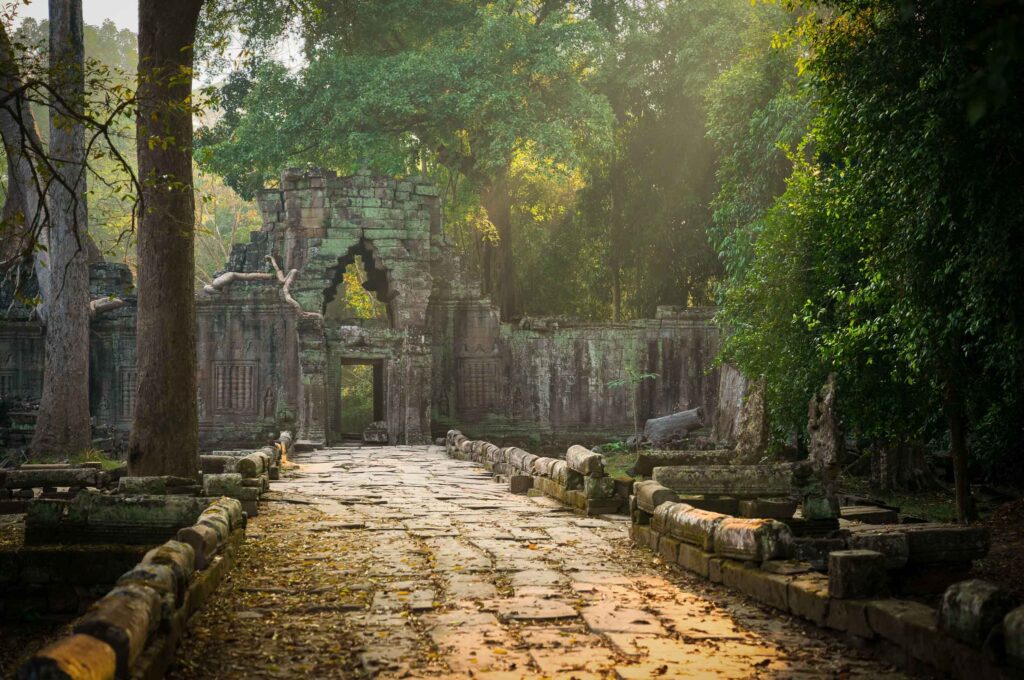
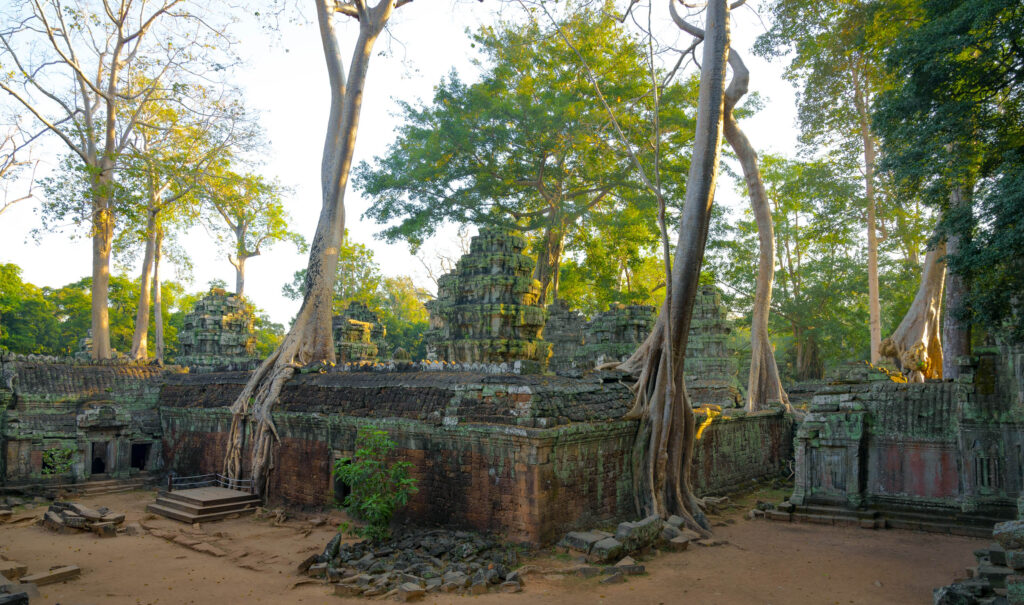
Explore Preah Khan, one of Angkor’s largest temples, known for its atmospheric corridors, ancient carvings and impressive tree roots. Our guide covers what to see and how to plan your visit.
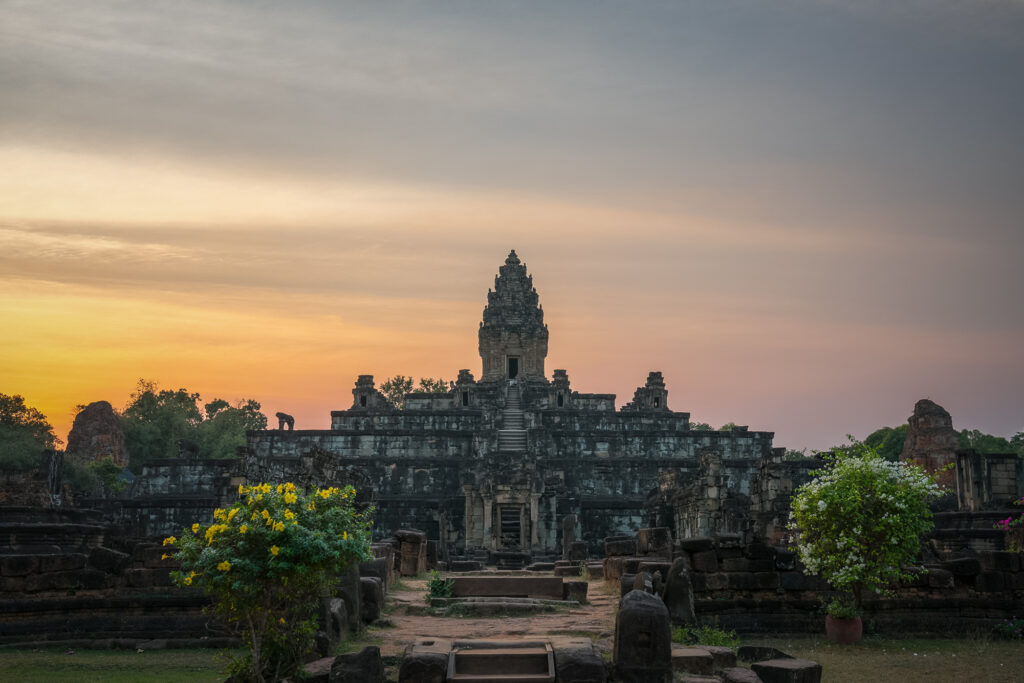
Bakong is one of the oldest temple mountains in the Angkor region. Discover its impressive stepped pyramid, stone elephants and what to know before visiting this historic temple near Siem Reap.
Ta Prohm is famous for its enormous trees growing through the ruins, but there is much more to explore beyond the best-known viewpoints. We recommend visiting early, when its corridors and courtyards are quieter and the temple is at its most atmospheric.
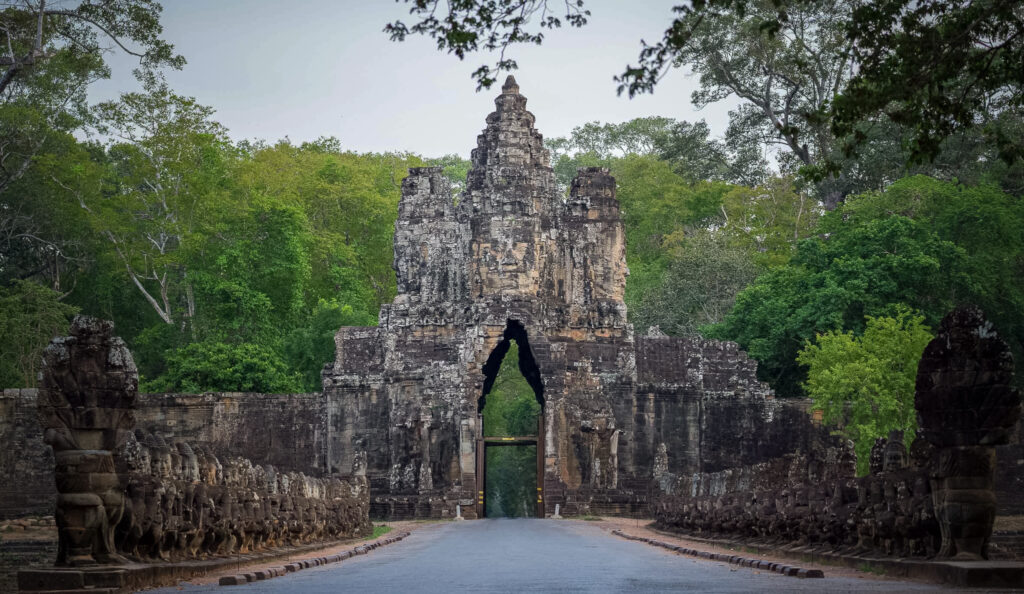
Visit Angkor Thom South Gate, the monumental entrance to the ancient city. Learn what to look for, when to visit, how to avoid the busiest times, and where to find the best views and photographs.
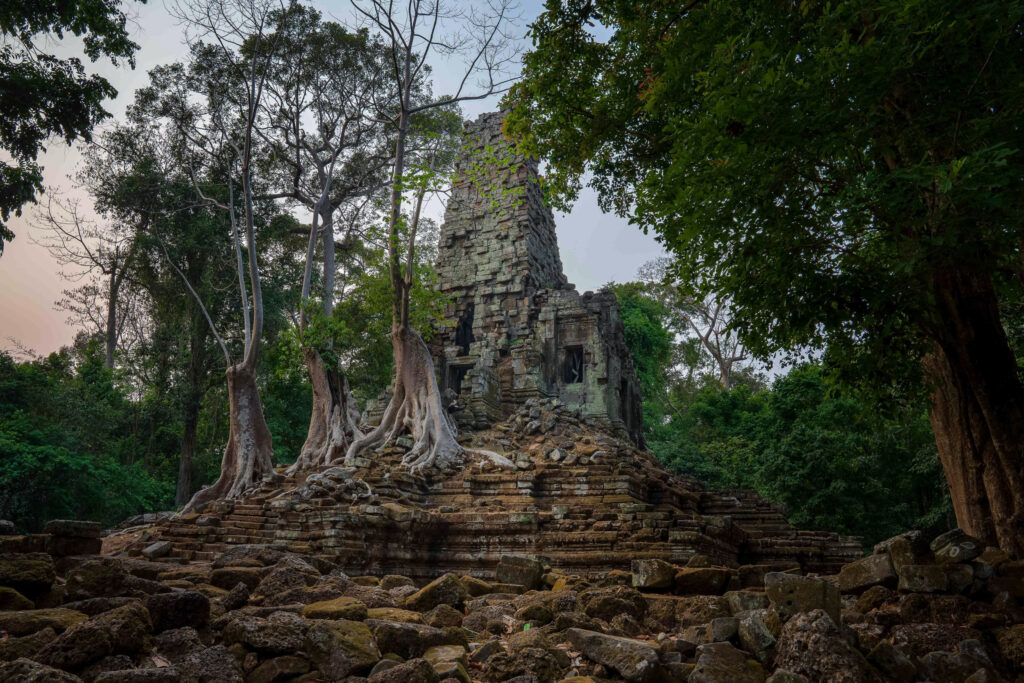
One of our favourite smaller temples at Angkor, Preah Palilay is especially atmospheric during the green season. It’s close to the Terrace of the Elephants, yet usually sees only a handful of visitors, making it an easy addition when exploring Angkor Thom.