Srah Srang is easy to overlook when planning a visit to Angkor. It does not have the towers of Angkor Wat, the faces of Bayon or the enormous trees of Ta Prohm. In fact, at first glance, it is mostly a large expanse of water.
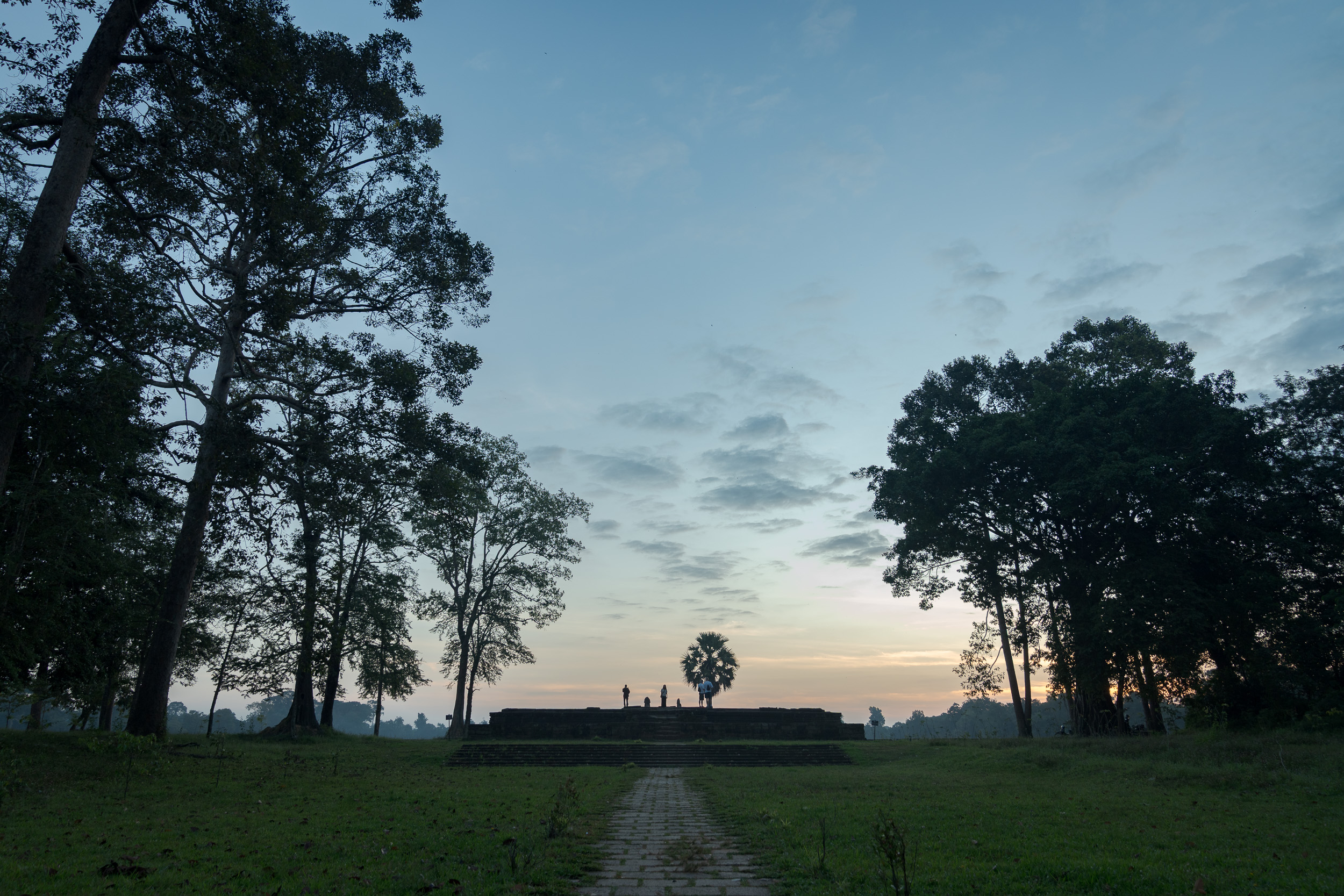
But Srah Srang is one of our favourite places in Angkor Archaeological Park to stop, especially early in the morning. Facing east across the water, its ancient landing terrace provides an open view of the sky that feels completely different from the enclosed temples surrounding it.
Commonly known as the Royal Bath, Srah Srang is a man-made reservoir with origins dating back to the 10th century. It formed part of Angkor’s carefully engineered landscape, where reservoirs, canals and other waterways were used to store and manage water, while water also held important religious and symbolic meaning.
Understanding that makes Srah Srang much more interesting. The water in front of you is itself part of ancient Angkor. Today, visitors come for the history and peaceful setting, but Srah Srang is particularly beautiful early in the morning, when the sun rises across the reservoir.
Table of Contents
What is Srah Srang?
Srah Srang is a large reservoir located in the eastern part of Angkor Archaeological Park, directly opposite Banteay Kdei. It measures roughly 700 metres by 350 metres, with an impressive stone landing terrace on its western bank.
The reservoir has origins in the 10th century, during the reign of Rajendravarman II, and was later modified during the reign of Jayavarman VII around the late 12th and early 13th centuries.
The western landing terrace is the part most visitors see today. Stone steps descend towards the water, while naga balustrades and guardian lions frame the terrace.
Although Srah Srang is often called the Royal Bath, its precise historical use is more complicated than the name suggests. What is clear is that water played an enormous role in the landscape of ancient Angkor, both practically and symbolically.
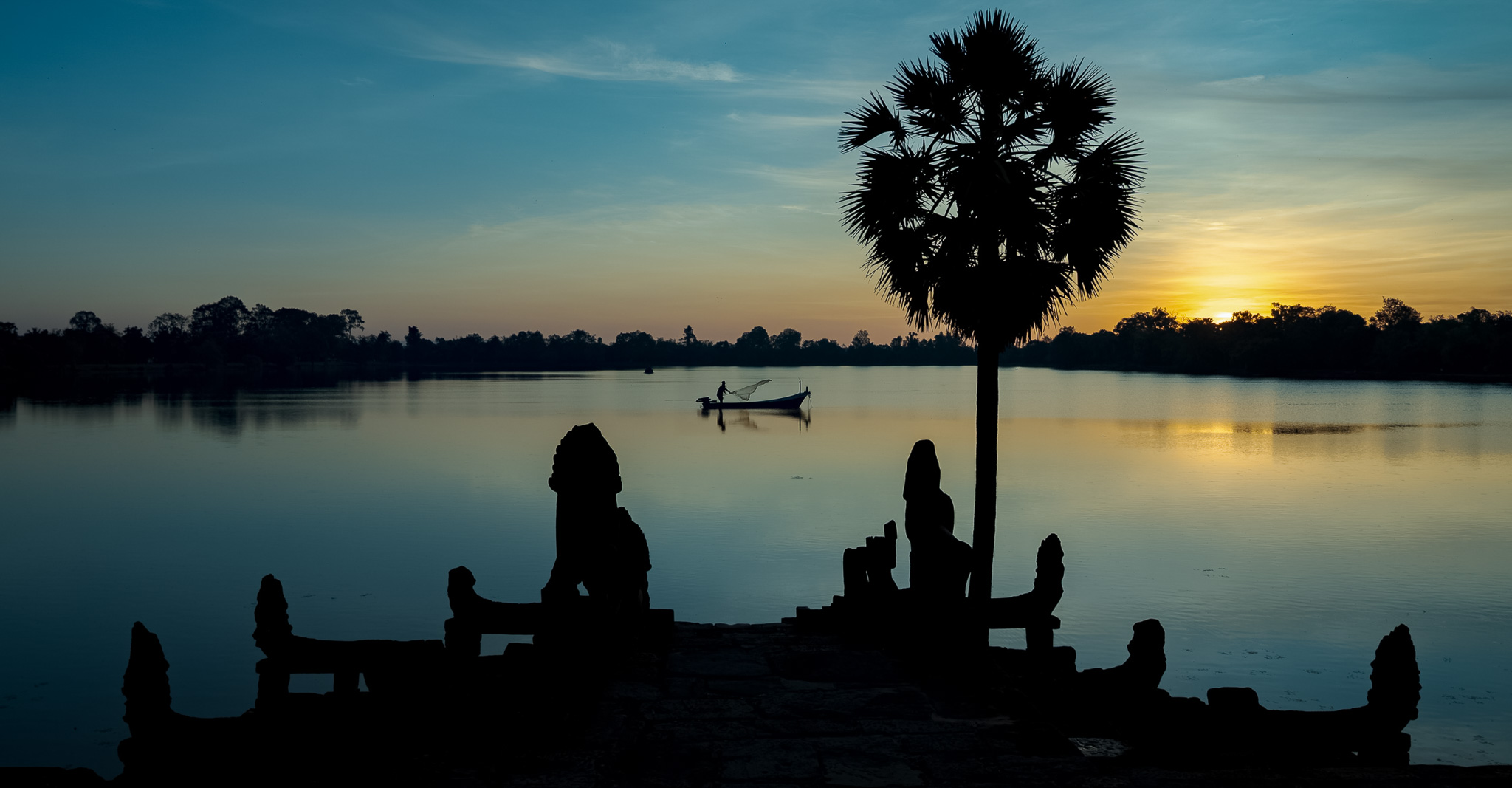
A fisherman crosses Srah Srang as the sun rises over the ancient reservoir.
Visiting Srah Srang
Srah Srang is located opposite Banteay Kdei and is easy to include while travelling through this part of Angkor Archaeological Park.
Unlike the major temples, there is relatively little walking involved if you only want to see the main terrace. You arrive close to the western edge of the reservoir and can walk down onto the stone platform overlooking the water.
This makes Srah Srang a good short stop between temples, particularly if you have been walking for several hours.
But if you only see it during the middle of the day, you miss one of the best reasons to come here.
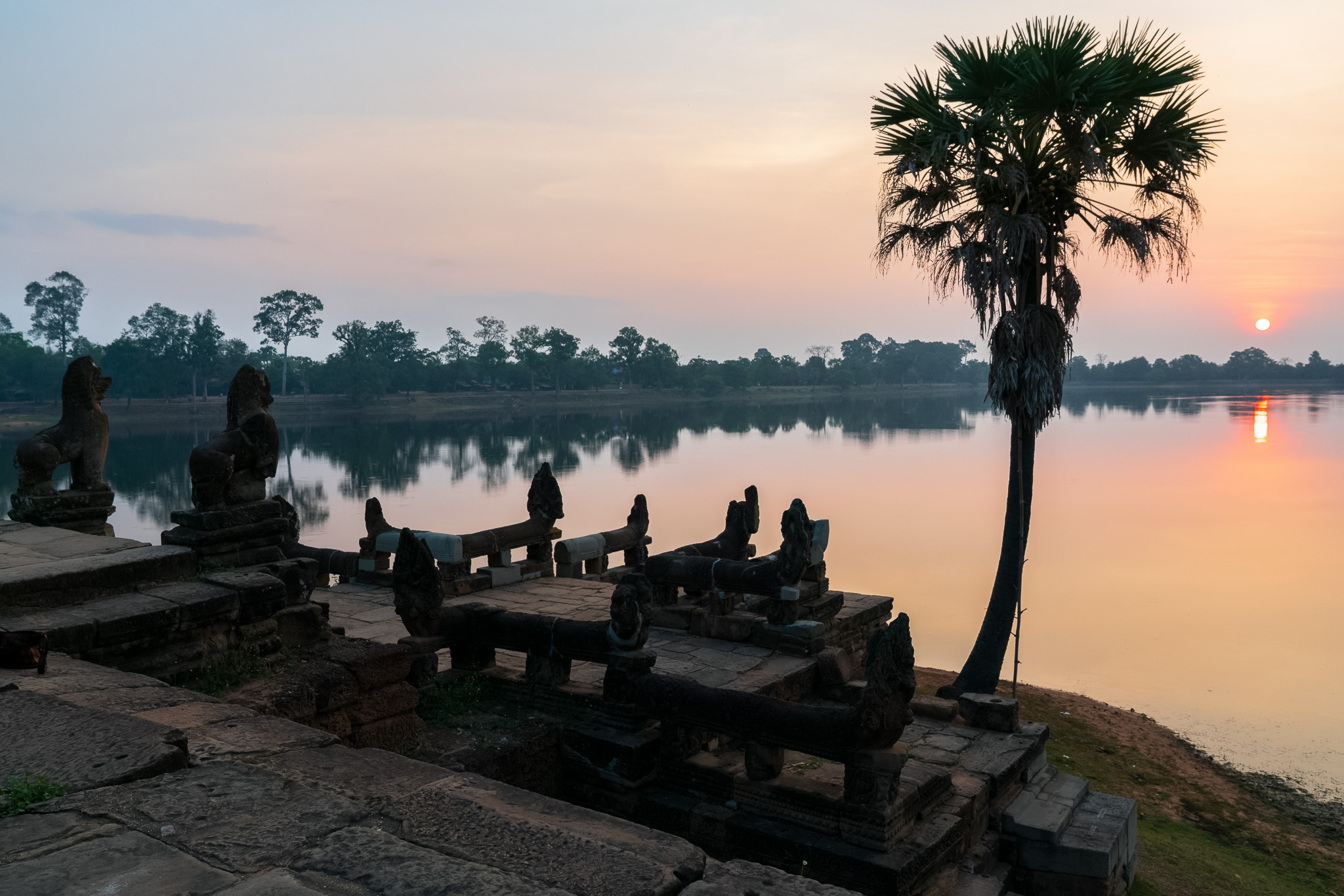
The stone landing terrace on the western side of Srah Srang.
What to combine with Srah Srang
One of the advantages of Srah Srang is its location.
Banteay Kdei is directly across the road, making the two an obvious combination. Ta Prohm is also nearby, so Srah Srang can fit naturally into a morning exploring this part of the park.
A particularly good early start is Srah Srang for sunrise followed by one of the nearby temples while most visitors are still around Angkor Wat.
ancient stone landing terrace overlooking Srah Srang at Angkor
Photographing Srah Srang
Srah Srang is particularly interesting to photograph because the photograph changes dramatically with the weather.
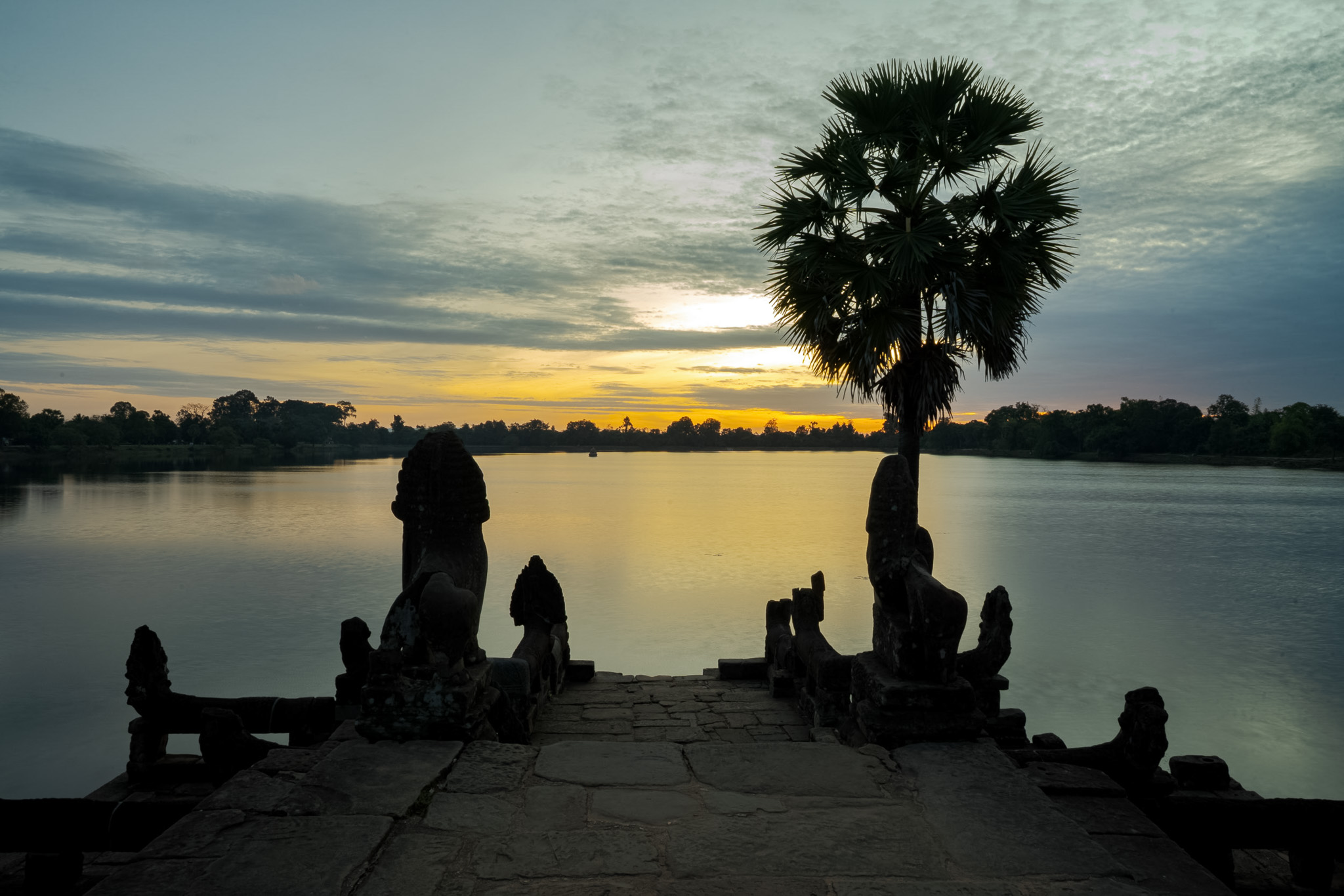
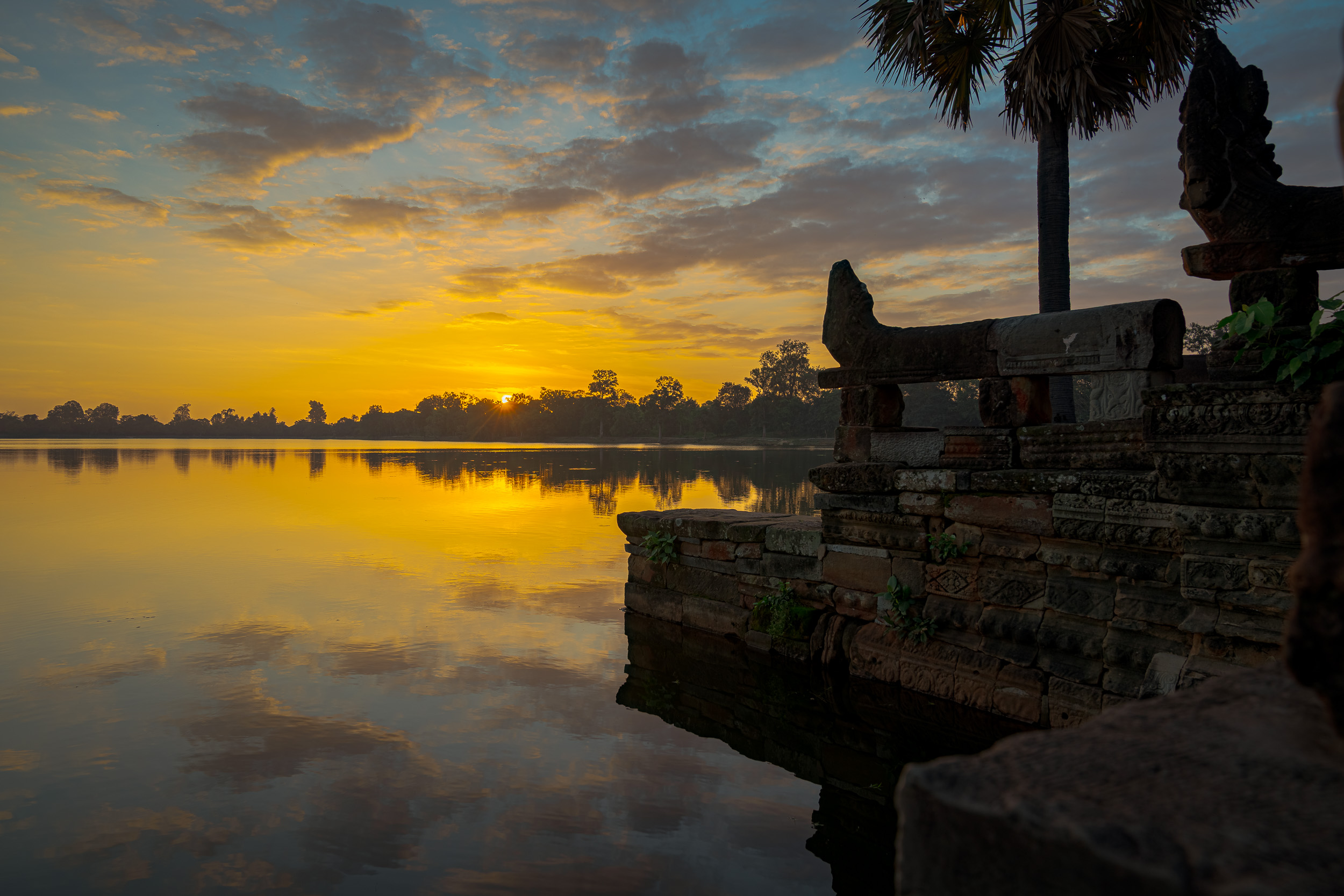
A clear morning can produce a strong sun reflected in the water. Clouds can create layers of colour across the sky, while darker mornings turn the terrace, lions and palm trees into silhouettes.
The stone terrace gives you plenty of foreground possibilities too. Instead of photographing only the horizon, use the guardian lions, naga balustrades, steps and palm trees to frame the water and sunrise.
And don’t assume a cloudy morning is a bad one. Some of our favourite photographs here have been made when the sun itself was barely visible.
Is Srah Srang worth visiting?
Srah Srang comes into view along the short path from the road near Banteay Kdei.
Yes, but we would not treat Srah Srang as a major attraction that needs hours of your itinerary. It is only a short walk from the road, with Banteay Kdei opposite and Ta Prohm a little further north.
Its appeal comes from the setting. It gives you a chance to stop between temples, look across the water and see a very different side of Angkor Archaeological Park.
But Srah Srang becomes more interesting when you realise the body of water in front of you is man-made. The Khmer built reservoirs, canals and other water infrastructure across Angkor, creating an extraordinary managed landscape around their temples and settlements. Srah Srang is one surviving part of that much bigger story.
Knowing this changes the way you look at it. You are not just stopping beside a scenic lake. You are standing on an ancient stone terrace looking across water that was deliberately incorporated into the landscape of Angkor centuries ago.
For us, Early morning is a peaceful time to experience Srah Srang. It offers a quiet start to the day, with views across the reservoir as the morning light develops.
The video below shows sunrise at Srah Srang at around 5:50–6:00 AM on September 10, during Cambodia’s low season. It gives you a realistic idea of the light, atmosphere and number of visitors you might encounter at this time of year. High season can be busier.
You can also consider visiting Srah Srang at sunset, as the terrace faces west across the reservoir.
Continue exploring Angkor
Angkor is much more than just Angkor Wat. Our Angkor temple guides are based on repeated visits and first hand experience, with practical advice on when to go, what to look for and which temples are worth including in your itinerary. Explore more of our guides below, or visit our complete Angkor Wat guide to start planning your time at Angkor.
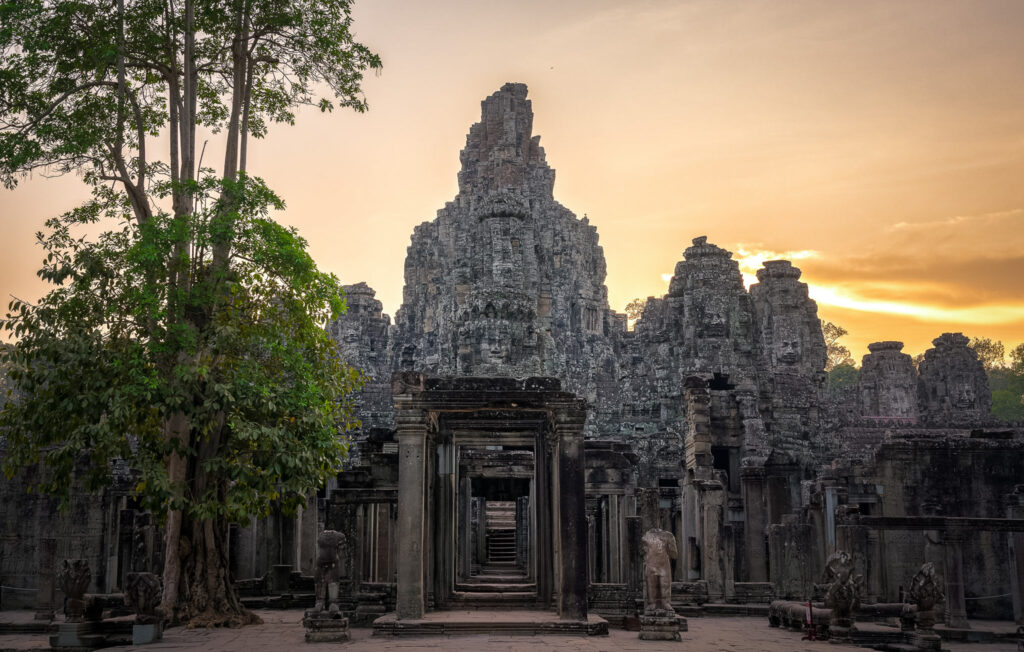
Bayon is one of Angkor’s most remarkable temples, famous for its enormous stone faces and maze of carved galleries. We recommend visiting early, when the temple is quieter and the soft morning light brings the faces to life.
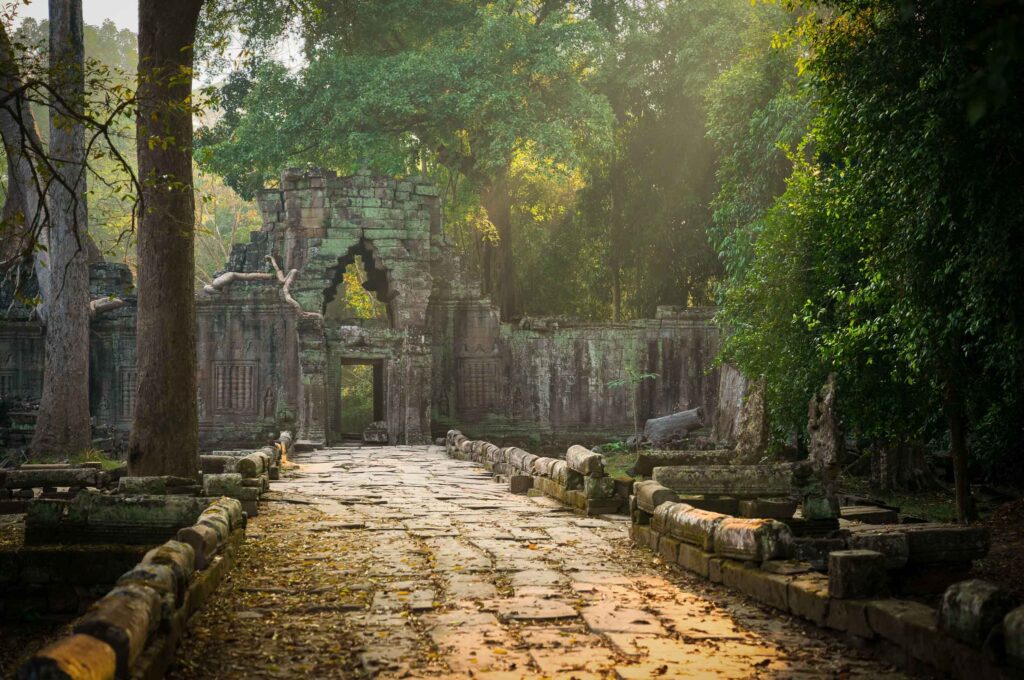
Explore Preah Khan, one of Angkor’s largest temples, known for its atmospheric corridors, ancient carvings and impressive tree roots. Our guide covers what to see and how to plan your visit.
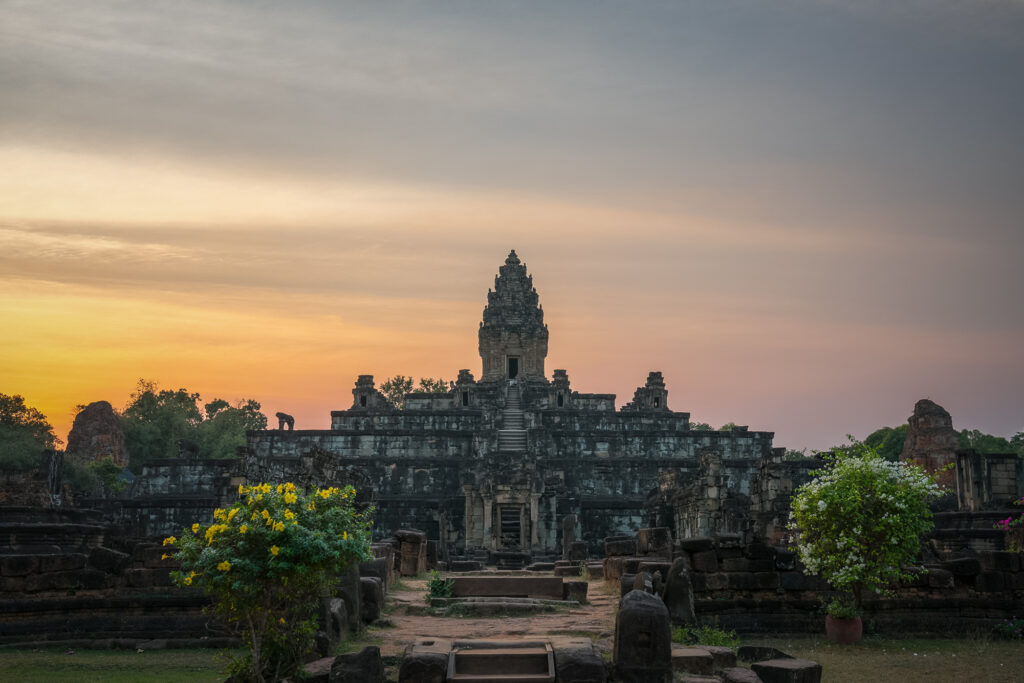
Bakong is one of the oldest temple mountains in the Angkor region. Discover its impressive stepped pyramid, stone elephants and what to know before visiting this historic temple near Siem Reap.
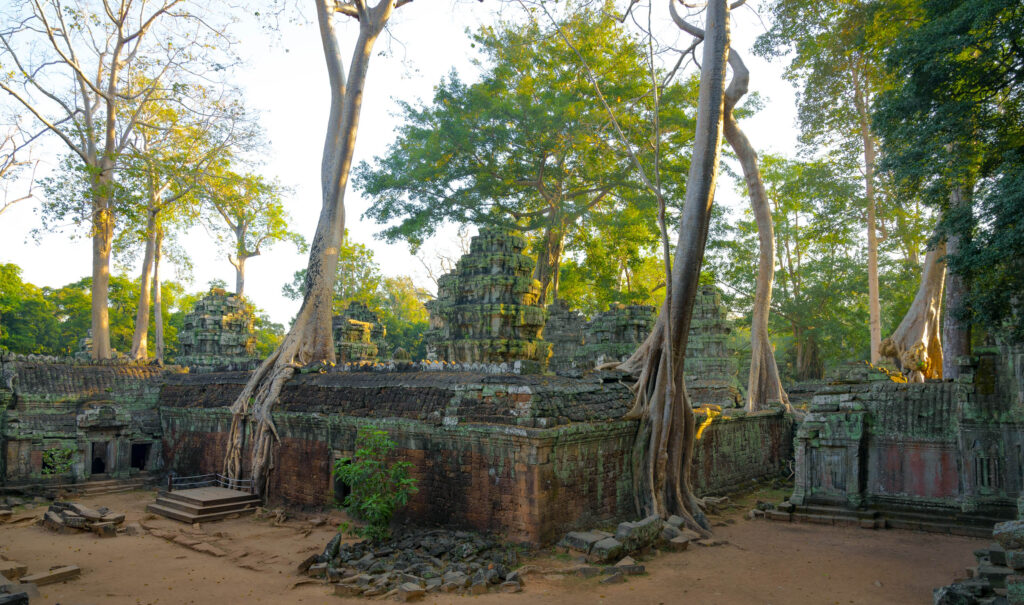
Ta Prohm is famous for its enormous trees growing through the ruins, but there is much more to explore beyond the best-known viewpoints. We recommend visiting early, when its corridors and courtyards are quieter and the temple is at its most atmospheric.
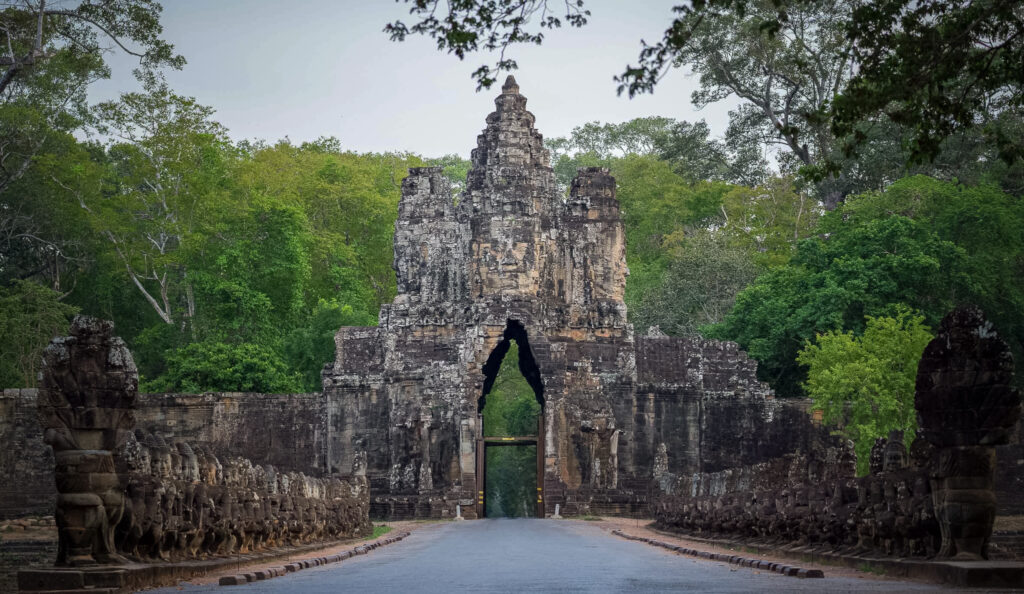
Visit Angkor Thom South Gate, the monumental entrance to the ancient city. Learn what to look for, when to visit, how to avoid the busiest times, and where to find the best views and photographs.
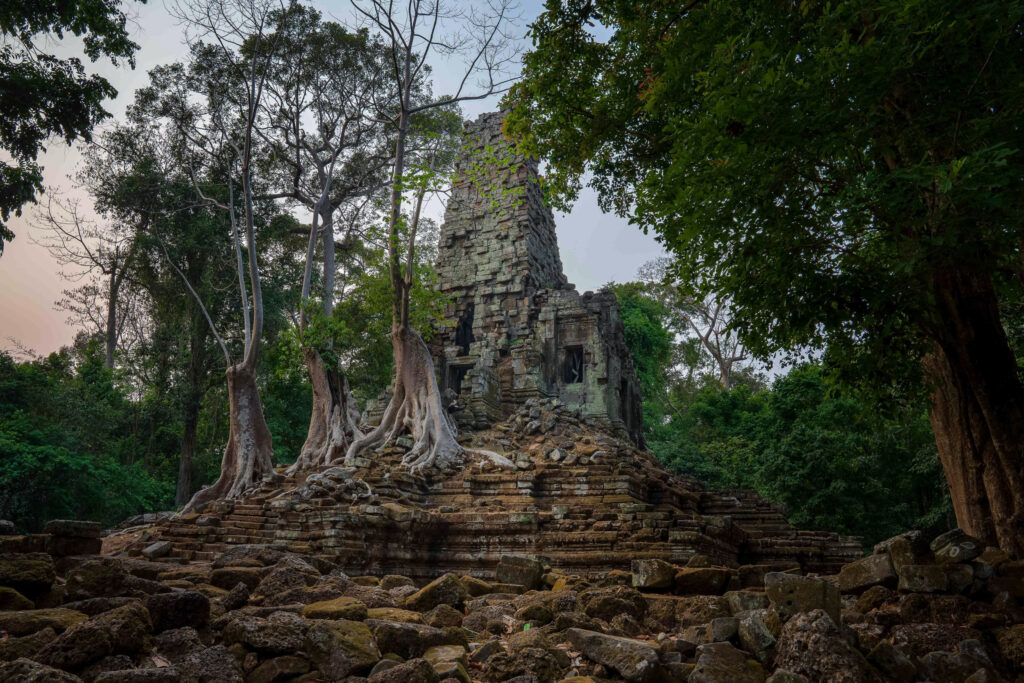
One of our favourite smaller temples at Angkor, Preah Palilay is especially atmospheric during the green season. It’s close to the Terrace of the Elephants, yet usually sees only a handful of visitors, making it an easy addition when exploring Angkor Thom.