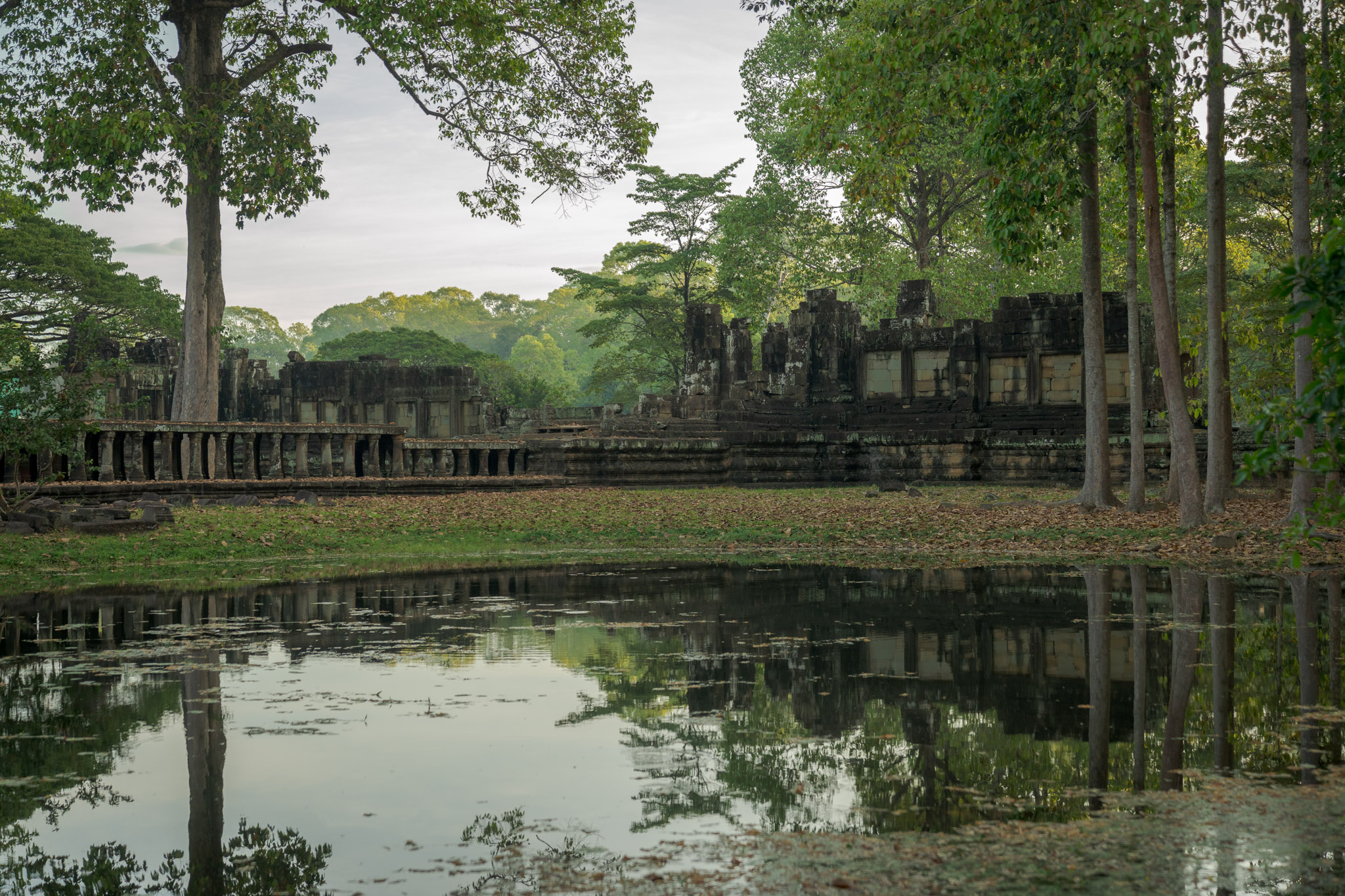
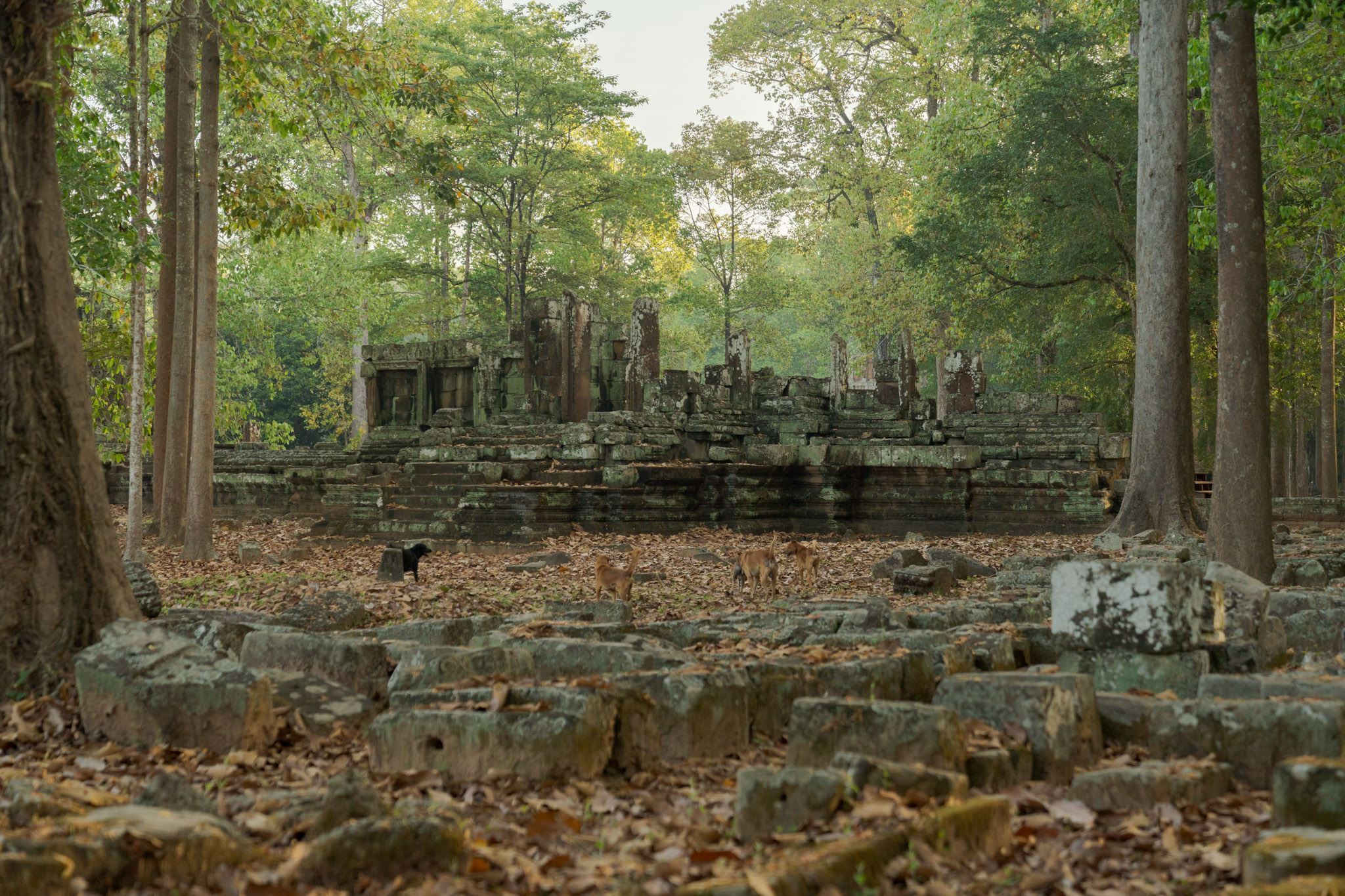
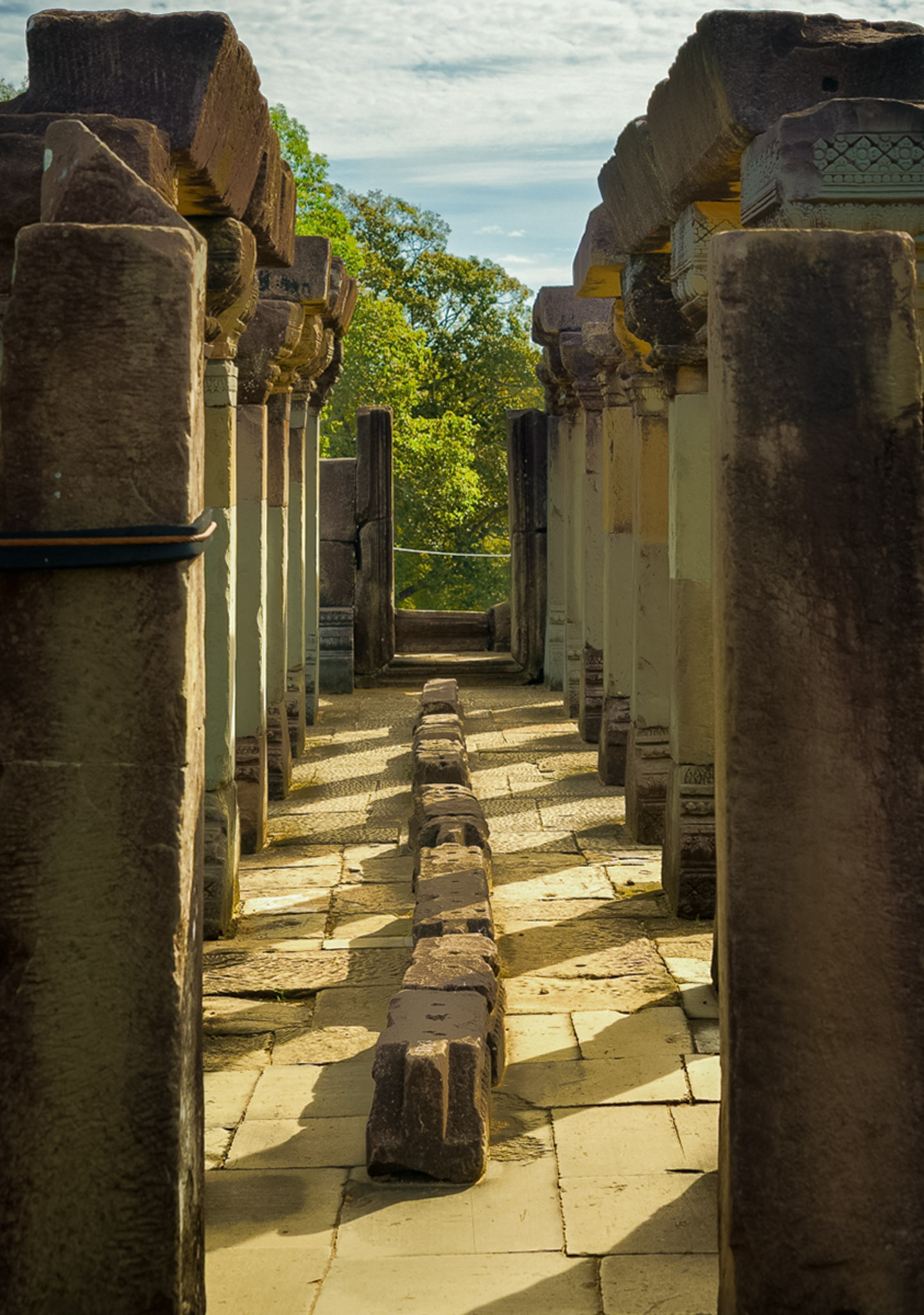
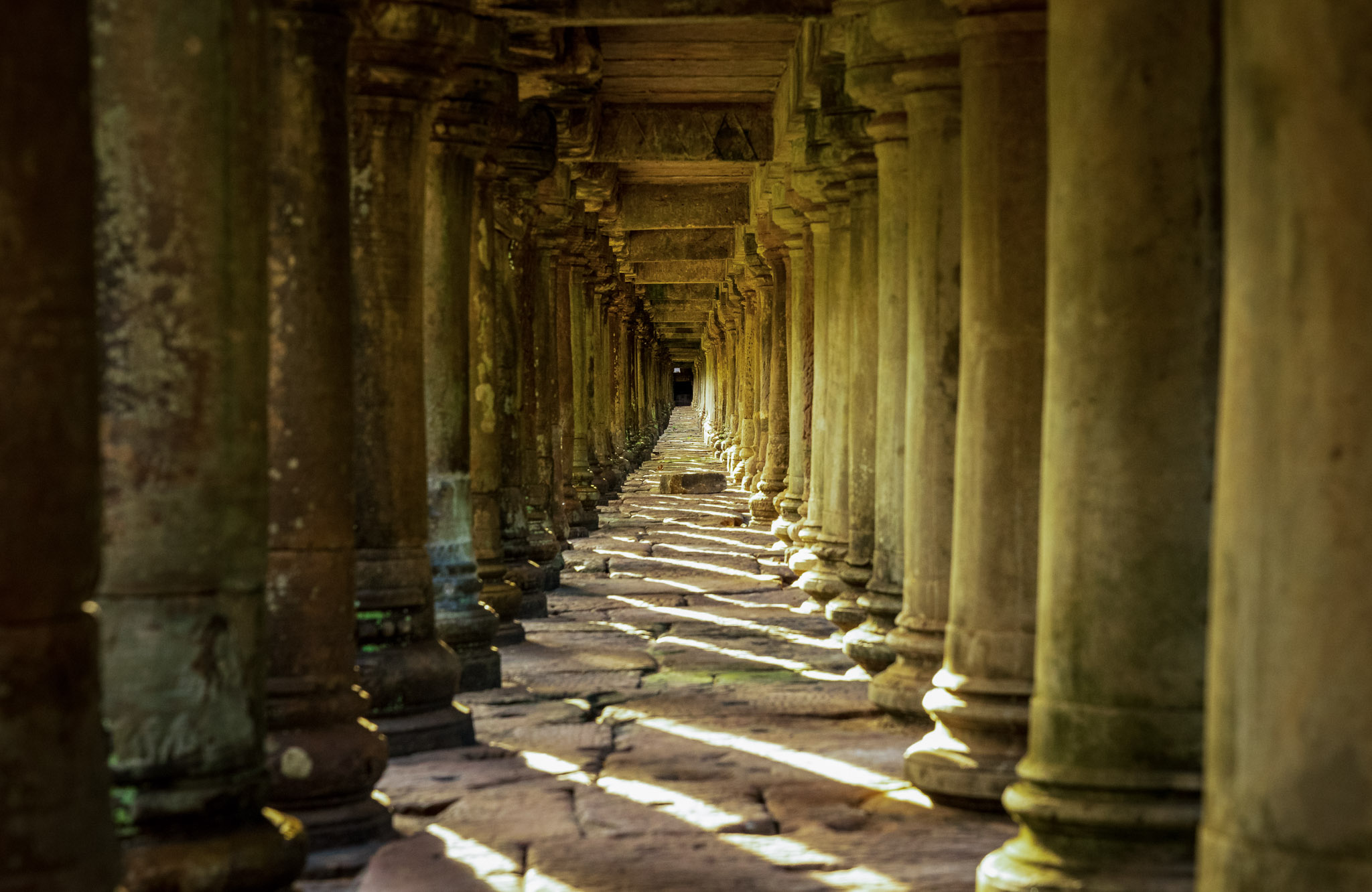
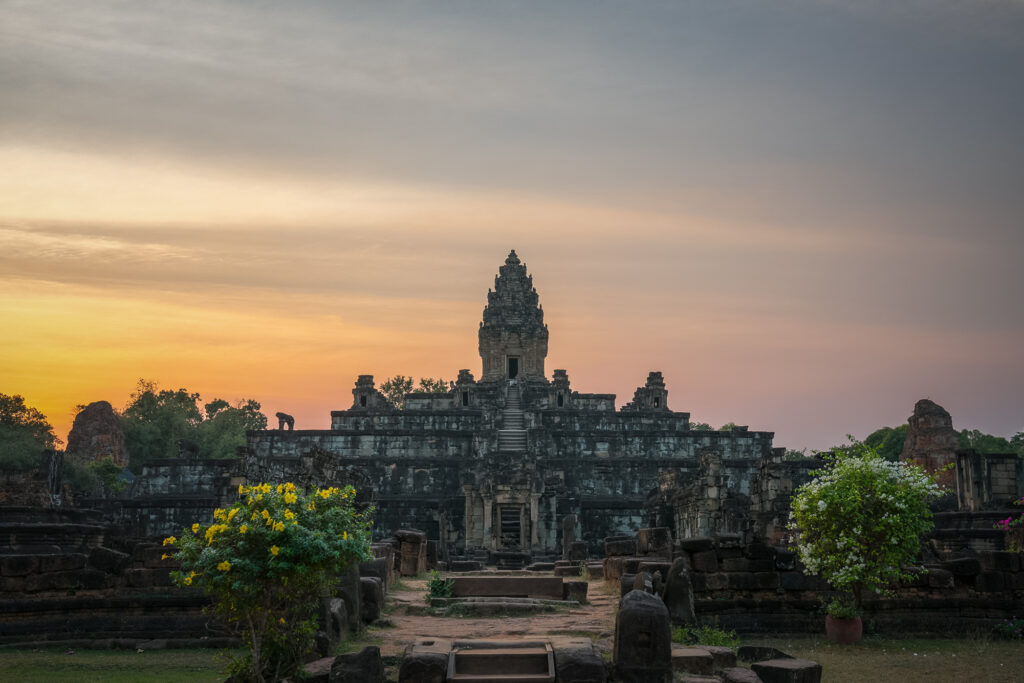
Baphuon is one of the most impressive temples inside Angkor Thom, but it is often overshadowed by nearby Bayon. Built as an enormous temple mountain, its steep terraces rise above the surrounding forest and give you a very different experience from the face towers and crowded passages of Bayon.
We think Baphuon is well worth visiting if you have the time. Part of the appeal is the scale of the temple itself, but the climb also gives you elevated views across Angkor Thom that you don’t get at most temples. Around the western side, an enormous reclining Buddha was later incorporated into the structure, adding another layer to a temple that changed considerably over its long history.
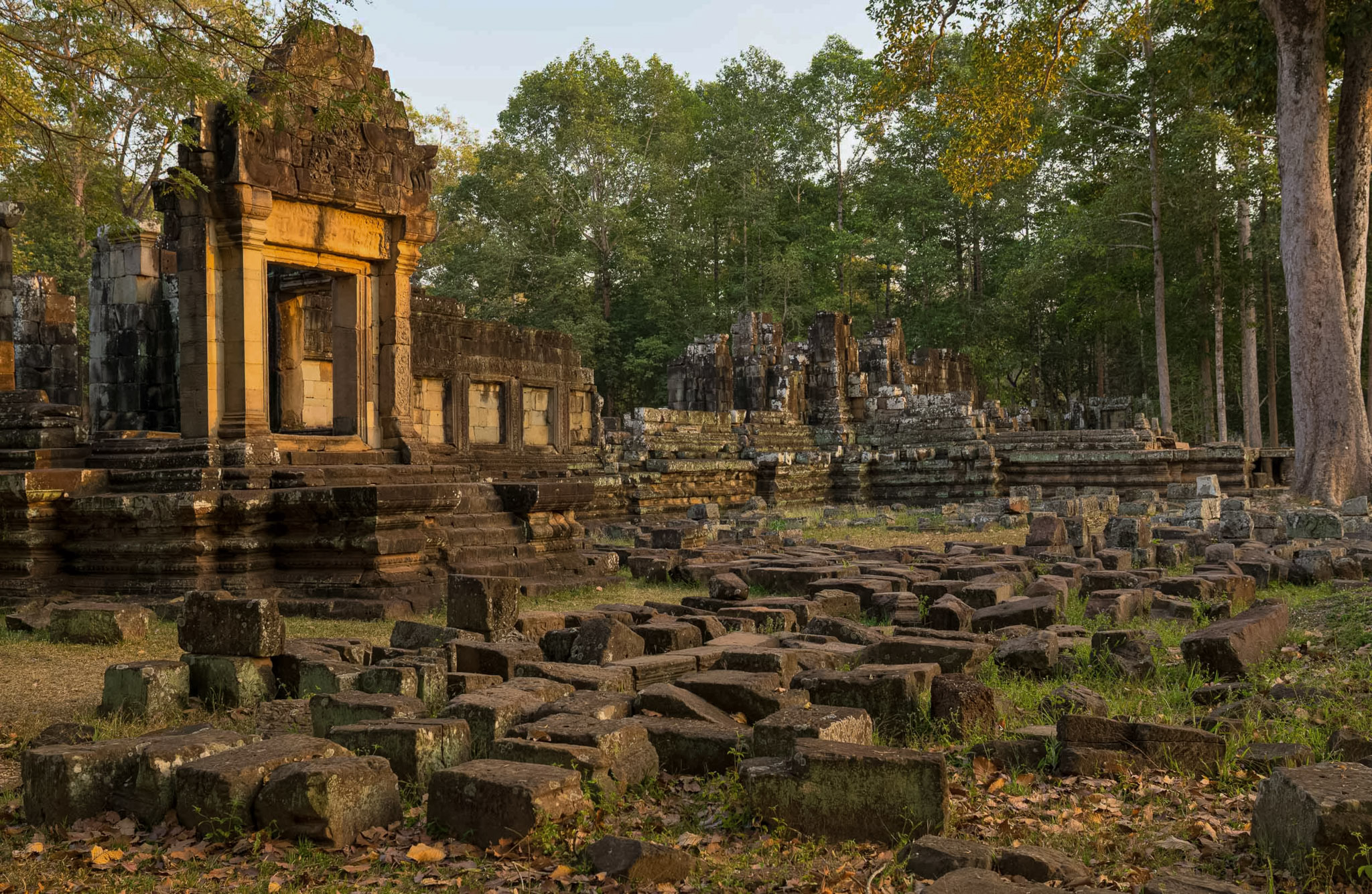
Baphuon is also a temple where the story of the restoration is almost as interesting as the monument. It was dismantled for reconstruction before decades of conflict interrupted the work, leaving archaeologists with an enormous puzzle when restoration eventually resumed.
Location: Inside Angkor Thom, northwest of Bayon
Built: Mid-11th century
King: Udayadityavarman II
Originally dedicated to: Shiva
Style: Hindu temple mountain
Later addition: Large reclining Buddha on the western side
Time needed: Around 45–60 minutes
Best time to visit: Morning or later afternoon
Physical difficulty: Moderate to strenuous if climbing to the upper levels
Temple pass: Included with the Angkor Pass

The first thing that stands out at Baphuon is its scale. A long raised causeway leads towards the temple before the huge tiered structure rises ahead of you. It feels quite different from Bayon despite the two temples being within easy walking distance of each other.
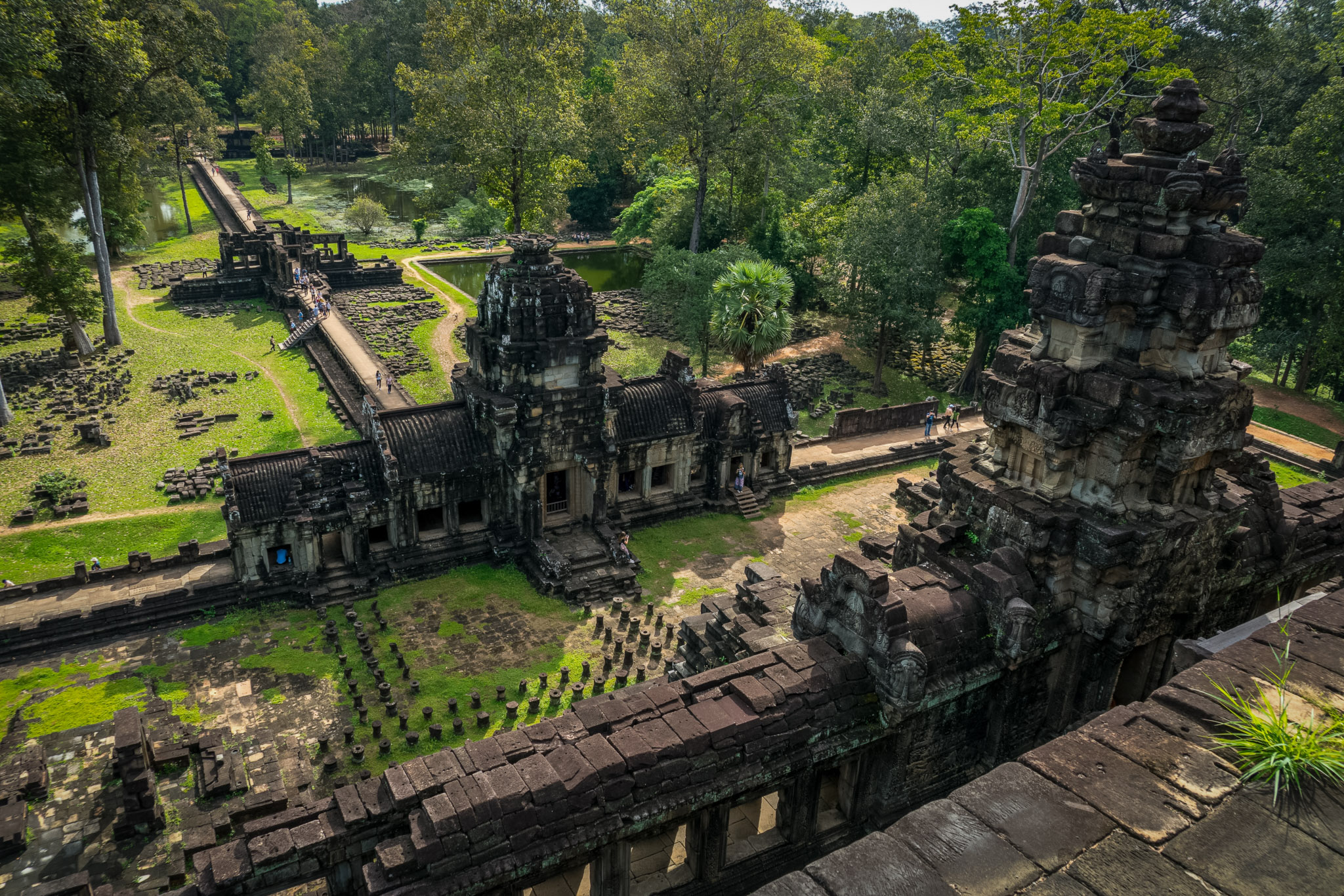
The upper levels are the main reason we recommend allowing enough time here. If the stairs are open and you’re comfortable with the climb, you can ascend through the different terraces and get excellent views over the temple complex and surrounding forest.
Baphuon is particularly worthwhile for visitors interested in architecture, photography and the restoration of Angkor. It also tends to feel less chaotic than Bayon, even though it sits on the standard Angkor Thom route.
Baphuon was constructed in the 11th century during the reign of King Udayadityavarman II, more than a century before the construction of Bayon. It originally stood at the centre of the royal capital that existed here before Jayavarman VII created the Angkor Thom we see today.
The temple was dedicated to Shiva and designed as a representation of Mount Meru, the sacred mountain at the centre of the Hindu cosmological universe. Its enormous tiered pyramid would have dominated the surrounding royal city.
Centuries later, after Buddhism had become Cambodia’s dominant religion, the temple was substantially altered. A huge reclining Buddha was constructed along the western side using stone from parts of the existing monument.
Those different periods are one of the reasons Baphuon is so interesting. You’re not looking at a temple frozen at the moment it was built, but a structure that was repeatedly adapted as Cambodia’s religious and political landscape changed.
Don’t rush the approach to Baphuon.
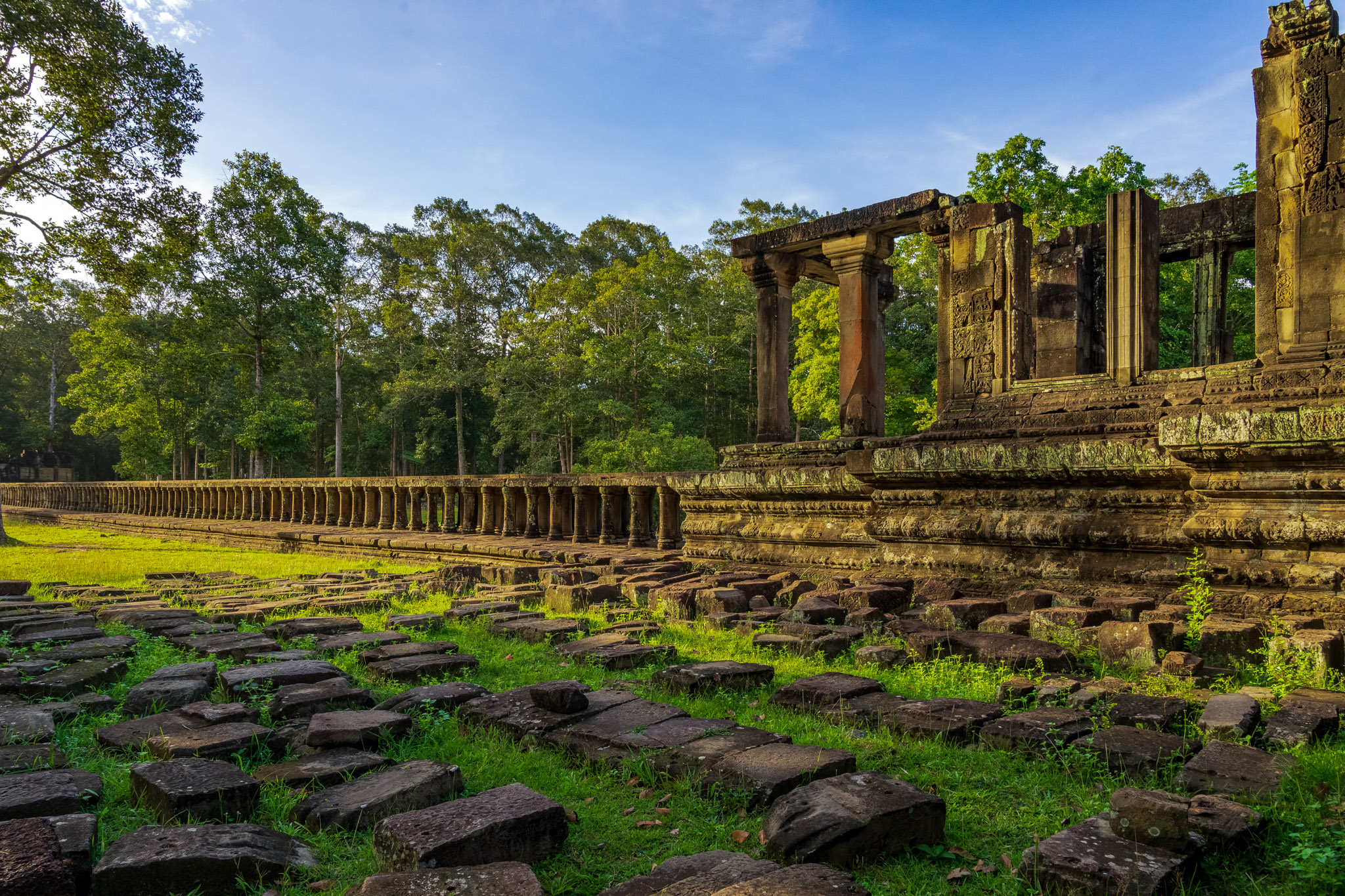
A long elevated sandstone causeway leads from the eastern entrance towards the main temple. Supported on rows of columns, it creates one of the most distinctive approaches at Angkor.
As you walk towards the temple, its scale gradually becomes clearer. From a photography perspective, this is also one of the best places to appreciate the symmetry of the structure before getting close to it.
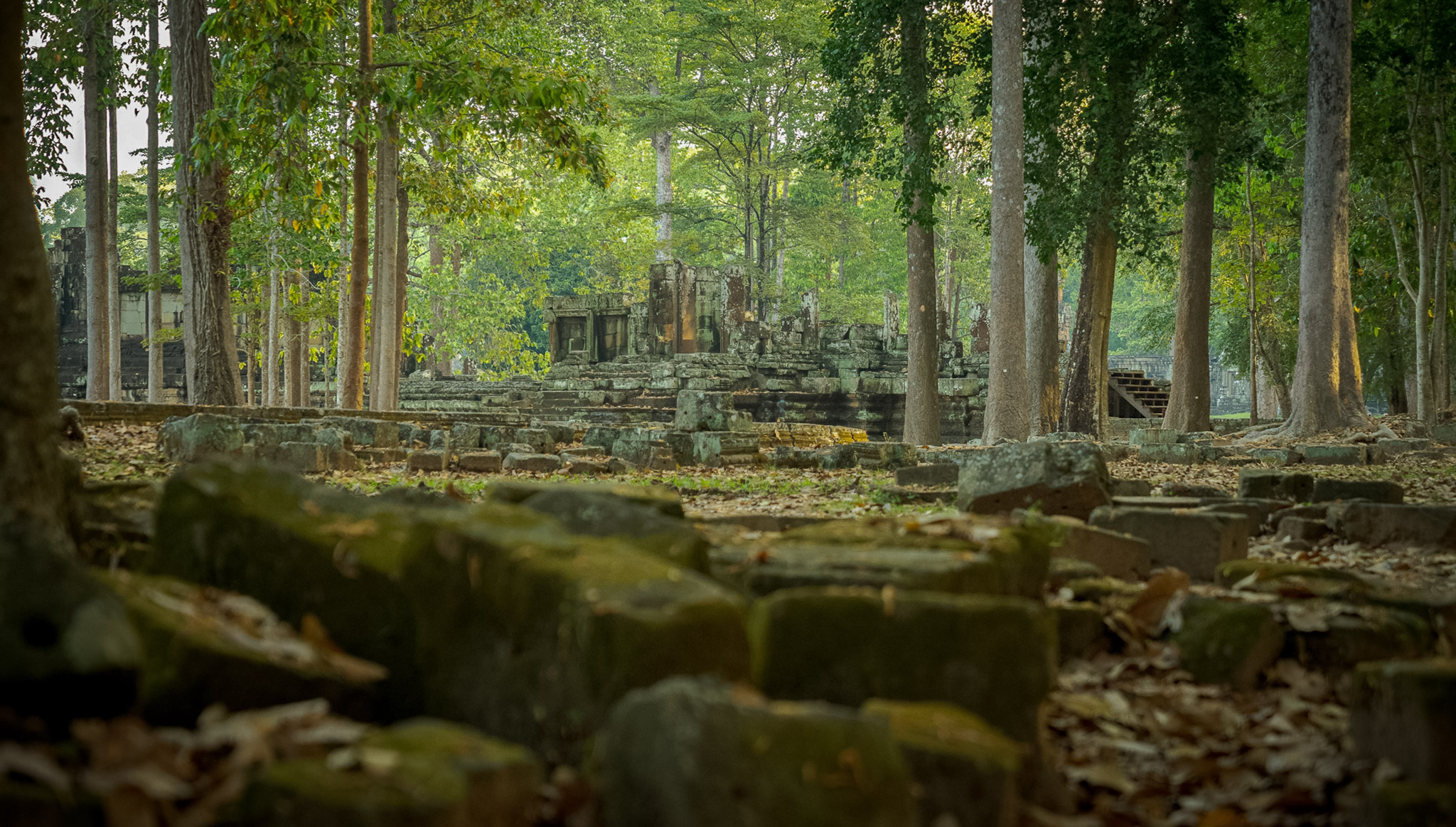
The surrounding forest makes the approach particularly attractive in the green season, when the vegetation becomes much denser and the stone takes on deeper colours.
Baphuon is one of the Angkor temples where climbing genuinely changes the experience.
Modern wooden staircases provide access to the higher terraces when they are open. The stairs are steep, and the combination of heat, humidity and climbing can make this considerably harder than it initially looks.
If you’re comfortable with the climb, we think it is worth doing. As you ascend, you begin to see over the lower galleries and eventually across the surrounding forest and Angkor Thom.
Allow yourself time at the top instead of treating the climb as something to complete quickly. The elevated perspective helps you understand just how large the original temple mountain was.
If you have limited mobility, difficulty with steep stairs or problems with heights, you can still appreciate Baphuon without climbing to the upper levels. The causeway, lower areas and exterior provide plenty to see.
One of Baphuon’s most unusual features is surprisingly easy to miss.
On the western side of the temple is an enormous reclining Buddha, constructed several centuries after the original Hindu temple. Rather than being a separate freestanding statue, the figure was incorporated into the structure using sandstone blocks from the temple itself.
It can be difficult to recognise when you’re standing close to it because of its scale and the condition of the stonework. Step back and look at the overall outline rather than searching for the kind of clearly carved Buddha image you might expect.
The reclining Buddha is an excellent example of how Angkor’s temples continued to be used and modified long after their original construction.
Baphuon’s modern history is extraordinary.
By the 20th century, much of the temple was unstable and collapsing. French archaeologists began an enormous restoration project using anastylosis, a process in which a monument is carefully dismantled and reconstructed using as much of the original material as possible.
Thousands of stones were removed, catalogued and laid out around the site.
Then Cambodia descended into decades of war and political upheaval. Records needed to reconstruct the temple were lost, while the dismantled stones remained scattered around the site.
When restoration eventually resumed, archaeologists faced what has often been described as one of the world’s largest three-dimensional puzzles.
The painstaking reconstruction took decades, and the restored Baphuon was officially reopened in 2011.
Knowing this before you visit makes the temple much more interesting. Many of the stones and structures you’re walking through today were painstakingly identified and returned to position after decades of interruption.
Morning is our preferred time to visit Baphuon, particularly if you intend to climb the temple. Temperatures are lower, and walking up the exposed upper levels becomes considerably less pleasant as the day gets hotter.
However, we wouldn’t necessarily make Baphuon your first temple of the morning. If you’re trying to avoid crowds across Angkor, there are temples where arriving early makes a bigger difference.
A practical route is to visit Bayon first and continue to Baphuon afterwards. The temples are close together, and this follows naturally into the Royal Palace area and Terrace of the Elephants.
Later afternoon can also be attractive, particularly for photography, although you should leave enough time to explore before access to the upper areas closes.
Allow around 45 minutes to one hour for Baphuon if you plan to climb the temple and explore the western side.
You can see the main exterior and walk the causeway more quickly, but we’d avoid squeezing Baphuon into a ten-minute photo stop. The approach, climb, views and reclining Buddha are what make the temple worthwhile.
If you’re particularly interested in architecture or photography, you could easily spend longer.
Because Baphuon sits so close to Bayon, the two temples work extremely well together, but they are very different experiences.
Bayon is intricate, enclosed and dominated by its famous stone faces. Baphuon is about scale, elevation and the form of the temple mountain itself.
If your itinerary allows it, we recommend walking between them instead of treating them as completely separate vehicle stops. It gives you a better sense of the concentration of major monuments within Angkor Thom.
Baphuon isn’t usually the temple people come to Cambodia specifically to see, but it’s one of the places that makes Angkor Thom much more interesting than a quick stop at Bayon.
We particularly like the long approach, the change in perspective as you climb, and the views from the upper terraces. The reclining Buddha and extraordinary restoration story also give you things to look for beyond the architecture itself.
If you’re doing a very rushed Small Circuit, Bayon will understandably take priority. But if you have enough time to explore Angkor Thom properly, we would definitely include Baphuon rather than driving straight from Bayon to the next major stop.
For us, it is one of those temples that rewards slowing down and exploring Angkor Thom as a larger archaeological landscape instead of a checklist of individual monuments.
Angkor is much more than just Angkor Wat. Our Angkor temple guides are based on repeated visits and firsthand experience, with practical advice on when to go, what to look for and which temples are worth including in your itinerary. Explore more of our guides below, or visit our complete Angkor Wat guide to start planning your time at Angkor.