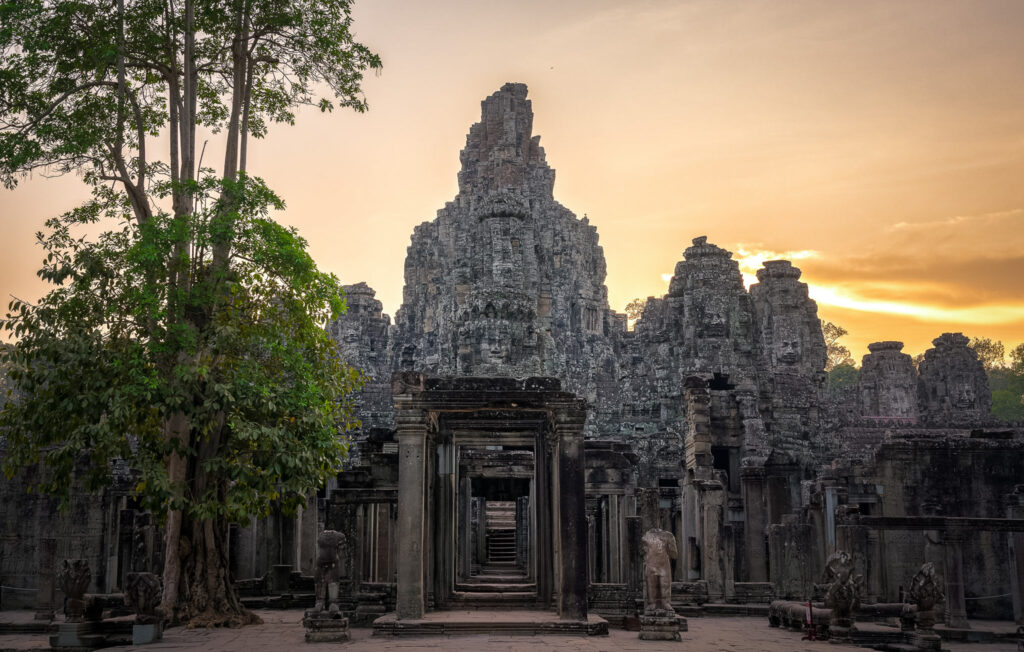
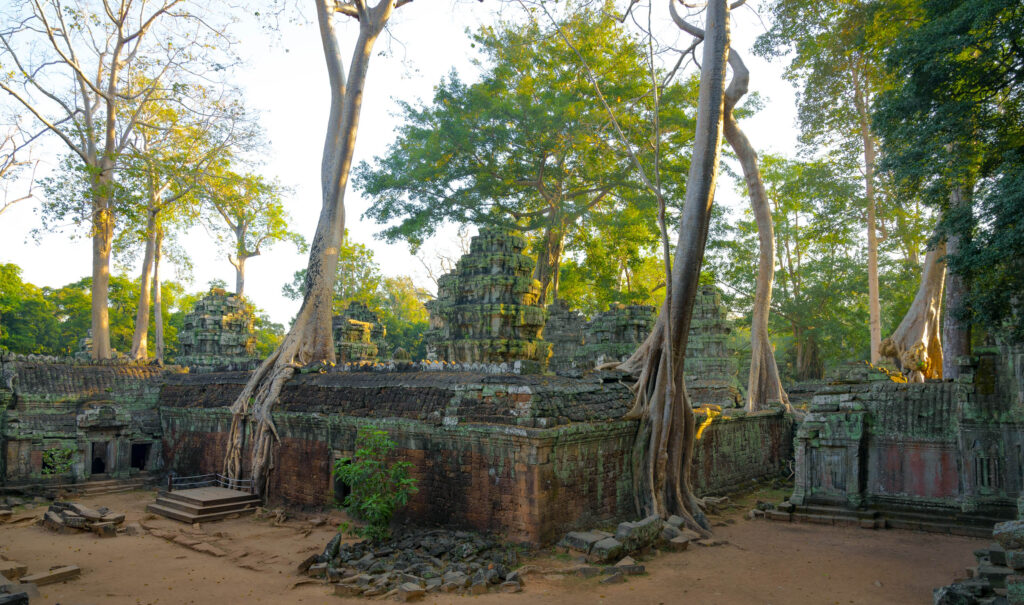
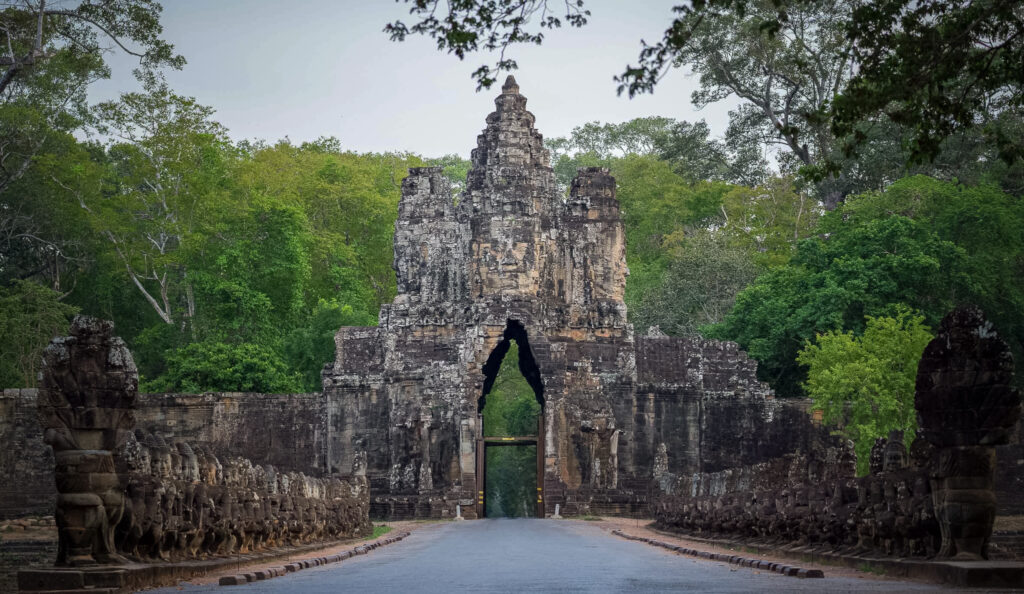
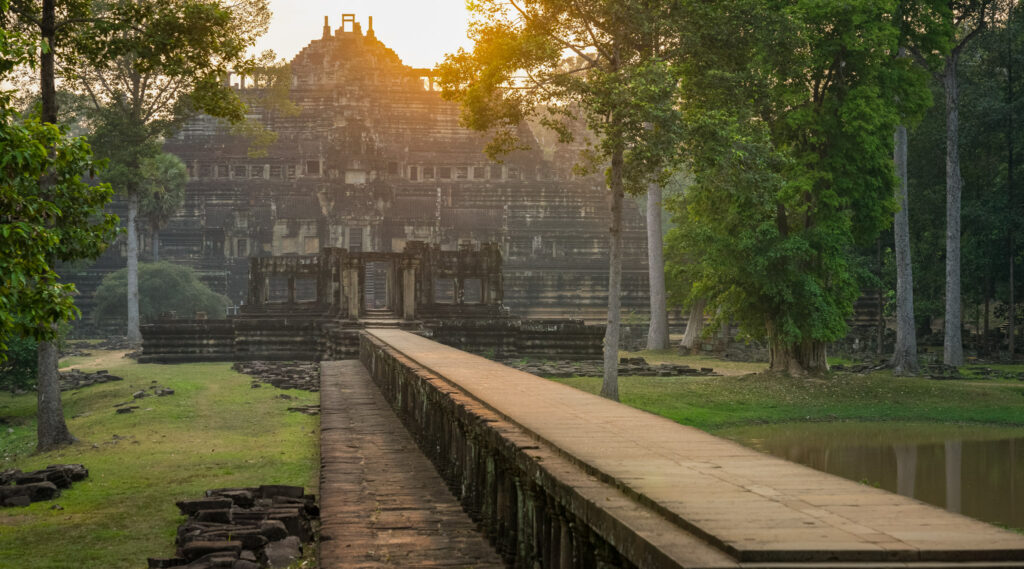
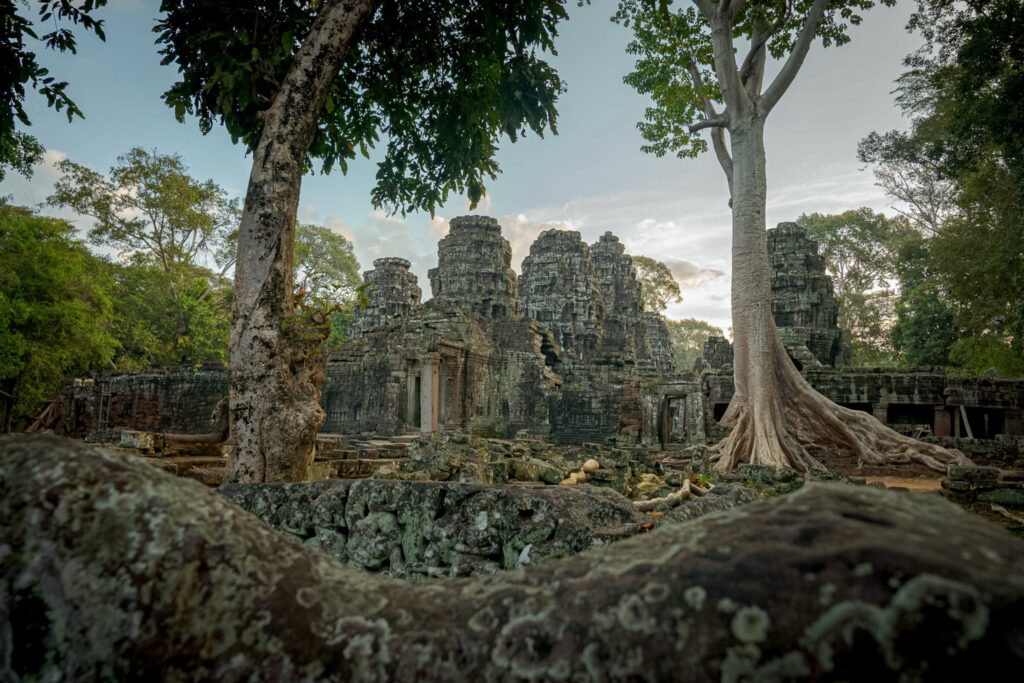
Preah Palilay is one of the smaller temples inside Angkor Thom, hidden among tall trees north of the Royal Palace area. It doesn’t have the scale of Bayon or Baphuon, but that’s a large part of why we like it. The temple feels secluded, the forest comes right up against the ruins, and it is easy to explore without the crowds found at Angkor’s better-known monuments.
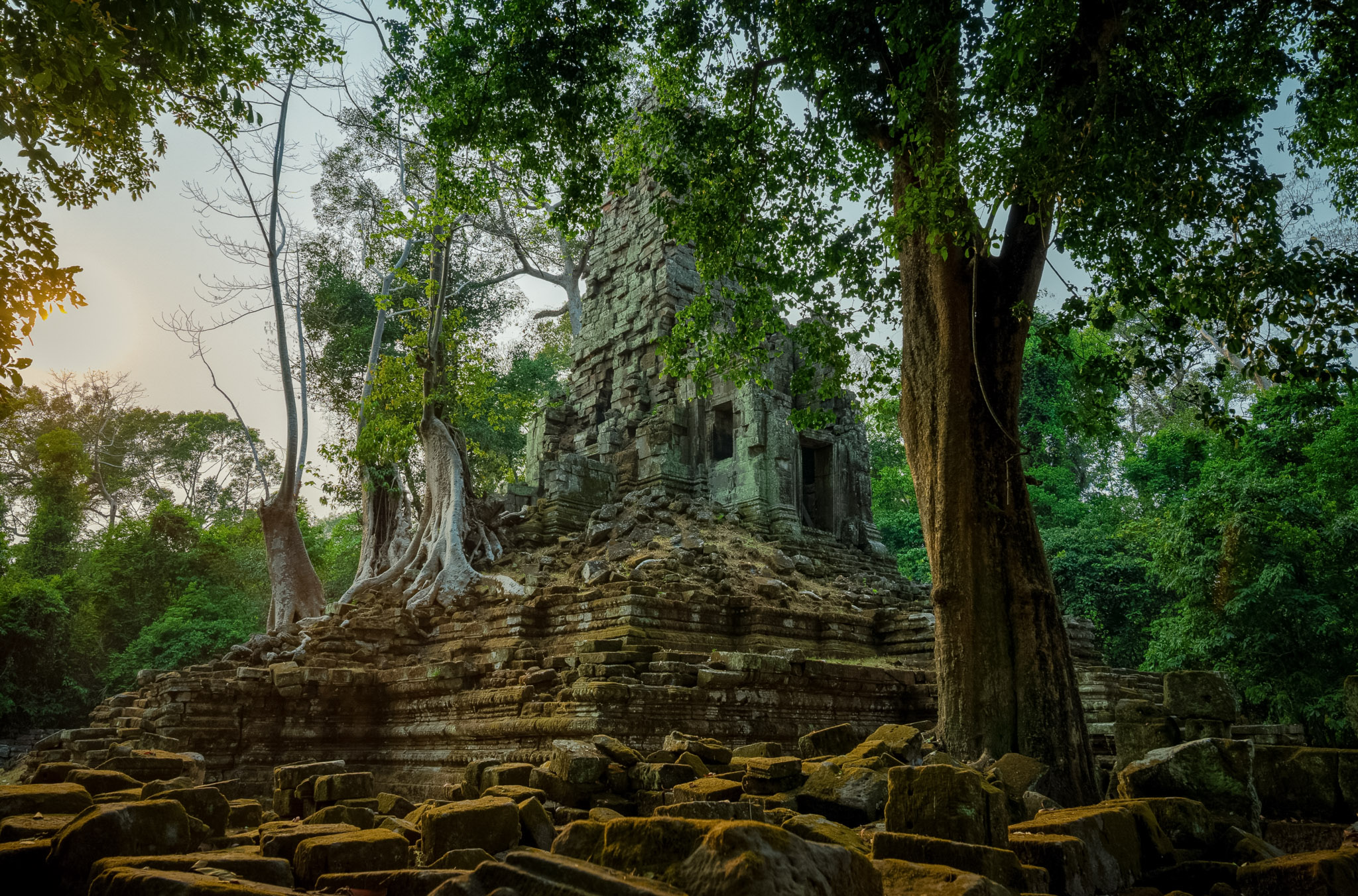
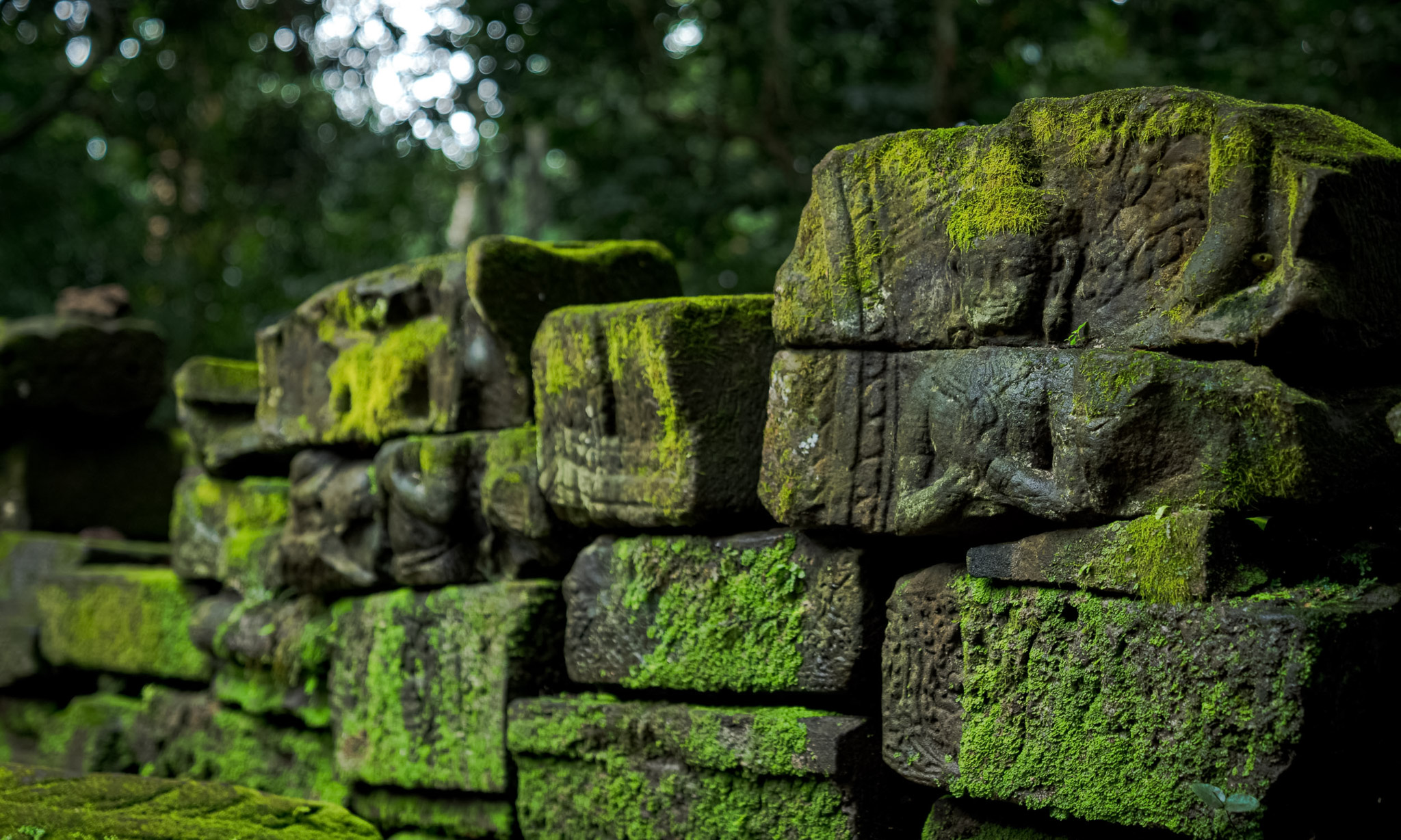
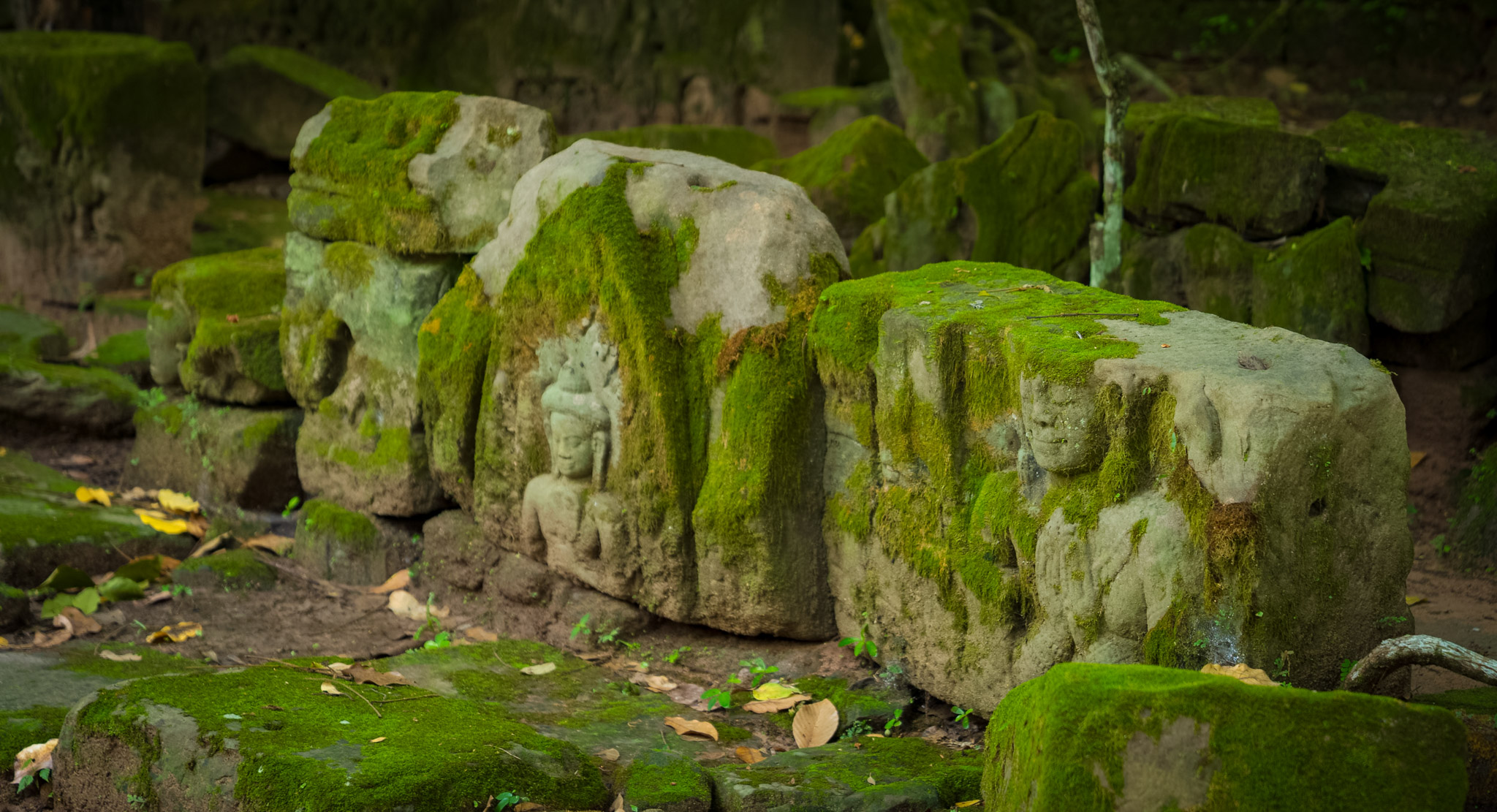
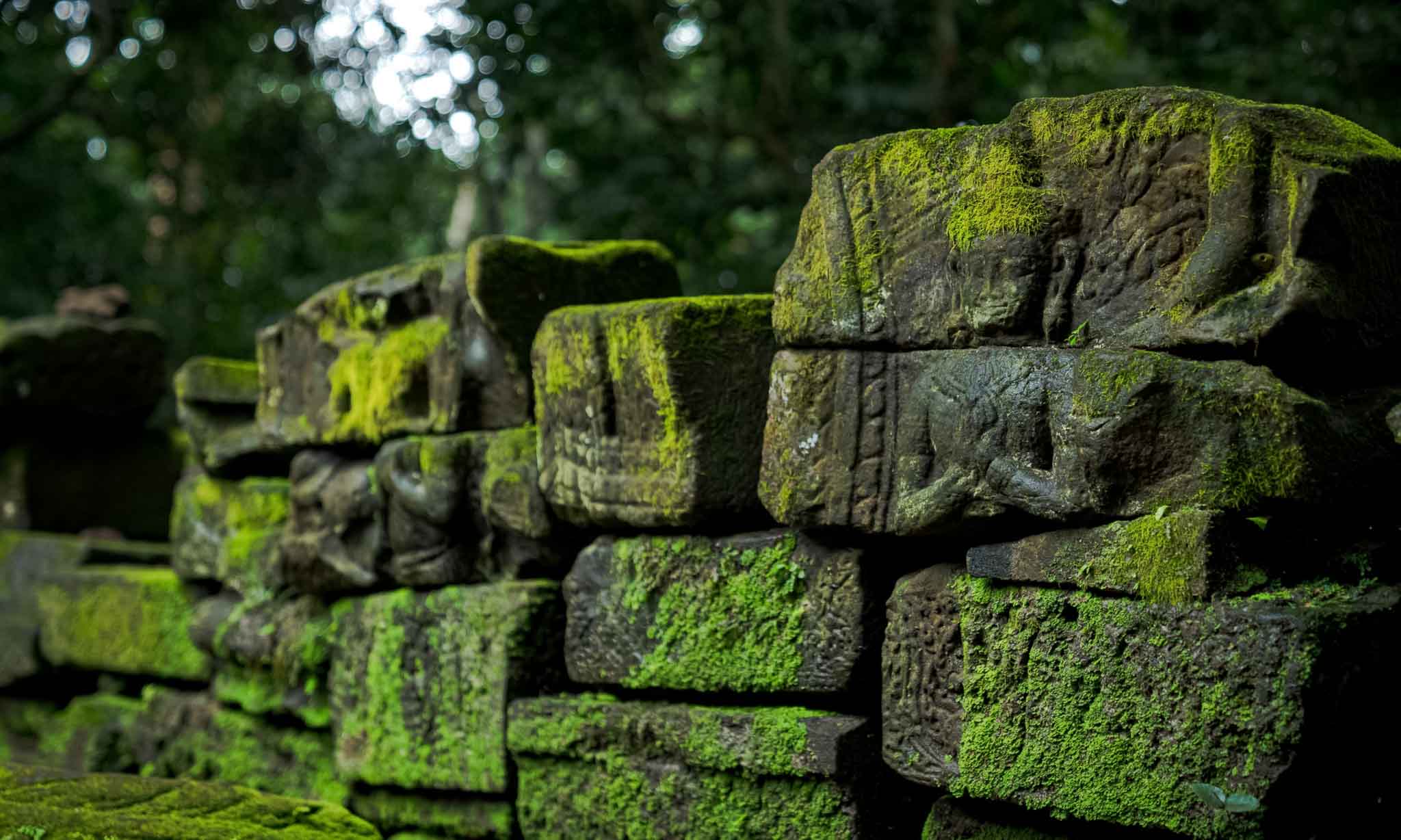
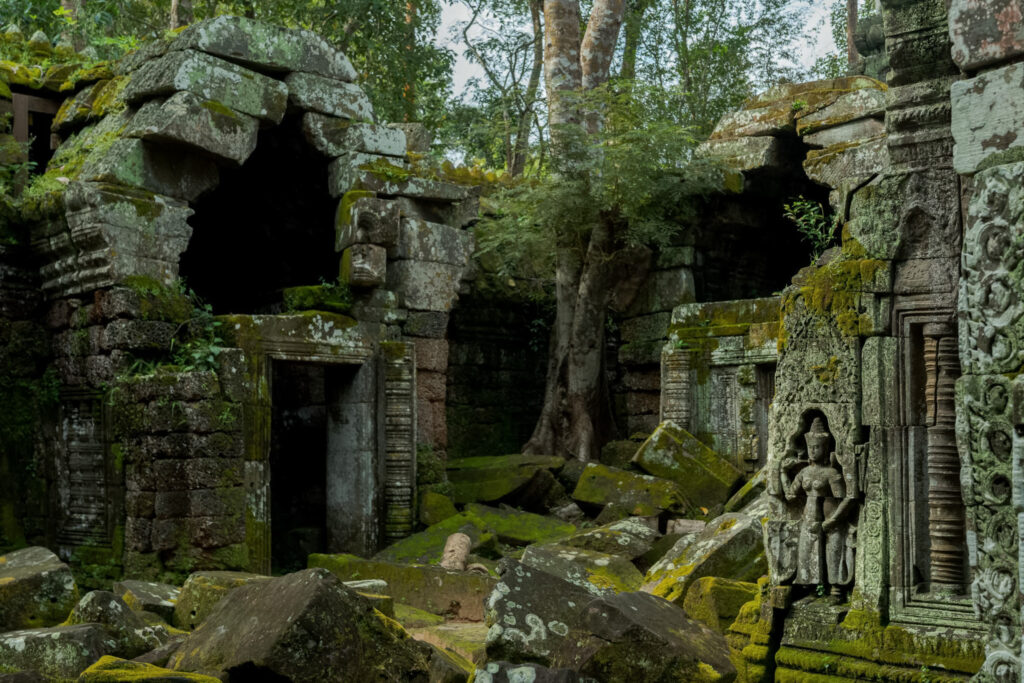
The most distinctive feature is its central sanctuary, which rises dramatically from a steep stone base. Around it you’ll find weathered carvings, scattered sandstone blocks and trees growing amongst the remains. During the green season, moss covers much of the fallen stonework and the whole area becomes particularly lush and atmospheric.
Preah Palilay isn’t a temple we’d suggest prioritising on a first, rushed visit to Angkor. But if you’re already exploring Angkor Thom and want to see something quieter beyond its headline monuments, it’s an easy temple to add and one we think deserves more attention than it gets.
Location: Northern part of Angkor Thom, near Tep Pranam and the Royal Palace area
Built: Probably late 12th to early 13th century, although its dating is uncertain
Religion: Buddhist, with some Hindu elements
Known for: Forest setting, central sanctuary and quiet atmosphere
Time needed: Around 20–30 minutes
Best time to visit: Flexible, although mornings are cooler
Physical difficulty: Easy to moderate, with uneven stone and steps around the sanctuary
Temple pass: Included with the Angkor Pass

Preah Palilay is worth visiting for almost the opposite reasons that you visit Angkor Wat or Bayon.
There is no enormous complex to work your way through and no single famous carving that everyone is trying to photograph. Instead, the appeal is the relationship between the ruins and the forest around them.
The central tower is compact but striking, particularly when viewed through the surrounding trees. Fallen sandstone blocks lie around the site, some becoming heavily covered in moss during the rainy season.
It’s also a useful reminder that Angkor Thom contains far more than the handful of monuments visited on most standard itineraries.
Preah Palilay is somewhat unusual because its exact construction date remains uncertain.
Architectural and decorative elements suggest different periods, and the temple contains both Buddhist and Hindu influences. It is generally associated with the later Angkorian period and may date from around the late 12th or 13th century.
Buddhist imagery found around the site is particularly interesting because much Buddhist art at Angkor was later altered or destroyed during periods when Hinduism again became dominant.
That complicated religious history is visible throughout Angkor, where temples were frequently reused, modified and reinterpreted long after their original construction.
The approach is understated, which suits the temple.
You enter through a small eastern gopura surrounded by forest before continuing towards the main sanctuary. Unlike the grand approaches at Angkor Wat or Baphuon, there is very little here preparing you for a monumental structure.
Instead, the ruins gradually appear amongst the trees.
Take your time around the entrance. There are carvings and architectural details that are easy to walk straight past if you’re concentrating only on reaching the central tower.
The sanctuary is the visual centrepiece of Preah Palilay.
It rises from a steep multi-level stone base, giving the relatively small structure much more height and presence than you might expect when approaching through the forest.
The tower itself is heavily weathered, which adds to the character of the site. From certain angles, the combination of broken stone, vegetation and tall surrounding trees gives Preah Palilay the kind of atmosphere many people imagine before they first visit Angkor.
The steps and stone surfaces can be uneven, particularly after rain, so take care when exploring around the base.
One of the things we particularly like photographing at Preah Palilay is the scattered stonework around the temple.
Weathered sandstone blocks sit amongst the trees and vegetation, some carved and others difficult to identify as parts of the original structure. Fallen and displaced stone is common throughout Angkor, but the forest setting here makes it particularly noticeable.
The appearance also changes significantly through the year.
During the dry season the stone can appear dusty and relatively bare. By the height of the green season, moss can turn the same blocks vivid green, while the surrounding vegetation becomes considerably denser.
If you’re interested in photography, these seasonal changes make smaller forest temples such as Preah Palilay particularly interesting to revisit.
We particularly like Preah Palilay during Cambodia’s green season.
From roughly May to October, increased rainfall transforms the forest around Angkor. At Preah Palilay, moss spreads across the sandstone, vegetation becomes intensely green and the surrounding trees create a much more enclosed atmosphere.
Rain doesn’t necessarily make this a bad time to explore. The forest provides some shade, and softer overcast light can work extremely well for photographing the stone and vegetation.
Surfaces can become slippery after heavy rain, however, particularly around loose stone and steps.
Unlike Ta Prohm, Bayon or Angkor Wat, we wouldn’t structure an entire morning around reaching Preah Palilay before the crowds. It doesn’t receive enough visitors for that to be necessary most of the time.
That makes it useful when planning a day at Angkor. Save your earliest hours for the temples where timing makes the biggest difference, then fit Preah Palilay into your route when you’re already exploring Angkor Thom.
Morning still has the advantage of cooler temperatures, but the forest provides more protection from the sun than many of Angkor’s exposed temples.
Preah Palilay makes most sense as part of a more complete exploration of Angkor Thom.
Bayon, Baphuon, the Royal Palace area, Phimeanakas, the Terrace of the Elephants and Terrace of the Leper King receive most of the attention. Preah Palilay allows you to continue beyond these better-known monuments into a much quieter part of the ancient city.
Because the temple itself doesn’t require long, it is an easy addition rather than a major detour.
If you enjoy walking and aren’t rushing through the standard circuit, this is exactly the kind of smaller site we’d add.
Preah Palilay is a particularly good temple for detail and environmental photography.
The central sanctuary gives you the obvious architectural subject, but we’d also pay attention to the smaller scenes: carved stones amongst moss, tree trunks against weathered walls, fallen blocks and views of the sanctuary partially obscured by vegetation.
The forest means the light can be relatively low and uneven, especially during the green season. That isn’t necessarily a disadvantage. The contrast between patches of light and the darker forest can give the ruins considerably more depth.
Preah Palilay is popular with locals for ‘pre wedding photography’ or couple photographs wearing traditional Khmer clothing. You’ll often see a team of photographers there doing just that.
Around 20 to 30 minutes is enough for most visitors.
Preah Palilay is compact, so there is no need to allocate the kind of time you would for Angkor Wat, Ta Prohm or Baphuon.
Photographers may want longer, particularly during the green season when there are plenty of smaller details around the site.
Preah Palilay isn’t an essential first-time Angkor temple, and we wouldn’t pretend it should replace Bayon, Ta Prohm or the other major monuments on a limited itinerary.
But that’s also missing the point of places like this.
Once you move beyond Angkor’s headline temples, smaller sites such as Preah Palilay start to show how extensive the archaeological landscape really is. Here you can wander through forest, examine fallen stonework and explore an ancient sanctuary without feeling like you’re moving along the same route as everybody else.
If you’re spending enough time in Angkor Thom to explore beyond the standard stops, we recommend adding Preah Palilay. It doesn’t require much extra time, and its quiet forest setting provides a welcome contrast to the monumental architecture elsewhere in the ancient city.
Angkor is much more than just Angkor Wat. Our Angkor temple guides are based on repeated visits and first hand experience, with practical advice on when to go, what to look for and which temples are worth including in your itinerary. Explore more of our guides below, or visit our complete Angkor Wat guide to start planning your time at Angkor.