Visiting Angkor Wat with a wheelchair: accessibility guide
Visiting Angkor Wat with a wheelchair or limited mobility is possible, but Angkor is not fully accessible and the experience varies considerably between temples.
Some areas have ramps and relatively manageable routes, while others involve steep steps, uneven stone, sand, thresholds and considerable walking distances. Accessible toilet facilities are also available at a number of locations around Angkor Archaeological Park.
This guide is based on our experience at the temples and is intended to give wheelchair users and visitors with limited mobility a realistic idea of what to expect.
We will continue updating this guide as we document accessibility at more temples and facilities around the park.
How accessible is Angkor Wat?
A significant part of a visit to Angkor Wat is possible for visitors using wheelchairs or with limited mobility, particularly with suitable transport and assistance.
However, it is important to understand that Angkor Wat is a centuries-old temple complex rather than a modern accessible attraction. Routes can include uneven stone, changes in level, sandy or rough surfaces and steps.
Some sections therefore require assistance or may not be practical for every visitor.
The uppermost level of Angkor Wat, known as the Bakan, is not wheelchair accessible. Reaching it requires climbing a very steep wooden staircase, and there are additional restrictions on who may enter.
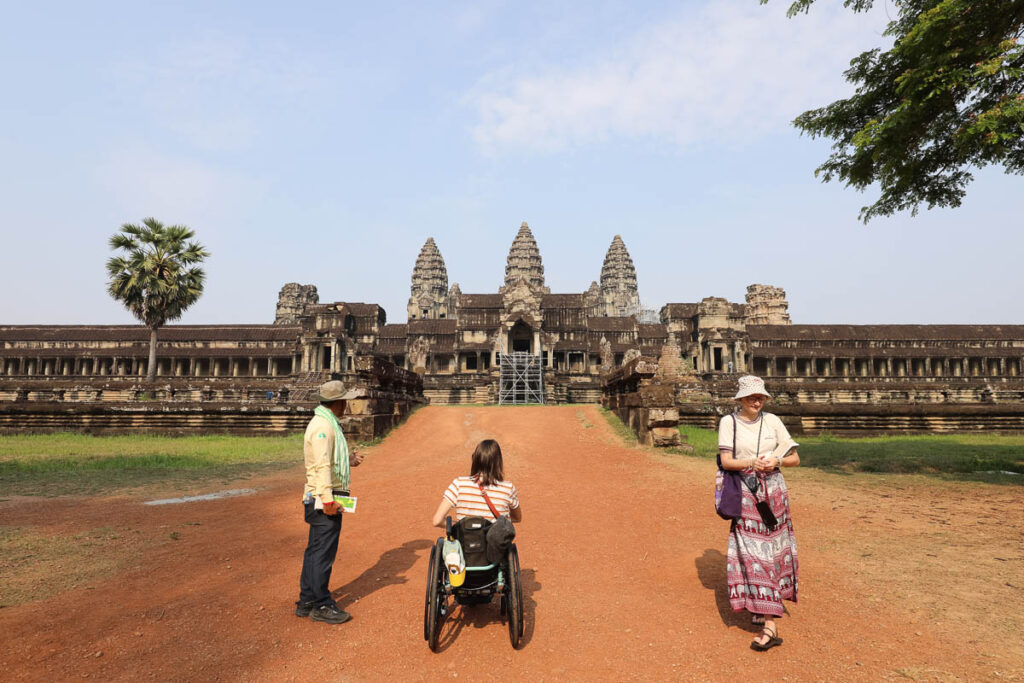
We have also accompanied wheelchair users around Angkor and documented what the experience is actually like.Read about one of our wheelchair-accessible Angkor tours, including the routes, assistance and practical challenges we encountered during the day.
Wheelchair user visiting Angkor Wat with assistance during a private accessible tour
Accessible toilets at Angkor Wat
There are public toilets within the Angkor Wat complex near the pagoda, although they are a reasonable distance from the main temple.
Accessible facilities and ramps are provided here, making this one of the useful places to know about before beginning a longer visit around Angkor Wat.
Accessible toilets at Angkor Parvis
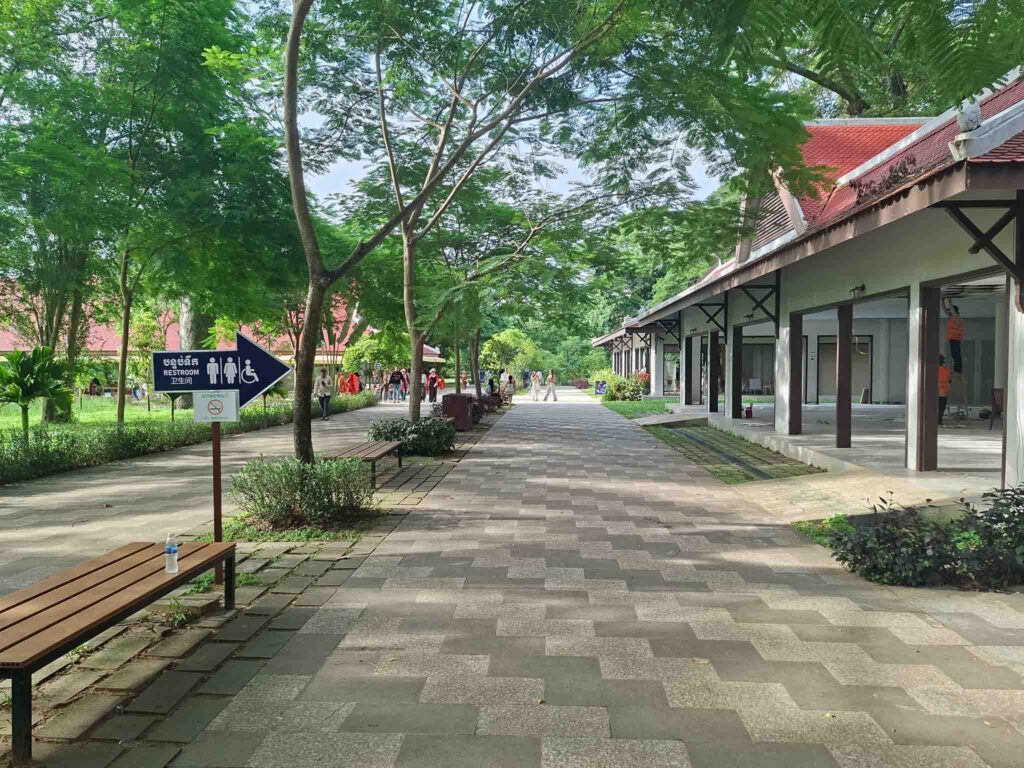
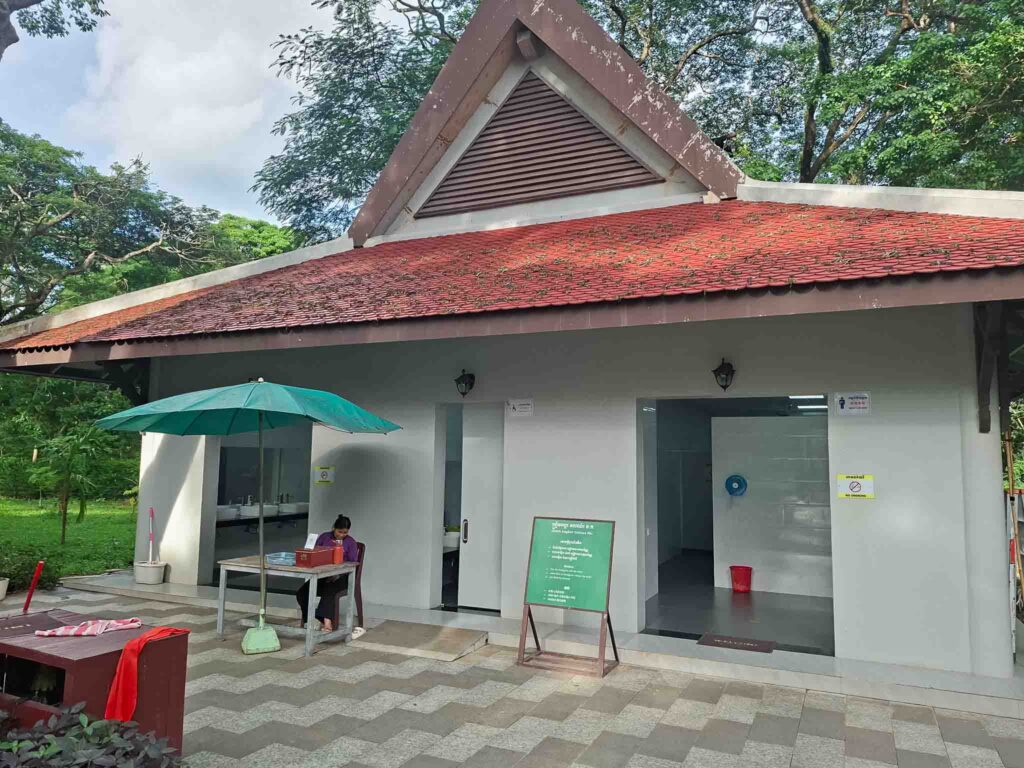
close to the main visitor facilities near Angkor Wat. The area has paved, relatively level walkways, and signs clearly indicate the location of the accessible toilets.
As shown in the photos below, wheelchair-accessible facilities are specifically signposted, making Angkor Parvis a useful stop before or after visiting Angkor Wat.
Angkor Wat upper level and the Bakan
The upper Bakan sanctuary is not accessible by wheelchair and will also be unsuitable for many visitors with limited mobility.
Access requires climbing a particularly steep wooden staircase with narrow steps and handrails.
Watch: What the Bakan stair climb is actually like
Children under 12 and pregnant women are not permitted to climb to the Bakan.
Bayon accessibility
Bayon presents different challenges from Angkor Wat, particularly because of its stone surfaces, changes in level and steps.
Some of the surrounding area can still be experienced by visitors with limited mobility, although access to all levels and internal areas should not be expected.
We are currently documenting wheelchair access, routes and nearby facilities at Bayon and will update this section with more detailed information.
Ta Prohm accessibility
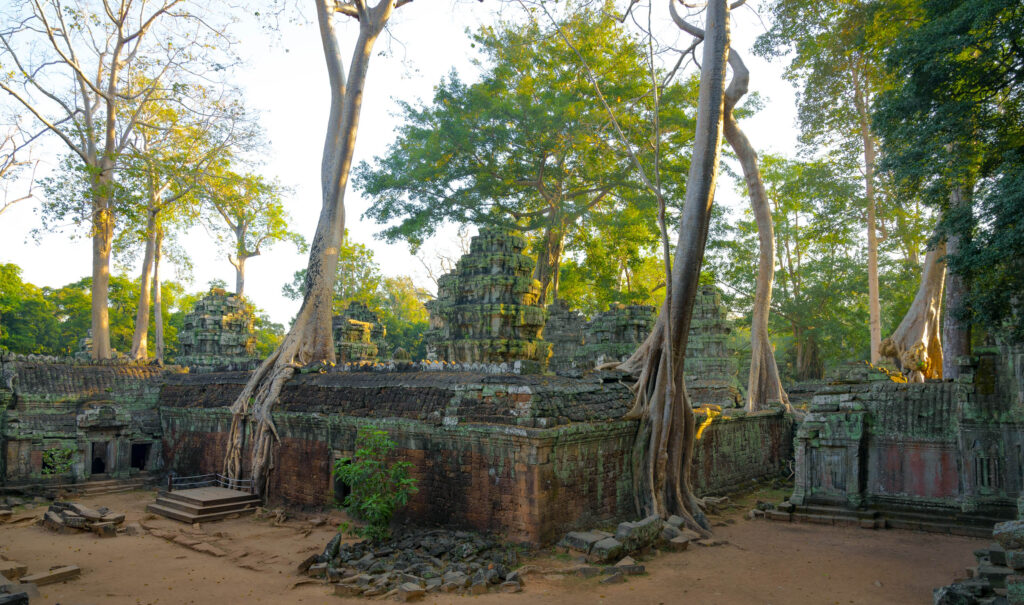
Ta Prohm has uneven surfaces, stone thresholds, steps and narrow sections that can make parts of the temple challenging for wheelchair users. Visitors with limited mobility may still be able to experience parts of the temple, particularly when the route is planned around their individual requirements.
We are currently documenting accessibility at Ta Prohm and will add detailed route and facility information to this guide.
Ta Prohm restrooms
Public toilets are available outside Ta Prohm near the west entrance, rather than inside the temple itself. The toilet building has a wheelchair ramp providing step-free access, as shown below.
If accessibility is important for your visit, it is worth using these facilities before entering Ta Prohm, where the terrain becomes considerably more uneven.
wheelchair ramp leading to toilets at ta prohm temple
Other Angkor temples
Accessibility varies enormously between temples within Angkor Archaeological Park.
As we expand this guide, we will add individual information for:
Angkor Thom and Bayon • Ta Prohm • Preah Khan • Banteay Kdei • Banteay Srei • Pre Rup • Neak Pean and other commonly visited temples.
This will include photographs of routes, steps, ramps, toilet facilities and other practical details that can help visitors decide which temples are suitable for them.
Accessible toilets around Angkor Archaeological Park
Public toilet facilities are located at various points throughout Angkor Archaeological Park, including standalone facilities beside the roads connecting the temples.
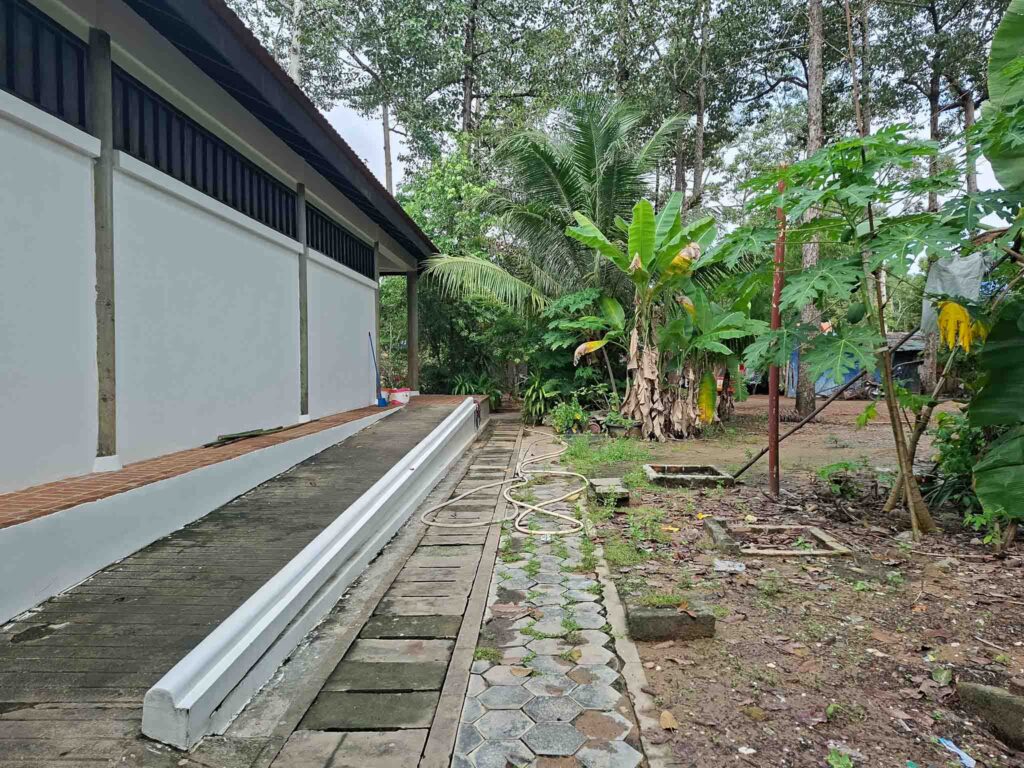
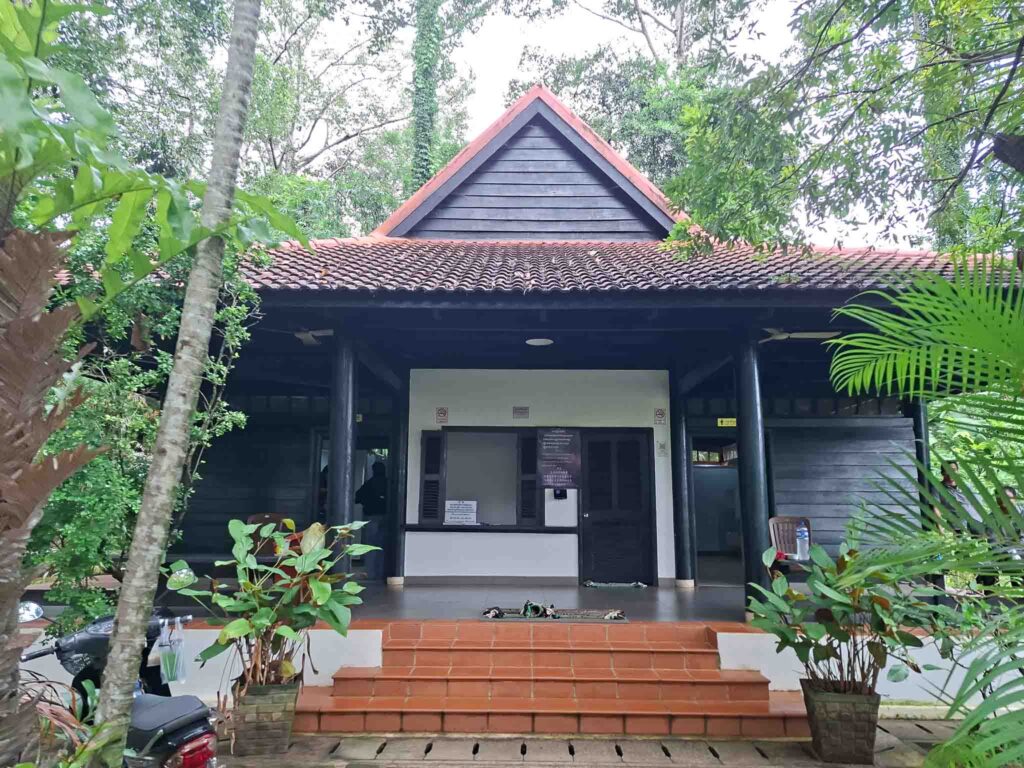
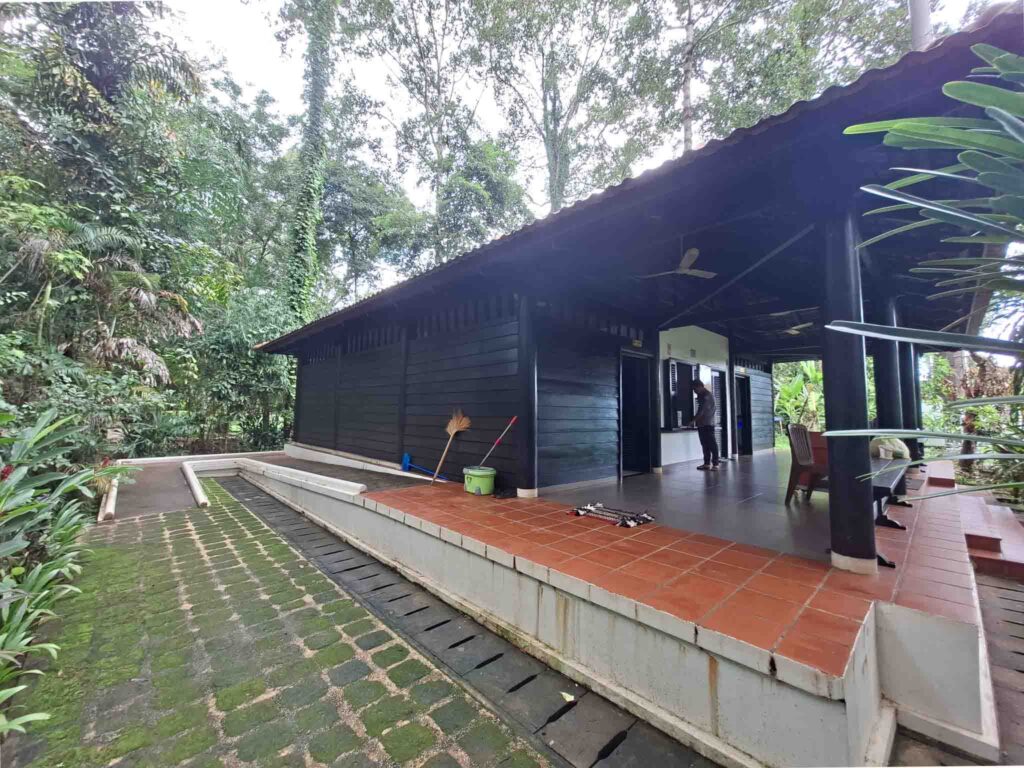
The facilities shown below are near Srah Srang and are a good example of the type of public toilets found around the park. The building has a wheelchair ramp providing step-free access from ground level.
Typical restroom at angkor archeological park
the wheelchair ramp on the side of the restroom
Facilities vary between locations, so visitors with specific accessibility requirements may find it useful to plan toilet stops as part of their route through Angkor.
Transport around Angkor for visitors with limited mobility
Transport is particularly important for visitors with mobility difficulties because distances between temples can be substantial, and even within individual temple complexes there can be considerable distances between parking areas and the main sights.
A private vehicle allows an itinerary to be adjusted around the visitor rather than following a fixed group schedule.
Depending on individual requirements, additional assistance can also be arranged.
View our accessible Angkor Wat tour →
Wheelchairs and mobility assistance
Every visitor’s mobility requirements are different. Someone using a wheelchair full-time may require a very different itinerary from someone who can walk short distances but struggles with stairs or prolonged walking.
When planning an accessible Angkor visit, it is useful to tell us:
Whether the visitor uses a wheelchair full-time or only for longer distances
Whether they can transfer independently into a vehicle
Whether they can manage occasional steps with assistance
Whether the wheelchair is folding or fixed-frame
How much walking they are comfortable doing
This allows the itinerary, vehicle and level of assistance to be planned appropriately.
Planning your visit
Don’t assume that limited mobility means Angkor Wat isn’t worth visiting. Although some areas cannot be made accessible, there is still a great deal that can be experienced with realistic planning and suitable assistance.
The important thing is to build the day around what the visitor can comfortably do instead of trying to follow a standard temple itinerary.
If you are travelling with a wheelchair or have limited mobility, you can contact us before your visit and tell us about your requirements.
View our accessible Angkor Wat tour →
Continue exploring Angkor
Angkor is much more than just Angkor Wat. Our Angkor temple guides are based on repeated visits and first hand experience, with practical advice on when to go, what to look for and which temples are worth including in your itinerary. Explore more of our guides below, or visit our complete Angkor Wat guide to start planning your time at Angkor.
Bayon is one of Angkor’s most remarkable temples, famous for its enormous stone faces and maze of carved galleries. We recommend visiting early, when the temple is quieter and the soft morning light brings the faces to life.
Ta Prohm is famous for its enormous trees growing through the ruins, but there is much more to explore beyond the best-known viewpoints. We recommend visiting early, when its corridors and courtyards are quieter and the temple is at its most atmospheric.
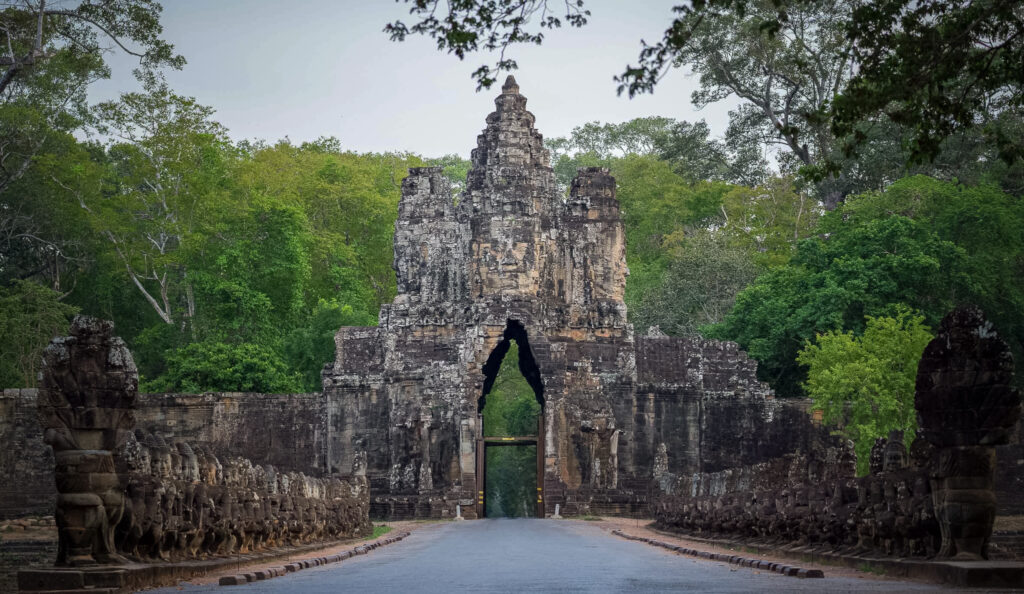
Visit Angkor Thom South Gate, the monumental entrance to the ancient city. Learn what to look for, when to visit, how to avoid the busiest times, and where to find the best views and photographs.
Baphuon is one of Angkor Thom’s most impressive temple mountains, with a long raised causeway, steep upper terraces and an enormous reclining Buddha. We recommend allowing time to climb and explore its remarkable architecture and restoration story.
We recommend Banteay Kdei for its atmospheric corridors, detailed carvings and quieter feel compared with nearby Ta Prohm. Visit early and you can often explore some of its most beautiful sections with very few other people around.
One of our favourite smaller temples at Angkor, Ta Nei is peaceful, atmospheric and still receives relatively few visitors. We recommend it for travellers who want to step beyond the standard temple circuit.